
Contact
ADDRESS
STAVROS NIARCHOS FOUNDATION
CULTURAL CENTER
364 Syggrou Avenue, Kallithea
TEL.
Box Office:
+30 213 0885700
Box Office email:
boxoffice@nationalopera.gr
Daily 09.00-21.00
info@nationalopera.gr
Register to our Newsletter





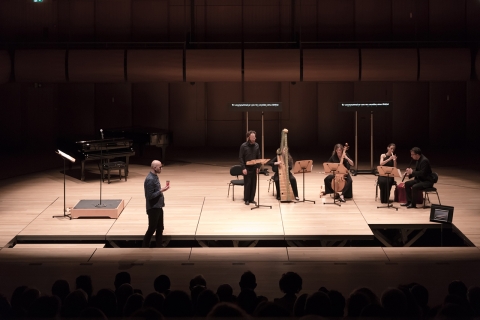
CONDUCTOR
Dimitris Kountouras
STAND-UP COMEDIAN
Dimitris Dimopoulos
WITH THE EARLY MUSIC ENSEMBLE EX SILENTIO
Iason Marmaras
Flora Papadopoulou
Annemarie Podesser
Elektra Miliadou
Dimitris Kountoura
31 March 2017
1 April 2017
Greek National Opera Alternative Stage
Stavros Niarchos Foundation Cultural Center
Starts at: 20.30 | 
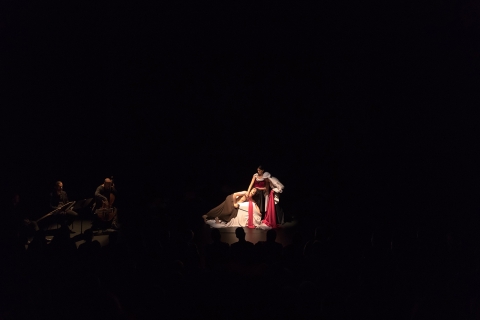
DIRECTOR-TABLEAUX VIVANTS
Teatri 35 (Gaetano Coccia, Francesco O. De Santis, Antonella Parrella)
LIGHTING
Gennaro Maria Cedrangolo
Dimitris Karakantas (violin)
Theodoros Kitsos (strings)
Dimos Goudaroulis (cello)
29, 30 March 2017
Greek National Opera Alternative Stage
Stavros Niarchos Foundation Cultural Center
Starts at: 20.30 |
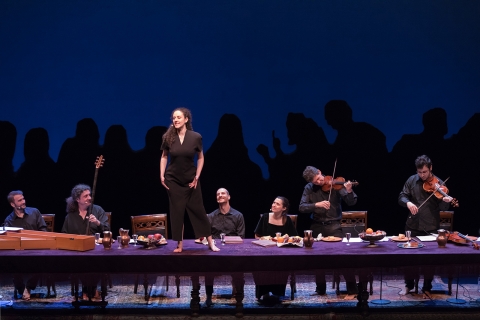
CONDUCTOR-IDEA
Markellos Chryssicos
DIRECTOR
Katerina Evangelatos
SETS-COSTUMES
Eva Manidaki
LIGHTING
Eleftheria Deco
FEATURING THE MUSIC ENSEMBLE LATINITAS NOSTRA
Evgenios Voulgaris (yayli tambur)
Iason Ioannou (cello)
Thodoris Kitsos (theorbo)
Ilias Livieratos (viola)
Simos Papanas (violin)
Dimitris Tigkas (violone)
Markellos Chryssicos (harpsichord)
WITH
Maria Palaska (soprano)
Georgios Stavrou (chanter)
Marianna Polychronidi (actor)
Nikolas Papagiannis (actor)
23, 24 March 2017
Greek National Opera Alternative Stage
Stavros Niarchos Foundation Cultural Center
Starts at: 20.30 |

CONDUCTORS
Anastasios Symeonidis (18, 19, 24/2 & 3, 5/3)
Zoe Tsokanou (22, 25, 26/2)
DIRECTOR
Francesco Micheli
REVIVAL DIRECTOR
Marina Mergou
SET DESIGNS – LIGHTING
Nicolas Bovey
COSTUMES
Gianluca Falaschi
VISUAL DESIGN
Panagiotis Tomaras
CHORUS MASTER
Agathangelos Georgakato
COUNT ALMAVIVA
Antonis (Anthony) Koroneos (18, 24, 26/2 & 3, 5/3)
Ioan Hotea (19, 22, 25/2)
DR. BARTOLO
Dimitris Kassioumis (18, 24, 26/2 & 3, 5/3)
Akis Laloussis (19, 22, 25/2)
ROSINA
Vassiliki Karayanni (18, 24, 26/2 & 3, 5/3)
Mina Polychronou (19, 22, 25/2)
FIGARO
Dionyssis Sourbis (18, 24, 26/2 & 3, 5/3)
Harris Andrianos (19, 22, 25/2)
DON BASILIO
Tasos Apostolou (18, 24, 26/2 & 3, 5/3)
Petros Magoulas (19, 22, 25/2)
FIORELLO
Yannis Selitsaniotis (18, 22, 24, 26/2 & 3/3)
Giorgos Mattheakakis (19, 25/2 & 5/3)
BERTA
Alexandra Mattheoudaki (18, 24, 26/2 & 3, 5/3)
Maria Vlachopoulou (19, 22, 25/2)
OFFICER
Christos Lazos (18, 24, 26/2 & 3, 5/3)
Vassilis Assimakopoulos (19, 22, 25/2)
NOTARY
Philippos Dellatolas (18, 24, 26/2 & 3, 5/3)
Anastassios Stellas (19, 22, 25/2)
With the GNO Orchestra and Chorus
Co-production with the Bologna Municipal Theatre [Teatro Comunale di Bologna]
18, 19, 22, 24, 25, 26 February 2017
3, 5 March 2017
Olympia Theatre
At 20:00 |
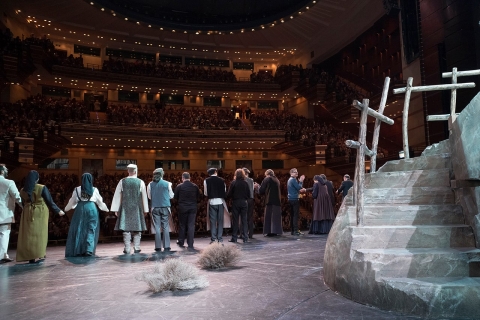
CONDUCTOR
Myron Michailidis
STAGING-SETS-COSTUMES
Antony McDonald
LIGHTING
Lucy Carter
MOVEMENT DIRECTOR
Philippe Giraudeau
ASSOCIATE DIRECTOR
Helen Cooper
ASSOCIATE MOVEMENT DIRECTOR
Lizie Saunderson
ASSOCIATE LIGHTING DESIGNER
Neill Brinkworth
CHORUS MASTER
Agathangelos Georgakatos
THE KING
Tasos Apostolou (27/1 & 1, 5/2)
Petros Magoulas (29/1, 3/2)
LOHENGRIN
Peter Wedd (27, 29/1 & 1, 3, 5/2)
ELSA
Jolana Fogašová (27/1 & 1, 5/2)
Iulia Isaev (29/1, 3/2)
TELRAMUND
Dimitri Platanias (27/1 & 1, 3, 5/2)
Valentin Vasiliu (29/1)
ORTRUD
Martina Dike (27/1, 1/2)
Julia Souglakou (29/1 & 3, 5/2)
THE HERALD
Dionyssis Sourbis (27/1 & 1, 5/2)
Dimitris Kassioumis (29/1, 3/2)
FOUR NOBLEMEN
Manolis Lorentzos (27, 29/1 & 1, 3, 5/2)
Panayotis Priftis (27/1 & 1, 5/2)
Vassilios Kotsikoyannis (29/1, 3/2)
Anastasios Lazarou (27, 29/1 & 1, 3, 5/2)
Theodoros Moraitis (27, 29/1 & 1, 3, 5/2)
FOUR PAGES
Triantaphyllia Yeorgiadou (27/1 & 1, 5/2)
Eleni Koutsoumbi (27/1 & 1, 5/2)
Photini Hadjidaki (29/1, 3/2)
Thei Stavrou (29/1, 3/2)
Barunka Preisinger (27/1 & 1, 5/2)
Vassiliki Petroyanni (27 & 1, 5/2)
Eleni Sotiriou (29/1, 3/2)
Anastassia Christophilaki (29/1, 3/2)
With the GNO Orchestra and Chorus
A new GNO production originated at the Welsh National Opera and Theatr Wielki – Polish National Opera
27, 29 January 2017
1, 3, 5 February 2017
Athens Concert Hall
At 18:30 |
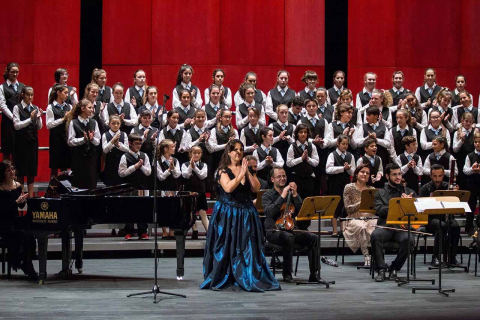
CHORUS MISTRESS
Mata Katsouli
5 January 2017
GREEK NATIONAL OPERA'S MAIN STAGE - 'STAVROS NIARCHOS' HALL
STAVROS NIARCHOS FOUNDATION CULTURAL CENTER
Starts at: 20.00 |
Admission is free
CONDUCTORS
Elias Voudouris (16, 17, 18, 21, 23, 24, 28, 29/12)
Zoe Zeniodi (30, 31/12)
CHOREOGRAPHY
Irek Mukhamedov
Marius Petipa
MUSIC
Adolphe Adam, with added music by Friedrich Burgmüller and Boris Assafyev
SET DESIGN – COSTUMES
Charles Cusick Smith
Philip P. Daniels
LIGHTING
Eleftheria Deco
GISELLE
Mayu Tanigaito (16, 18/12)
Maria Kousouni (17, 23, 28, 30/12)
Eleana Andreoudi (21, 24, 29, 31/12)
COUNT ALBRECHT
Joseph Skelton (16, 18/12)
Vangelis Bikos (17, 23, 28, 30/12)
Igor Siatzko (21, 24, 29, 31/12)
MYRTHA
Olga Zourbina (16, 18, 23, 28, 30, 31/12)
Ariadne Filippaki (17, 21, 24, 29/12)
HILARION
Stratos Papanoussis (16, 18, 23, 30/12)
Giorgos Varvariotis (17, 24, 28, 31/12)
Agapios Agapiadis (21, 29/12)
BERTHE
Dimitra Laoudi
Mitsi Stergianou
Georgia Tritsi
WILFRED
Antonis Koroutis
Bledi Latifi
Ektor Bollano
COUNTESS BATHILDE
Mania Karavasili
Georgia Tritsi
DUKE
Thanassis Solomos
With the participation of the Greek National Opera’s Principal dancers, Soloists, Demi-Soloists and Corps de Ballet.
16, 17, 18, 21, 23, 24, 28, 29, 30, 31 December 2016
Olympia Theatre
At 20:00 | (31/12 at 19:00 | )
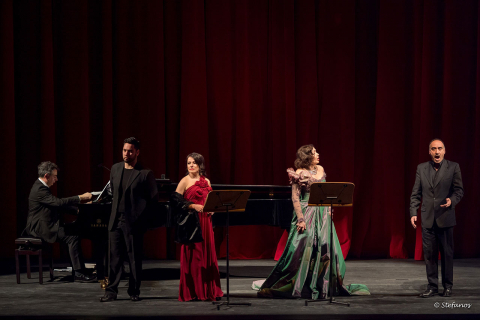
28 December 2016
GNO MAIN STAGE FOYER - SNFCC
Starts at: 20.00 |
Admission is free
CONDUCTOR
Lukas Karytinos
STAGE DIRECTIONS - SETS - COSTUMES - LIGHTING
Nikos S. Petropoulos
REVIVAL DIRECTOR
Ion Kessoulis
CHOREOGRAPHY - MOVEMENT
Fotis Diamantopoulos
CHORUS MASTER
Agathangelos Georgakatos
VIOLETTA VALÉRY
Myrtò Papatanasiu (19/11)
Elena Moșuc (20, 25, 30/11)
Maria Mitsopoulou (23, 26/11)
Vassiliki Karagianni (27/11)
FLORA BERVOIX
Angelica Cathariou (19, 25, 26, 30/11)
Lydia Vafeiadi (20, 23, 27/11)
ANNINA
Alexandra Mattheoudaki
ALFREDO GERMONT
Yannis Christopoulos (19, 23, 26, 30/11)
Antonis Koroneos (20, 25, 27/11)
GIORGIO GERMONT
Dimitris Tiliakos (19, 26/11)
Dionyssis Sourbis (20, 30/11)
Dimitri Platanias (23, 25, 27/11)
GASTONE
Charalambos Velissarios (19, 20, 27/11)
Alexandros Tsilogiannis (23, 25, 26, 30/11)
BARONE DOUPHOL
Petros Salatas (19, 23, 26, 30/11)
Christos Amvrazis (20, 25, 27/11)
MARCHESE D'OBIGNY
Nikolaos Karagiaouris (19, 26, 27, 30/11)
Vassilis-Denachis Kostopoulos (20, 23, 25/11)
DOCTOR GRENVIL
Dionysos Tsantinis (19, 23, 26, 30/11)
Pavlos Sampsakis (20, 25, 27/11)
GIUSEPPE
Thanassis Evangelou (19, 23, 26, 30/11)
Manolis Lorentzos (20, 25, 27/11)
COMMISSIONER / SERVANT
Theodore Moraitis (19, 23, 26, 30/11)
Vassilis Assimakopoulos (20, 25, 27/11)
With the GNO Orchestra and Chorus and members of the GNO Ballet.
19, 20, 23, 25, 26, 27, 30 November 2016
Megaron, The Athens Concert Hall - Alexandra Trianti Hall
Starts at 20:00 |
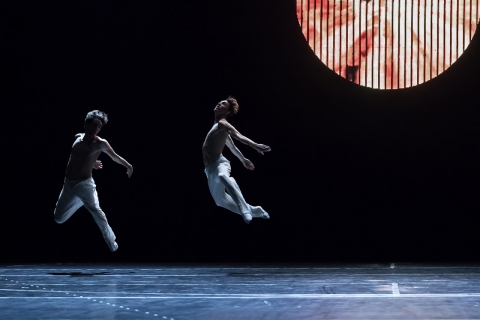
MUSIC
György Ligeti
Jannis Xenakis
Julien Tarride
CONCEPT - CHOREOGRAPHY - STAGE DIRECTION
Antonis Foniadakis - APOTOSOMA
SET DESIGN - LIGHTING
Sakis Birbilis
COSTUMES
Antonis Foniadakis
SOUND DESIGN - VIDEO DESIGN
Julien Tarride
ASSOCIATE DRAMATIST
Eri Kyrgia
FEATURING THE GREEK NATIONAL OPERA BALLET DANCERS
Magda Koukou-Ferra
Stelios Katopodis
Michael Doolan
Thanassis Solomos
THE NATIONAL THEATRE ACTORS LEONI XEROVASSILA
Konstantinos Georgalis
MODERN DANCERS
Ioanna Paraskevopoulou
Maro Stavrinou
Yannis Lavner
Pierre Mazenti.
Dance theatre - A co-production with the National Theatre of Greece
3, 4, 5, 6, 10, 11, 12, 13, 17, 18, 19, 20, 24, 25, 26, 27 November 2016
Rex Theatre, Marika Kotopouli – National Theatre
At 20:00 | (19:00 | on Sundays)
CONDUCTOR
Elias Voudouris
STAGE DIRECTIONS - SETS - COSTUMES - LIGHTING
Nikos S. Petropoulos
26 November 2016
Theatres / Cultural Venues in Greek cities
Starts at: 20.00 |
Admission is free
Screenings of GNO's performance of La Traviata in 13 cities:
Aigio - ‘Apollo’ Municipal Cinema
Veria - ‘Star’ Cinema and Theatre Hall
Heraklion - Cultural and Conference Center (‘Mikro Theatro’)
Ioannina - Cultural Multiplex 'Dimitris Hatzis'
Kos - ‘Orpheus’ Cinema and Theatre Hall
Mesolongi - ‘Trikoupeio’ Cultural Center
Preveza - 'Oasi' Cultural Center
Serres - ‘Asteria’ Municipal Theatre
Syros - ‘Apollo’ Theatre
Trikala - ‘Matsopoulou Mill’ Arts & Culture Venue
Tripoli - 'Malliaropouleio' Theatre
Florina - Cultural Center (‘Theodoros Angelopoulos’ Hall)
Chios - ‘Homerion’ Cultural Center

CONDUCTOR
Giorgos Aravidis (21, 22, 23, 26/10)
Andreas Pylarinos (30/10, 2, 6/11)
DIRECTOR
Simos Kakalas
SET DESIGN
Antonis Daglidis
COSTUME DESIGN
Clare Bracewell
LIGHTING
Periklis Mathielis
PROJECTORS
Stathis Mitsios
CHOREOGRAPHY – MOVEMENT
Irina Akrioti
Kolioubakina
CHOIRMASTER
Agathangelos Georgakatos
VIVIKA ZACHAROULIS’ WIFE
Georgia Eliopoulos (21, 23, 30 /10- 6 /11)
Gina Poulou (22, 26, 30 /10)
KIKI VIVIKA’S FRIEND
Diamandi Kritsotaki (21, 23 /10 - 2, 6 /11)
Despina Skarlatou (22, 26, 30 /10)
PETROS HARMIDIS KIKI’S HUSBAND
Dimitris Paksoglou (21, 23, 30 /10 - 6 /11)
Nikos Stefanou (22, 26 /10 - 2 /11)
ZACHAROULIS
Stamatis Beris
COLONEL VIVIKA’S UNCLE
Yannis Yannissis (21, 23, 30 /10 - 6 /11)
Kostis Rasidakis (22, 26 /10 - 2 /11)
MARKOS KORTASIS THE GODSON
Pavlos Maropoulos (21, 23, 30 /10 - 6 /11)
Anastasios Stellas (22, 26 /10 - 2 /11)
MARTIS AN ARCHITECT
Thanassis Evangelou (21, 23, 30 /10 - 6 /11)
Nikos Tsaousis (22, 26 /10 - 2 /11)
MIMIS
Manolis Lorentzos (21, 23, 30 /10 - 6 /11)
Nikos Katsigiannis (22, 26 /10 - 2 /11)
A COOK
Angeliki Marinaki (21, 23, 30 /10 - 6 /11)
Anastasia Christofilaki (22, 26 /10 - 2 /11)
With the Orchestra, Choir, Ballet dancers and Soloists of the Greek National Opera
21, 22, 23, 26, 30 October 2016
2, 6 November 2016
Olympia Theatre
At 20:00 |
SOLOIST
Myrtò Papatanasiu
PIANO
Christos Papageorgiou
30 September 2016
Olympia Theatre
Starts at 20.00 |
Proceeds from the recital will be donated to the Association for the Building of the Opera House and the Academy of the Lyric Art "Maria Callas" for the purposes of the Lyric Art Academy "Maria Callas".
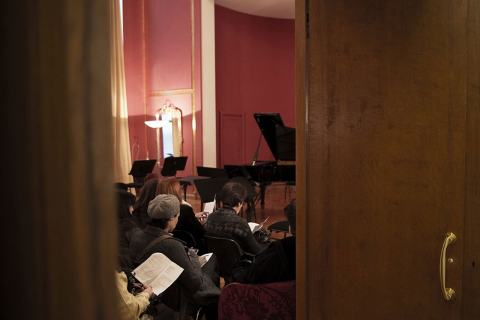
SOLOISTS
Sofia Kyanidou
Dimitris Paksoglou
Tassos Apostolou
PIANO
Nikos Vassiliou
25 September 2016
Olympia Theatre foyer
The concert will be held at 11:00 | and again at 13:00 |
Free Entry with coupon, available on a first-come-first-served basis from the Olympia Theatre box office one hour before doors open.

CONDUCTOR
Elias Voudouris
CHORUS MASTER
Agathangelos Georgakatos
CHILDREN’S CHOIR CONDUCTOR
Mata Katsouli
SOLOISTS
Eleni Voudouraki
Antonia Kalogirou
Georgia Elliopoulos
Vassiliki Karayanni
Cellia Costea
Akis Lalousis
Petros Magoulas
Dimitri Platanias
Dionyssis Sourbis
Yannis Christopoulos
ROLES PERFORMED BY
Irenai Athanasiou
Christos Amvrazis
Philippos Dellatolas
Thanassis Evangelou
With the Orchestra, Choir and children’s Choir of the Greek National Opera
25 September 2016
Stavros Niarchos Foundation Cultural Center
Starts at 20.00 |
Free entrance

ANIMATION
Eirini Vianelli
DIRECTOR
Angela Saroglou
COSTUMES
Yannis Katranitsas
PIANO
Sofia Tamvakopoulou
SOLOISTS (LISTED IN ORDER OF APPEARANCE)
THE CHILD
Theodora Baka
MOTHER, CHINESE CUP, NUMBERS
Eleni Voudouraki
TEAPOT, OLD MAN
Nikos Stefanou
FIRE
Vassiliki Karayanni
A mixture of opera and animation
Co-produced by Greek National Opera and Animasyros Festival
22 September 2016
Apollo Theatre, Hermoupolis Syros
Starts at 21:00 |
Free entry

CONDUCTOR
Lukas Karytinos
DIRECTOR
Stephen Langridge
SET - COSTUMES
George Souglides
VIDEO PROJECTION DESIGN
Thomas Bergmann - Silbersalz Film GmbH
LIGHTING
Giuseppe di Iorio
MOVEMENT
Dan O'Neill - Fotis Nikolaou
CHORUS MASTER
Agathangelos Georgakatos
CHILDREN'S CHORUS MASTER
Mata Katsouli
CARMEN
Rinat Shaham (24, 26/7)
Géraldine Chauvet (27, 29/7)
DON JOSÉ
Leonardo Capalbo (24, 26/7)
Dimitris Paksoglou (27, 29/7)
ESCAMILLO
Dionyssis Sourbis (24, 26/7)
Omar Kamata (27, 29/7)
MICAËLA
Saioa Hernández (24, 26/7)
Anna Stylianaki (27, 29/7)
ZUNIGA
Petros Magoulas
MORALÈS
Nikos Kotenidis
FRASQUITA
Maria Mitsopoulou (24, 26/7)
Maria Kokka (27, 29/7)
MERCÉDÈS
Eleni Davou (24, 26/7)
Diamanti Kritsotaki (27, 29/7)
DANCAÏRE
Kostis Rasidakis (24, 26/7)
Yannis Selitsaniotis (27, 29/7)
REMENDADO
Alexandros Tsilogiannis (24, 26/7)
Christos Kechris (27, 29/7)
Ballet
WOMEN
Cleopatra Anerousou
Athina Vrouva
Eleni Kladou
Eleftheria Stamou
MEN
Fotis Diamantopoulos
Blendi Latifi
Petros Kouroupakis
Esmeraldo Bitro
Ilir Sipri
24, 26, 27, 29 July 2016
Odeon of Herodes Atticus
New production, within the framework of the Athens Festival
Starts at 21.00 |
DIRECTOR’S NOTE
Bizet’s Andalucia is invented, fictional, but it reflects our world. Grinding poverty is daily reality for many millions of people, and the opera Carmen gives voice to those people. This was a radical step in the history of opera, which had traditionally restricted working or poor people to comedy, reserving tragedy for Gods and Nobility. It remains radical today. Carmen respects the humanity of the poor, and gives them passionate, beautiful, sexy, celebratory, and tragic music. There is death, and despair, but there are parties, and dances and fun too: passion and humor are not the preserves of the wealthy. The people in this invented world exist on the margins of society, the desperate edge. They scrape together a living through hard work, or crime, the sex trade, smuggling, whatever comes to hand. They laugh, they cheat, they bribe, they fight, they love; they feel guilt, pride, hope, fear… And somehow, because there is no safety net, all these emotions are heightened, even purified. As is well known, Carmen, the woman, is a Romani, a gypsy, a traveller – dangerously foreign and exotic. The Roma culture is borderless, at least in spirit and intention, even if interaction with National burocracy and fixed-place cultures sometimes causes difficulty and friction. Carmen exemplifies this sense of radical freedom. Men find her absurdly, impossibly attractive. But she is more than an object of desire. She is a real person. Her background seems chaotic, unstable, impoverished. But like everyone else she must eat, she must earn money. Why else would she work in a sweatshop factory doing degrading work? We love Carmen for her verve, for her nerve; for her refusal to compromise with life or love; above all for her insistence on her right to absolute personal freedom and her fearlessness in the face of death.
Borders and poverty, freedom and captivity. There could hardly be more relevant topics. Carmen is a story for now.
Stephen Langridge, 6 June 2015
Carmen at a glance
The composer / French composer Georges Bizet was born in Paris in 1838 and died in Bougival, near the French capital, in 1875. His first music instructor was his own father, a singing teacher. Later, at the Paris Conservatory he was a pupil of Jacques Fromental Halévy, composer of La Juive, whose daughter he went on to marry in 1869. He also studied with Charles Gounod, who deeply influenced the younger composer’s oeuvre. By 1857, when Bizet received the much-coveted Prix de Rome, he had already composed his Symphony in C, though it was not performed until as late as 1935. When he returned from the Villa Medici to Paris, his highest priority was to do something about his pitiable finances. His opera Les pêcheurs de perles (1863) was not the success he had expected. After the Franco-Prussian War (1870) he was appointed chorusmaster of the Theatre National de l' Opéra, but he instead chose to take a position as chef de chant at the Opéra-Comique. His first widely successful composition was the music for the play based on the novel L’Arlésienne by Alphonse Daudet. Bizet was there to experience the turbulent premiere of Carmen in March 1875, but not to see it blossom into a resounding success, for he died a few months later at the age of 36.
The opera / Carmen was written to a libretto by Henri Meilhac (1831-1897) and Ludovic Halévy (1834-1908) after Prosper Merimée’s (1803-1870) novel of the same title (1845). While the term "opera comique" suggests comical elements, it in fact refers to structural and aesthetic characteristics, one of which is prose dialogues. In 1875 Ernest Guiraud (1837-1892) replaced the prose with recitatives for the Vienna performance of the opera. He also added ballet music borrowed from L’Arlésienne Suite and another opera by Bizet, La jolie fille de Perth. Carmen was originally planned in three acts, while later the two scenes of Act III were divided into Acts III and IV. The opera recounts the story of Corporal Don José, who finds himself madly in love with the Gipsy girl Carmen. Tired of his love she finally tells him that she doesn’t love him any longer. In despair, Don José kills her.
Premieres / Carmen was first performed in Paris at the Salle Favart by the ensemble of the Opéra-Comique on 3 March 1875. The title role was performed by Celestine Galli-Marié, but the production that established the opera firmly was held in Vienna in October 1875. In Greece, one of the first recorded performances of the opera was held at the Municipal Theatre of Patras during the 1900/1 season. The Greek National Opera added the opera to its repertory in the 1941/2 season, with Kitsa Damasioti as Carmen. The production was conducted by Antiochos Evangelatos.
Act I / Seville, c.1830. Outside a tobacco factory guarded by soldiers, a young peasant girl, Micaëla, hears that her beloved, Corporal Don José, will be coming soon with the change of guard. The factory bell rings, and the workwomen appear in the street as they return to work. Among them Carmen, a Gypsy woman, sings of the pleasures of free love. She looks at Don José and throws a flower his way, which he keeps. Micaëla arrives to bring Don José a kiss and a letter from his mother, in which she suggests that Micaëla would make a suitable wife. The workwomen are heard quarreling; Carmen has cut a woman with a knife, but refuses to give any explanations for her behavior. The lieutenant of the guard, Zuniga, orders Don José to lead her to jail. Οnce alone, Carmen persuades him to let her go, implying that they might be together if she is set free. Ηe helps her escape.
Αct II / Α group of Gypsy women entertain some officers at Lillas pastia’s tavern. Carmen learns that Don José has been released from prison, where he was serving a monthlong sentence for letting her escape. The famous matador
Escamillo arrives with his entourage. Carmen appears unimpressed, but she gives him some hope. When her friends, who are smugglers, draw up a plan of action, Carmen states she will not be participating, but she promises to meet with them
later. Αs she explains, she has fallen in love with Don José, who is expected to arrive soon. Don José comes and Carmen dances for him. When he says that he must leave because he is on duty, she gets angry and remains impassive even when he shows her the flower of their first encounter, which he has treasured all this time. She tells him that if he loves her, he must run away to the mountain with her. The lieutenant returns, hoping to find Carmen alone. Gripped by envy, Don José attacks him; he now has no other choice but to follow Carmen.
Act III, Scene 1 / In the mountain Carmen and Don José continue to quarrel. The Gypsy women read their cards, but Carmen keeps getting the death card. The smugglers set off, while the women keep the customs officers busy and Don José stands guard. A guide leads Micaëla to the scene, but she hides when she hears her beloved shooting. Escamillo arrives complaining about the stray bullet which nearly hit him. He heard that Carmen had gotten tired of her lover. Don José challenges him to a duel. Carmen interrupts them at the most critical moment and Escamillo invites everyone to his next bullfight. Micaëla appears and informs Don José that his mother is dying. He follows Micaëla after he warns Carmen that they shall meet again.
Scene 2 / Outside the Seville arena salesmen sell their goods while people arrive to attend the bullfight. Escamillo comes with Carmen. A friend tells her to be careful because Don José has been spotted in the crowd, but Carmen is ready to confront him. Don José begs her to come away with him. She tells him that she no longer loves him and prefers to die rather than lose her freedom. As cheers are heard and she rushes to share Escamillo’s triumph with him, Don José stands in her way. When she also returns the ring he had given her as a token of his love he stabs her, just as the bull in the arena succumbs to Escamillo’s coup de grace. As the crowds are leaving the arena after the bullfight, they see Don José holding the dead woman in his arms and confessing his crime.
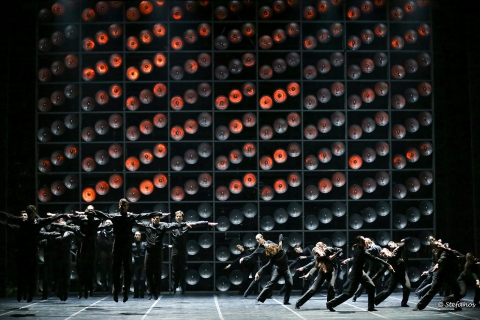
Choreography
Andonis Foniadakis
APOTOSOMA
Μusic
J.S.Bach
G.F. Händel
J. Tarride
Sets diligence
Andonis Foniadakis
APOTOSOMA & Sakis Birbilis
Costumes
Tassos Sofroniou
Lighting
Sakis Birbilis
Sound design
Julien Tarride
Selon Désir
WOMEN
Maria Kousouni
Eleana Andreoudi
Popi Sakellaropoulou
Anna Fragou
Olga Zourbina
Magda Koukou- Ferra
Magda Lagoyanni
Zoi Schinoplokaki
Viki Tsiroyanni
Ariadni Filippaki
MEN
Vangelis Bikos
Stelios Katopodis
Yannis Benetos
Michael Doolan
Michalis Pappas
Nikos Moschis
Elton Dimroci
Thanassis Solomos
Dimitris Ferras
Air
WOMEN
Maria Kousouni
Eleana Andreoudi
Popi Sakellaropoulou
Anna Fragou
Magda Koukou-Ferra
Margarita Kostoglou
Ariadni Filippaki
MEN
Vangelis Bikos
Stelios Katopodis
Yannis Benetos
Michael Doolan
Elton Dimroci
Thanassis Solomos
Links
WOMEN
Maria Kousouni
Eleana Andreoudi
Vanessa Kourkoulou
Dimitra Laoudi
Christina Makridou
Popi Sakellaropoulou
Anna Fragou
Olga Zourbina
Komi Kloukina
Magda Koukou-Ferra
Magda Lagoyanni
Zoi Schinoplokaki
Vicky Tsiroyanni
Ariadni Filippaki
Aggeliki Vrahlioti
Paraskevi Ekonomou
Anastasia Pattelaki
Maria-Eleni Tsoni (Students of the GNO School)
MEN
Danilo Zeka
Vangelis Bikos
Agapios Agapiadis
Anton Koruti
Stelios Katopodis
Yannis Benetos
Michael Doolan
Michalis Pappas
Nikos Moschis
Elton Dimroci
Thanassis Solomos
Dimitris Ferras
Yannis Lavner
Pavlos Maratos
(Students of the GNO School)
Kalamata International Dance Festival
15, 16 July 2016
Dance Megaron, Main Hall
Starts at 22.00 |

3 July 2016
Visitors' Center of the SNFCC
Starts at 20.30 |
Free admission

1, 2 July 2016
Olympia Theatre
Starts at 20.00 |
Free entrance
CONDUCTOR
Vladimiros Symeonidis
DIRECTOR
Alexandros Efklidis
ART INSTALLATION
Alexandros Psychoulis
LIGHTING
George Tellos
ANAPARASTASIS III: THE PIANIST
With Aris Servetalis, Lenio Liatsou
DISSONART ENSEMBLE
Violin, Thodore Patsalidis, Greta Papa
Viola, Hara Sira
Cello, Vassilis Saitis
Double bass, Yannis Chatzis
Flute, Yannis Anisegos
Clarinet, Alexis Stavridis
Piano, Lenio Liatsou
Strychnine Lady
Viola, Greta Papa
ACTORS
Kostas Koutsolelos
Aris Balis
Alexis Zervanos
Konstantinos Gavalas
With the Athens Youth Symphony Orchestra (AYSO)
CONDUCTOR
Pavlos Sergiou
MUSICIANS
Spyros Poulimenos
Haris Tsikleas
Yannis Panagiotou
Alexandros Sofronis
Spyros Zardas-Tsenoglou
Elissavet Boura
Myrsini Dimopoulou
Romanos Lioutas
Christos Kyriakopoulos
Nikos Panas
Nikos Filippopoulos
Eleni Papadopoulou
Yorgos Synodinos
Andreas Kerkezos
Yorgos Chliavoras
Panayiota Kalavrizioti
Irini Kattavenaki
Yannis Mavritsakis
Dimitris Karagiouloglou
Platon Bourgiotis
Konstantina Kouveli
Varvara Tsotra
Myrto Xirouhaki
Mihalis Kontos
Kostas Hinis
Nikos Vlahos
25 June 2016
The performances start at:
The Pianist 18.30 | & 19.15 | & 00.00 |
Strychnine Lady 20.30 | & 00.30 |
Free admission

21 June 2016
Veranda of the 4th floor of the EMST
Starts at 21.30 |
Free admission

CONDUCTOR
Myron Michailidis (10,11/6)
Elias Voudouris (12,15/6)
DIRECTOR
Enrico Castiglione
SET - VIDEO - LIGHTING
Enrico Castiglione
COSTUMES
Sonia Cammarata
CHOREOGRAPHY
Fotis Diamantopoulos
CHORUS MASTER
Agathangelos Georgakatos
AIDA
Cellia Costea (10,12/6)
Anda-Louise Bogza (11,15/6)
RADAMÈS
Walter Fraccaro (10,12,15/6)
Francesco Anile (11/6)
AMNERIS
Elena Gabouri (10,12/6)
Elena Cassian (11,15/6)
Amonasro Aris Argiris (10,12/6)
Angelo Veccia (11,15/6)
RAMFIS
Tassos Apostolou
THE KING
Dimitris Kassioumis
HIGH PRIESTESS
Lenia Safiropoulou
MESSENGER
Charalambos Velissarios
PRIESTESSES/ SLAVES
Anna Fragou
Cleopatra Anerousou
Olga Zourbina
Eleni Kladou
Komi Kloukina
Magda Koukou-Ferra
Margarita Kostoglou
Magda Lagoyanni
Eleftheria Stamou
Zoi Schinoplokaki
Vicky Tsiroyanni
Ariadni Filippaki
TRIUMPHAL SCENE
Anna Fragou
Olga Zourbina
Komi Kloukina
Magda Koukou-Ferra
Margarita Kostoglou
Magda Lagoyanni
Zoi Schinoplokaki
Ariadni Filippaki
Stelios Katopodis
Hector Bolano
Michael Doolan
Petros Kouroupakis
Nikos Moschis
Elton Dimroci
Thanassis Solomos
Dimitris Ferras
10, 11, 12, 15 June 2016
Odeon of Herodes Atticus
New production originating from the Taormina Opera Festival
Within the framework of the Athens Festival
Starts at 21.00 |
Aida at a glance
Giuseppe Verdi
Αida
Οpera in four acts
Libretto by Antonio Ghislanzoni, based on a scenario by Auguste Mariette
World premiere Cairo Opera House, 24 December 1871
Greek National Opera premiere Olympia Theatre, 8 January 1958
The composer / Giuseppe Verdi, the most celebrated composer of Italian romanticism, was born in the village of Le Roncole in northern Italy in 1813, and died in Milan in 1901. He studied music in the small town of Busseto and then in Milan. His earliest works were influenced by the revolutionary spirit of the times, echoing the struggle of small Italian states to be liberated from the Austrians and unified into one dominant country. Verdi’s involvement with politics elevated the composer to the status of a national symbol (as an acrostic, ‘Viva Verdi’ meant ‘Viva, Vittorio Emanuele, Re d’Italia’), and in 1861 he was elected a member of the first Italian Parliament. His most significant operas include Nabucco (1842), Ernani (1844), Rigoletto (1851), Il trovatore (1853), La traviata (1853), La forza del destino (1862), Don Carlos (1867, 1884), Aida (1871), Otello (1887) and Falstaff (1893).
In terms of aesthetics, Verdi’s music expressed the spirit of ripe romanticism, while on a political level it expressed his compatriots’ desire to see Italy free and united. He had the good fortune to be loved by an especially broad section of the public and to enjoy a popularity that remains unfaltering to this day. Verdi was the composer who experienced that special moment in the history of music when high art became popular during the historical, political and social changes of the 19th century.
The opera / Aida is an opera in four acts to a libretto by Antonio Ghislanzoni, which was based on a scenario by Auguste Mariette. The opera is set in the age of the pharaohs. Aida, daughter of the king of Ethiopia, is held as a slave in Egypt, where she has fallen in love with Radamès, commander of the Egyptian army. Her rival for the warrior’s heart is her mistress, Amneris, daughter of the Egyptian king. In accordance to her father’s wishes, Aida manages to extract information about the Egyptian army’s strategy from Radamès. Radamès is charged with treason and condemned by the council of priests to death. Even Amneris’ pleas for his life cannot save him. Aida hides in the underground vault of the temple of Vulcan where Radamès is going to be entombed alive so that she may die beside him.
Premieres / Aida received its premiere at the Cairo Opera House on 24 December 1871 in a production conducted by composer and double bass player Giovanni Bottesini. The cast was led by Antonietta Pozzoni-Anastasi (Aida), Eleonora Grossi (Amneris), Pietro Mongini (Radamès) and Francesco Steller (Amonasro). The European premiere was held on 8 February 1872 at La Scala, Milan, and Verdi then made several changes to the score. This production was conducted by Franco Faccio, while the cast included Teresa Stolz as Aida, Maria Waldmann as Amneris, Giuseppe Fancelli as Radamès and Francesco Pandolfini as Amonasro.
There are references to an 1882 performance in Athens in Italian, while the first Olympia Theatre was inaugurated in April 1916 with Verdi’s Ernani and featured Aida during its first season. There was another run of performances a few months later at the Panathenaic Stadium under the baton of Belgian composer, violinist and conductor Armand Marsick, at the time living and working in Greece.
Aida was first staged by the Greek National Opera (founded in 1940) on 8 January 1958, during the inaugural season of the present-day Olympia Theatre. The production was conducted by Andreas ParidiS. The leading role was sung by Rena Kanaki, Radamès by Angelo Lo Forese (or Loforese) and Amneris by Franca Sacchi.
Director's note
"The production of Aida I will present at the Odeon of Herodes Atticus, has first been presented at the ancient theatre of Taormina, a rare gem, like the Herodes Atticus Odeon one of the most famous Greco-roman theatres of the Mediterranean. To produce once again a production which has already met with great success, like my first Aida, is always a stimulating challenge, difficult to repeat or to surpass, especially if one is to give a new perspective, to produce new solutions and create new emotions.
Aida is about passion, about drama, about power struggle, about magnificence, but it is also a «chamber opera» as Giuseppe Verdi himself liked to call it. It is an opera with a double soul, an intimate one, represented by the secret love story between Aida and Radamès with whom Amneris is also in love, and an extrovert one, represented by the grandeur of the Egyptian civilization, magnificently expressed by Verdi in Act II and especially in the «triumph» scene. Expressing these two sides is no easy task, even more so since Aida is one of the most produced operas, loved all over the world.
The principal problem in producing in a Greco-Roman theatre a work so strongly linked to the Egyptian civilization, is how to «host» ancient Egypt of the Pharaonic times in a theatre that has no relation to this civilization, in order to set the work in the time of the Pharaohs and achieve the maximum Egyptian splendor.
I have thus created a great pyramid, a symbol of ancient Egypt, which embraces the whole stage, a flattened pyramid on which all four acts of Verdi’s opera unfold. But this was not enough in order to render ancient Egypt with all its colors and in all its magnificence. So I have conceived a design which apart from the flattened pyramid is completed by a «coating» of the complete interior of the theatre with colors, forms, structures and symbols of Ancient Egypt. This has been made possible thanks to high definition projections of a series of images, which have the power to «transform» the ruins of the theatre into exceptional Egyptian environments.
The projections have been designed to match exactly the structure of the theatre, its columns, its niches, its curves. So, instead of simple images projected in casual manner on a part of the theatre, these projections transform a Greco-roman column into an Egyptian one, reconstructing an transforming Greco-roman walls into the walls of the Pharaohs imperial palace or to the chambers of Amneris, but also transforming the interior of the theatre in a long row of palm trees on the banks of the Nile.
I still recall the emotions of many spectators who found themselves unexpectedly plunged into the Nile, or in the imperial palace of the Pharaoh, because through the use of high definition projection technology the ancient theatre has been transformed into ancient Egypt. An I recall the amazement of those who wondered how I had mounted Egyptian columns in the Greek-roman theater.
Well, these same emotions, even more intense and stronger, I hope bring to the spectators at the Herodes Atticus Odeon, where the flattened pyramid on which the entire action takes place, completed by projections in high definition, will transform the entire Odeon into ancient Egypt, and more specifically in the environments of Verdi’s Aida, transforming the niches, the columns, the existing windows into Egyptian rather than ancient Greek style, hoping to give to the viewer a spectacular effect of high-impact.
The costumes by Sonia Cammarata, recreating with unanimously recognized imaginative flair the attires of Ancient Egypt, are also part of the whole scenario. These include the refined dresses of Aida and Amneris and the strongly communicative costumes of the King and of Amonasro as well as an extraordinary assortment of collars made with the mosaic technique, with thousands of colorful glass pieces shining spectacularly.
In this absolutely Egyptian scenario, the opera characters move with great agility, living their passions and their desires, their dramas and their dreams on the symbol par excellence of Ancient Egypt, the pyramid; a pyramid that in Act II houses the glory of the triumph and in Act IV reveals the intimacy of the tomb.
I have tried to highlight the love story of Aida and Radamès since Aida’s first appearance, when in Act I she comes across Amneris in the presence of Radamès. A love between the slave Aida and warrior Radamès, which leads both to death, a poignant death that finds them embraced in the shadows of the tomb under the altar of Amneris".
Enrico Castiglione
Act I, Scene 1: A room in the Palace in Memphis, Egypt. / The captain of the guards, Radamès, learns from Ramfis, the head of the high priests, that the Ethiopians are threatening to declare war. Radamès hopes he will be chosen as supreme commander of the Egyptian army. The king’s daughter, Amneris, appears and, shortly afterwards, her slave, Aida, approaches. Amneris sees in Aida’s eyes her love for Radamès. She swears vengeance because she too is in love with him. In the meantime the king enters. A messenger bears the news that the Ethiopians have invaded Egypt and are marching against Thebes, led by the mighty warrior Amonasro. The king announces that Isis has appointed Radamès supreme commander. The crowd cries out in homage to him, while Amneris prays for her warrior to return in victory. Only Aida is sad, since the victory of Radamès must mean the defeat of her father, Amonasro, the king of Ethiopia, who has taken up arms to free her from slavery.
Scene 2: Inside the temple of Vulcan in Memphis / The priests and priestesses sing a hymn to the gods. Radamès receives a sacred sword that is consecrated to Ptah to protect him in war and direct him towards victory.
Act II, Scene 1: A room in Amneris’ private apartments / The king’s daughter is surrounded by her slaves, who are dressing her for the triumphal Egyptian festivities. Amneris tries to discover whether Aida is, in fact, in love with Radamès. She tells her that he has been killed in battle. Aida is stricken with grief; this confirms Amneris’ suspicions and, filled with rage, she reveals that Radamès is alive. At first Aida declares her love, but then she begs in vain for pity.
Scene 2: At the citywalls in Thebes / The city’s inhabitants are celebrating victory. The king welcomes Radamès and asks him what he would like as a reward for his triumph. Radamès has the prisoners brought before the king. Among them Aida recognizes her father, Amonasro, who commands her not to betray him. Without revealing his true identity, he begs for mercy to all the prisoners. Ramfis objects and proposes that at least Aida and her father be held in Egypt, as a guarantee of peace. The king approves of this suggestion and announces that he intends to reward Radamès by bestowing the hand of Amneris upon him.
Act III Night on the banks of the Nile / Ramfis leads Amneris to the temple of Isis in order to receive the goddess’s blessing on the eve of her wedding. Concealed nearby, Aida awaits Radamès for a secret encounter, but, while she is waiting, Amonasro appears. He has discovered Aida’s and Radamès’ mutual love. He urges his daughter to persuade Radamès to reveal the route the Egyptian forces will use to invade Ethiopia. Aida is horrified by his suggestion, but consents to her father’s will. When Radamès approaches, she proposes to him that they flee from Egypt, following some secret route unguarded by the Egyptian forces. Radamès mentions the gorges of Napata. At that moment Amonasro reappears and reveals his true identity. Radamès is horror-stricken for he realizes that he has revealed a military secret and is dishonoured. Amneris and Ramfis arrive from the temple and cry out at the betrayal. Radamès allows himself to be taken prisoner while Amonasro escapes with Aida.
Act IV / Scene 1: A room in the king’s palace / Amneris wants to save Radamès and has him brought before her. She asks him to plead not guilty before the high priests to their charges of treason. He refuses. Amneris declares that she will implore the king to pardon him if only he will renounce his love for Aida. He repeatedly refuses and is consequently taken back to the dungeon, sentenced to be buried alive under the altar in the temple of Vulcan. Amneris bitterly deplores the cruelty of the priests and their punishment.
Scene 2: In the temple of Vulcan; in Radamès’ tomb / Radamès is ready to die. Aida, who is concealed in the chamber, suddenly comes forward to embrace him. While the two lovers bid farewell to the Earth, Amneris prostrates herself on the stone covering the entrance to the vault and beseeches the gods to grant peace to the man buried below.

5 June 2016
SNFCC Visitors Center
Starts at 19.00 |
Admission is free

5 June 2016
SNFCC Visitors Center
Starts at 11.00 |
Admission is free
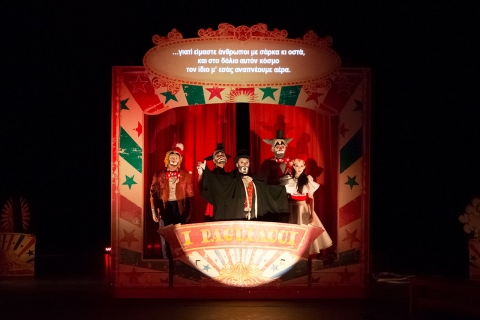
DIRECTOR
Isidoros Sideris
SETS/ COSTUMES
Yiannis Katranitsas
LIGHTING
Costas Blougouras
MUSIC PREPARATION AND ACCOMPANIMENT
Frixos Mortzos
MOVEMENT - CHOREOGRAPHY
Dionyssis Tsaftaridis
CANIO
Filippos Modinos
NEDDA
Zenia Argenti
TONIO
Petros Salatas
BEPPE
Nikos Stefanou
SILVIO
Kostis Rasidakis
TIME-HONORED PAGLIACCIO
Dionyssis Tsaftaridis
29 May 2016
Municipality of Acharnes
"Mikis Theodorakis" Theatre
Starts at 21.00 |

28 May 2016
SNFCC Visitors Center
Starts at 10.00 and 12.30 |
Admission is free

DIRECTOR
Isidoros Sideris
SETS/ COSTUMES
Yiannis Katranitsas
LIGHTING
Costas Blougouras
MUSIC PREPARATION AND ACCOMPANIMENT
Frixos Mortzos
MOVEMENT - CHOREOGRAPHY
Dionyssis Tsaftaridis
CANIO
Filippos Modinos
NEDDA
Maria Kokka
TONIO
Yannis Selitsaniotis
BEPPE
Yannis Kavouras
SILVIO
Kostis Rasidakis
TIME-HONORED PAGLIACCIO
Dionyssis Tsaftaridis
27 May 2016
Municipality of Eleusis
Old Oil Factory
Starts at 21.00 |
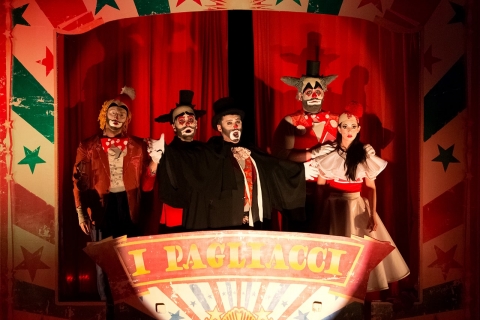
DIRECTOR
Isidoros Sideris
SETS/ COSTUMES
Yiannis Katranitsas
LIGHTING
Costas Blougouras
MUSIC PREPARATION AND ACCOMPANIMENT
Frixos Mortzos
MOVEMENT - CHOREOGRAPHY
Dionyssis Tsaftaridis
CANIO
Filippos Modinos
NEDDA
Georgia Eliopoulos
TONIO
Petros Salatas
BEPPE
Nikos Stefanou
SILVIO
Harris Andrianos
TIME-HONORED PAGLIACCIO
Dionyssis Tsaftaridis
25 May 2016
Municipality of Lycovrissi- Pefki
Municipal Theatre of Pefki
Starts at 20.00 |

22 May 2016
Starts at: 12.00 | (noon)
Free admission
STAVROS NIARCHOS FOUNDATION
CULTURAL CENTER
364 Syggrou Avenue, Kallithea
Box Office:
+30 213 0885700
Box Office email:
boxoffice@nationalopera.gr
Daily 09.00-21.00
info@nationalopera.gr