
Contact
ADDRESS
STAVROS NIARCHOS FOUNDATION
CULTURAL CENTER
364 Syggrou Avenue, Kallithea
TEL.
Box Office:
+30 213 0885700
Box Office email:
boxoffice@nationalopera.gr
Daily 09.00-21.00
info@nationalopera.gr
Register to our Newsletter





Το έργο
Το ποιητικό κείμενο του Τσέζαρε Στερμπίνι για την κωμωδία σε δύο πράξεις Ο κουρέας της Σεβίλλης βασίζεται στο ομότιτλο θεατρικό του Πιέρ-Ωγκυστέν Καρόν ντε Μπωμαρσαί αλλά και στο ποιητικό κείμενο του Τζουζέππε Πετροζελλίνι για την ομώνυμη όπερα του Τζοβάννι Παϊζιέλλο (1782). Η υπόθεση αφηγείται τα τεχνάσματα των οποίων μετέρχεται ο κόμης Αλμαβίβα προκειμένου τελικά να νυμφευτεί την αγαπημένη του Ροζίνα, που ο ηλικιωμένος κηδεμόνας της, Ντον Μπάρτολο, προορίζει για τον εαυτό του. Με την βοήθεια του κουρέα Φίγκαρο, ο οποίος μπαινοβγαίνει χωρίς δυσκολία στην κατοικία του Ντον Μπάρτολο, ο Αλμαβίβα επιτυγχάνει.
Ο συνθέτης
Ο Αντόνιο Τζοακίνο Ροσσίνι γεννήθηκε στο Πέζαρο το 1792. Το 1806, ως μαθητής συνέθεσε το πρώτο του λυρικό έργο. Το 1812 η όπερά του Η λυδία λίθος δόθηκε στην Σκάλα του Μιλάνου ενώ το 1813 με τον σοβαρό Ταγκρέδο και την κωμική Ιταλίδα στο Αλγέρι καθιερώθηκε επίσης εκτός ιταλικών πόλεων. Το 1814 ανέλαβε την διεύθυνση και των δύο θεάτρων της Νάπολης, για τα οποία συνέθεσε μερικά από τα σημαντικότερα έργα του. Πολλά από αυτά γράφηκαν για το ταλέντο της τραγουδίστριας Ιζαμπέλλας Κολμπράν, την οποία ο Ροσσίνι νυμφεύτηκε το 1822. Ξεχωρίζουν ο Οθέλλος, η Αρμίντα, o Μωυσής στην Αίγυπτο, η Ερμιόνη, Η κυρά της λίμνης, ο Μωάμεθ Β’ και η Τσελμίρα. Ταυτόχρονα, συνέθετε για άλλες πόλεις της Ιταλίας αριστουργήματα όπως Ο κουρέας της Σεβίλλης, Η Σταχτοπούτα, Η κλέφτρα κίσσα και Σεμίραμις. Το 1822 επισκέφθηκε τη Βιέννη, όπου συνάντησε τον Μπετόβεν. Ακολούθησε το Λονδίνο και τελικά το Παρίσι, όπου εγκαταστάθηκε το 1824. Το 1829 παρουσίασε τον Γουλιέλμο Τέλλο, την τελευταία του όπερα. Απογοητευμένος από την εξέλιξη της φωνητικής τέχνης τα υπόλοιπα 39 χρόνια της ζωής του συνέθετε μονάχα τραγούδια και έργα εκκλησιαστικής μουσικής. Από το 1855 ήταν μόνιμα εγκατεστημένος στο Παρίσι, όπου πέθανε το 1868. Το 1887 η σορός του μεταφέρθηκε στην Φλωρεντία.
Πρεμιέρες
Ο Κουρέας της Σεβίλλης παρουσιάστηκε για πρώτη φορά στο θέατρο Αρτζεντίνα της Ρώμης στις 20 Φεβρουαρίου 1816. Το 1833 αναφέρεται παράσταση της όπερας στο Σαν Τζάκομο της Κέρκυρας. Στην Αθήνα υπάρχουν στοιχεία για παράσταση–παρωδία (1837) και παρουσίαση της όπερας στο Φάληρο (1889). Ακόμα, αναφέρονται παραστάσεις στο Δημοτικό Θέατρο της Ερμούπολης της Σύρου (1872-73). Από την Εθνική Λυρική Σκηνή η όπερα πρωτοπαρουσιάστηκε στις 11 Μαρτίου 1942.
Α' Πράξη
Στην Σεβίλλη, ο κόμης Αλμαβίβα μεταμφιεσμένος ως φτωχός φοιτητής Λιντόρο, επιχειρεί να κατακτήσει την καρδιά της όμορφης Ροζίνας. Η κοπέλα μένει μαζί με τον προστάτη της δόκτορα Μπάρτολο, ο οποίος επίσης επιθυμεί να την νυμφευτεί. Προκειμένου να προσεγγίσει την Ροζίνα, ο Αλμαβίβα ζητά τη βοήθεια του Φίγκαρο, κουρέα της περιοχής, ο οποίος παλαιότερα υπήρξε στην υπηρεσία του. Ο Φίγκαρο προθυμοποιείται να τον βοηθήσει. Ο Ντον Μπαζίλιο, δάσκαλος της μουσικής, πληροφορεί τον φίλο του Ντον Μπάρτολο, πως στην Σεβίλλη έχει φτάσει ο Αλμαβίβα γοητευμένος από την ομορφιά της Ροζίνας. Τού εξηγεί όμως ότι γνωρίζει έναν σίγουρο τρόπο προκειμένου να εξουδετερώσει τον αντίπαλο: τη συκοφαντία. Ταυτόχρονα, βάσει σχεδίου του Φίγκαρο, ο Αλμαβίβα/Λιντόρο εισέρχεται στην κατοικία του Ντον Μπάρτολο ως μεθυσμένος στρατιώτης, προσκομίζοντας μια υποτιθέμενη άδεια διανυκτέρευσης από την στρατιωτική υπηρεσία. Ο Ντον Μπάρτολο αρνείται να συμμορφωθεί και από τη φασαρία που δημιουργείται, έρχεται η αστυνομία. Ωστόσο, ο αστυνομικός γνωρίζει τον κόμη Αλμαβίβα κι έτσι, προς τεράστια έκπληξη του Ντον Μπάρτολο, όχι μόνον δεν τον συλλαμβάνει, αλλά τον αφήνει ελεύθερο.
Β’ Πράξη
Ο Αλμαβίβα επιστρέφει στην κατοικία του Ντον Μπάρτολο αυτή τη φορά μεταμφιεσμένος ως δάσκαλος μουσικής, λέγοντας ότι ο Ντον Μπαζίλιο είναι ασθενής. Καταφθάνει ο Φίγκαρο για την καθημερινή περιποίηση του Ντον Μπάρτολο και καταφέρνει με τέχνη να πάρει το κλειδί του μπαλκονιού της Ροζίνας. Πρόθεσή του είναι να βοηθήσει τον Αλμαβίβα να ελευθερώσει την αγαπημένη του. Απροειδοποίητα φτάνει ο Ντον Μπαζίλιο, τον οποίο ο Αλμαβίβα δωροδοκεί, προκειμένου να φύγει χωρίς να δημιουργήσει πρόβλημα. Η Μπέρτα, οικονόμος του σπιτιού, σχολιάζει την ανοησία του αφεντικού της, που θέλει να νυμφευτεί γυναίκα τόσο νεώτερη του. Ο Ντον Μπάρτολο αποφασίζει να κινηθεί γρήγορα κι έτσι ζητά να έρθει συμβολαιογράφος να τελέσει τον γάμο. Δείχνει στη Ροζίνα την επιστολή που εκείνη είχε στείλει προς τον Λιντόρο και της λέει πως την πήρε από τον κόμη Αλμαβίβα. Η Ροζίνα αισθάνεται ότι ο αγαπημένος της την πρόδωσε και δέχεται να παντρευτεί το Ντον Μπάρτολο. Ξεσπά καταιγίδα. Φτάνουν ο Φίγκαρο και ο Αλμαβίβα από το μπαλκόνι προκειμένου να απαγάγουν τη Ροζίνα. Το μυστήριο της διπλής ταυτότητας του Αλμαβίβα/Λιντόρο λύνεται και το ζευγάρι συμφιλιώνεται. Εμφανίζεται ο Ντον Μπαζίλιο με τον συμβολαιογράφο, ο οποίος αντί του Ντον Μπάρτολο παντρεύει τον Αλμαβίβα με τη Ροζίνα. Αργοπορημένος έρχεται με την αστυνομία ο Ντον Μπάρτολο. Δεν έχει όμως άλλη επιλογή από το να υποταχθεί στο πεπρωμένο του. Ο γάμος έχει ήδη γίνει και όλοι είναι προσκεκλημένοι στο παλάτι του Κόμη, για να γιορτάσουν το χαρμόσυνο γεγονός.
| Καλλιτεχνικοί συντελεστές | |
|---|---|
| Καλλιτεχνικός διευθυντής | Μύρων Μιχαηλίδης |
| Μουσίκη διευθύνση | Τάσος Συμεωνίδης Γιώργος Αραβίδης Ραφαήλ Πυλαρινός Γιώργος Παπαδόπουλος |
| Αναβίωση σκηνοθεσίας | Κωνσταντίνα Ψωμά |
| Σκηνοθεσία,μετάφραση διασκευή κειμένου | Κωστής Παπαϊωάννου |
| Αναβίωση σκηνοθεσίας | Κωνσταντίνα Ψωμά |
| Σκηνικά | Σοφία Παντουβάκη Γιώργος Κολιός |
| Κοστούμια | Σοφία Παντουβάκη |
| Φωτισμοί | Χριστίνα Καμμά |
| Κινησιολογία | Θεμιστοκλής Παυλής |
| Ενορχήστρωση, διασκευή μουσικού κειμένου | Γιάννης Σαμπροβαλάκης |
| Μουσική προετοιμασία μονωδών | Σοφία Γκελασβίλι - Τροϊζου |
| Βοηθός Σκηνοθέτη | Μαρίνα Μέργου Ηρώ Κεραμοπούλου |
| Βοηθός σκηνογράφου, ενδυματολόγου | Μαρίζα Παγκάκη |
| Καλλιτεχνικές εκπαιδεύτριες | Χριστίνα Αυγερίδη Ζωή Λυμπεροπούλου Βενετία Νάση Κωνσταντίνα Στράνη |
| Διανομή | |
|---|---|
| Ροζίνα | Nίκη Χαζιράκη Διαμάντη Κριτσωτάκη Άρτεμις Μπόγρη |
| Κόμης Αλμαβίβα | Ιωάννης Κάβουρας Μανώλης Λορέντζος Άρης Προσπαθόπουλος |
| Δρ Μπάρτολο | Γιώργος Ματθαιακάκης Αναστάσιος Λαζάρου Νικόλαος Καραγκιαούρης |
| Φίγκαρο | Αρκάδιος Ρακόπουλος Γιάννης Σελητσανιώτης |
| Ντον Μπαζίλιο | Διονύσης Τσαντίνης Βασίλης Κωστόπουλος Επαμεινώνδας Ηλιόπουλος |
| Μπέρτα | Μαρία Βλαχοπούλου Βασιλική Κατσουπάκη |
| Χορευτές | Ευαγγελία Σδούκου Γιώργος Παπαθανασίου Ιωάννα-Σοφία Ζαρμπή Ελισάβετ Σπαχή |
*Με την Ορχήστρα Εκπαιδευτικών Προγραμμάτων της ΕΛΣ
| Συντελεστές παραγωγής | |
|---|---|
| ΕΘΝΙΚΗ ΛΥΡΙΚΗ ΣΚΗΝΗ 2013/14 Η όπερα διαδραστικά στα δημοτικά σχολεία; |
Τζοακίνο Ροσσίνι Ο κουρέας της Σεβίλλης |
| Καλλιτεχνικός Διευθυντής | Μύρων Μιχαηλίδης |
| Καλλιτεχνική συνεργάτις | Μαρία Μεταξάκη |
| Σχεδιασμός Έργου – Υπεύθυνη Περιοδείας | Αστερία Σαμουελιάν |
| Ομάδα Έργου | |
|---|---|
| Τεχνικός Διευθυντής | Σωκράτης Δαλαμάγκας |
| Υπεύθυνη Έργου | Σοφία Βογιατζίδου |
| Υπεύθυνος Σπουδών | Νίκος Βασιλείου |
| Συνεργάτις | Σοφία Μακρή |
| Γραμματειακή Υποστήριξη | Μίνα Σουλάντζου Επιμέλεια Εντύπων Νίκος Α. Δοντάς |
| Σχεδιασμός Λογοτύπου | Δρ Σοφία Παντουβάκη |
| Φωτογραφίες | Άρης Καμαρωτός |
| Εκτύπωση | Καμπύλη Α.Ε. |
Στον αρχικό σχεδιασμό και υλοποίηση του Έργου, συνεργάστηκαν και οι Μαριλένα Καρυτινού (Δ/νση Ανάπτυξης), Λίνα Τέντζερη (Υπεύθυνη Αναπτυξιακών Προγραμμάτων) και Λένα Λειβαδίτου (Γραμματειακή Υποστήριξη)

CONDUCTOR
Anastasios Symeonidis
CHOREOGRAPHER
Renato Zanella
SETS- COSTUMES
Katerina Angelopoulou
LIGHTING
Vinicio Cheli
LIGHTING DILIGENCE
Spyros Tzoras
Stratos Papanoussis
Natassa Siouta - Aleksander Neskov
Maria Kousouni (7,8/10)
Eleana Andreoudi (11, 13/10) - Vangelis Bikos
Popi Sakellaropoulou - Danilo Zeka
Vanessa Kourkoulou - Thanassis Solomos
Mania Karavassili - Elton Dimrochi
Anna Fragou - Agapios Agapiadis
Eleana Andreoudi (7,8/10)
Vicky Tsirogianni (11, 13/10) - Michalis Pappas
Eleni Kladou - Yiannis Benetos
With Orchestra, Principal Dancers, Soloists, Demi-Soloists and the Corps de Ballet of GNO
7, 8, 11, 13 October 2015
Pireaus Municipal Theater
Starts at 20.00 | 

CONDUCTOR
Elias Voudouris
CHORUS MASTER
Agathangelos Georgakatos
SOLOIST
Julia Souglakou
Tzina Poulou
Eleni Davou
Yannis Christopoulos
Petros Magoulas
10 October 2015
Olympia Theater
Starts at 20.00 |

SOLOISTS
Vassiliki Karayanni
Yannis Christopoulos
PIANO
Domna Chalari
4 October 2015
VISITORS CENTER OF THE SNFCC
Starts at 12.00 |
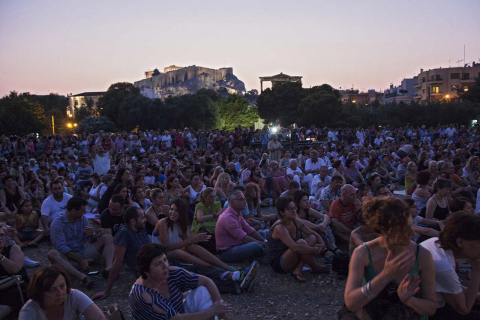
The GNO presents a series of free entrance events and educational programs
CONDUCTOR
Myron Michailidis
SOLOISTS
Cellia Costea
Dimitri Platanias
Dimitris Paksoglou
Concert with the Orchestra and Chorus of GNO
29 July 2015
Concert begins at 21.00 |
Archaeological site of the Temple of Olympian Zeus
Important change: The distribution of the priority coupons and the entrance
to the archeological site for the concert will be at the Arch of Hadrian's gate,
Amalias avenue due to works being done at Vass. Olgas avenue.
Free entrance for priority coupon holders. Coupons will be distributed at the entrance of the Olympian Temple two hours prior to the starting time of the concert.
![Orphée aux enfers [Orpheus in the Underworld]](/media/k2/items/cache/a8308085617c33314a3f8a8cd6417fdc_M.jpg?t=20200305_095608)
CONDUCTOR
Nikos Vassiliou
DIRECTOR - SETS
Stephan Grögler
LIBRETTO ADAPTATION
Pierre-Henri Loÿs
COSTUMES
Véronique Seymat
LIGHTING
Giannis Georgiou
SOUND DESIGN
Nathaniel Méchaly
OPINION PUBLIQUE
Ioanna Kokovika (15/7)
Stella Kavvadia (16/7)
ORPHÉE
Yannis Christopoulos (15, 16/7)
EURYDICE
Erophile Papadogia (15/7)
Elisabeth-Nefeli Papageorgiou (16/7)
PLUTON
Nikolaos Katsigiannis (15, 16/7)
CUPIDON
Christina Asimakopoulou (15/7)
Ioanna Karamolegou (16/7)
JUPITER
Nikos Masourakis (15, 16/7)
JUNON
Lydia Angelopoulou (15, 16/7)
MULTITALENT
Arkadios Rakopoulos (15, 16/7)
VOCAL ENSEMBLE
Christina Asimakopoulou (16/7)
Stella Kavvadia (15/7)
Ioanna Karamolegou (15/7)
Ioanna Kokovika (16/7)
Elisabeth-Nefeli Papageorgiou (15/7)
Erophile Papadogia (16/7)
Marialena Varela (15, 16/7)
Demosthenes Vlachos (15, 16/7)
15, 16 July 2015
Olympia Theatre
Performances begin at 20.00 |
Free entrance for priority coupon holders. Coupons will be distributed one hour prior the starting time of the performance at the entrance of the Olympia Theatre

DIRECTION
Angela-Kleopatra Saroglou
SETS
Yorgos Kollios
COSTUMES
Alexia Theodoraki
LIGHTS
Spyros Tzoras
PIANO
Yiannis Tsanakaliotis
DON JOSÉ
Dimitris Sigalos
ESCAMILLO/MORALLÈS
Yannis Selitsaniotis
ZUNIGA/LE DANCAÏRE
Costas Mavrogenis
CARMEN
Ines Zikou
MICAËLA/FRASQUITA
Despina Scarlatou
MERCÉDÈS
Eleni Davou
12 July 2015
Open-air Municipal Theatre of Zografou
Starts at 21.00 |
Free admission
27, 28 June 2015
Olympia Theatre
Performances begin at 20.00 |
Free entrance upon priority coupons that will be distributed at the entrance one hour before the starting time of the performance
20, 21 June 2015
Olympia Theatre
Performances begin at 20.00 |
Free entrance upon priority coupons that will be distributed at the entrance one hour before the starting time of the performance

CONDUCTOR
Lukas Karytinos
DIRECTOR - SETS - COSTUMES
Hugo de Ana
REVIVAL DIRECTOR
Katerina Petsatodi
VIDEO PROJECTION DESIGN
Ideogamma S.R.L. - Sergio Metalli
LIGHTING
Vinicio Cheli
CHORUS MASTER
Agathangelos Georgakatos
CHILDREN'S CHORUS MISTRESS
Mata Katsouli
FLORIA TOSCA
Dimitra Theodossiou (14, 17/6)
Cellia Costea (16, 18/6)
ΜARIO CAVARADOSSI
Roberto Aronica (14, 17/6)
Rudy Park (16, 18/6)
ΒARON SCARPIA
Dimitri Platanias (14, 16, 18/6)
Francesco Landolfi (17/6)
CESARE ANGELOTTI
Petros Magoulas (14, 16, 17, 18/6)
SACRISTAN
Dimitris Kassioumis (14, 16, 17, 18/6)
SCIARRONE
Vangelis Maniatis (14, 16, 17, 18/6)
SHEPHERD BOY
Christine Assimakopoulou (14, 16, 17, 18/6)
GAOLER
Christos Amvrazis (14, 16, 17, 18/6)
SPOLETTA
Charalambos Alexandropoulos (14, 16, 17, 18/6)
With the Orchestra, Chorus and Children's Chorus of the GNO within the framework of its educational program
14, 16, 17, 18 June 2015
ODEON OF HERODES ATTICUS
Production within the framework of the Athens Festival
Starts at 21.00 |

17 May 2015
7 June 2015
SNFCC Visitors Center
Starts at 12.00 |
Free admission
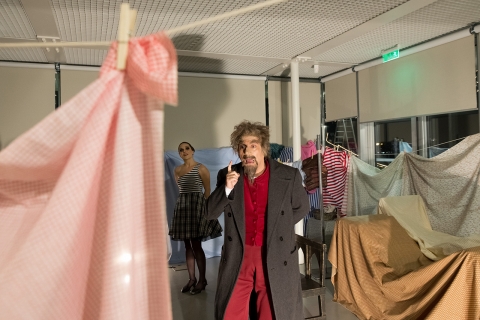
TRANSLATION
Dimitris Dimopoulos
DIRECTOR
Ion Kessoulis
SETS
George Kolios
COSTUMES
Avgi Delega
CHOREOGRAPHY
Dimitra Vlachou
CONDUCTOR, PIANO
Chrysanthos Alissafis
VESPETTA
Myrsini Margariti
PIMPINONE
Vangelis Maniatis
4 June 2015
MUNICIPAL CONSERVATORY OF MOSCHATO
Performances begin at 20.30 |
Admission is free

RESEARCH-PRESENTATION COORDINATION
Alexandros Efklidis, director
RÉPÉTITEUR, PIANO
Nikos Vasileiou
LOULA
Lydia Zervanou
GEORGE
Dimitris Nalbantis
FIROULIS
Christos Lazos
MERLOUTSOS
Kostis Rasidakis
XENI
Vassiliki Petrogianni
31 May 2015
SNFCC Visitors Center
Starts at 20.30 |
Free admission
The admission exams for the Greek National Opera Professional Dance School’s Preparatory Courses are intended for junior candidates aged from 12 to 17. The exams for the academic year 2026-2027 will be held on 27 September 2026. The time of the exams will be announced in the section “NEWS & ANNOUNCEMENTS” of the Greek National Opera’s official website (https://www.nationalopera.gr/nea-anakoinoseis) by Friday, 18 September 2026.
Candidates who will be tested in classical ballet and modern dance must wear:
Girls:
Ballet
Modern Dance
Boys:
Ballet & Modern Dance
Applications:
The application period for the admission exams for the GNO Dance School’s Preparatory Courses for Juniors is from 4 July to 15 September 2026. Applications can only be submitted via email at: This email address is being protected from spambots. You need JavaScript enabled to view it.
Eligible to participate in the exams are candidates who will have reached the age of twelve by 30/9/2026.
The secretariat will remain closed during the August holiday period.
You are kindly requested to send the supporting documents as clearly scanned attachments in PDF format.
Applications submitted after the specified deadline will not be accepted.
Necessary supporting documents:
You can download the application form here.
You are kindly requested to ensure that you have received the reference number for your application (via email), as you will need it to access the platform where the results will be announced.
Secretariat:
Stavros Niarchos Foundation Cultural Center
364 Syggrou Avenue, Kallithea
Tel. 213088-5971, -5974 (extension 5971, 5974)
E-mail: This email address is being protected from spambots. You need JavaScript enabled to view it.
Public hours: Monday-Friday 10.00-15.00
You are kindly requested to enter through the Dance School entrance. The School’s premises are on the 6th floor.

DIRECTION
Angela-Kleopatra Saroglou
SETS
Yorgos Kollios
COSTUMES
Alexia Theodoraki
LIGHTS
Spyros Tzoras
PIANO
Yiannis Tsanakaliotis
Sofia Tamvakopoulou
Domna Chalari
DON JOSÉ
Yannis Christopoulos
Philippos Modinos
Dimitris Paksoglou
Dimitris Sigalos
ESCAMILLO/MORALLÈS
Akis Laloussis
Arkadios Rakopoulos
Yannis Selitsaniotis
Dionyssis Tsantinis
ZUNIGA/LE DANCAÏRE
Nikolaos Karagiaouris
Giorgos Mattheakakis
Costas Mavrogenis
Dionyssis Tsantinis
CARMEN
Kassandra Dimopoulou
Diamanti Kritsotaki
Marissia Papalexiou
Ines Zikou
MICAËLA/FRASQUITA
Antonia Kalogirou
Sofia Mitropoulou
Despina Skarlatou
MERCÉDÈS
Eleni Davou
Athina Kastrinaki
Vicky Tsiliakou
Maria Vlachopoulou
29 January 2015
1, 13, 15, 27 February 2015
1, 7, 10, 19, 22, 29, 31 March 2015
3, 23, 25, 28 April 2015
7, 9, 13, 21, 23, 28 May 2015
In 22 cities around Greece, in the framework of the programme "Journey to the Stavros Niarchos Foundation Cultural Center"
Performances begin at 20.00 |
Free entrance for priority pass holders. Priority passes will be distributed one hour prior the starting time
29 January 2015 - Municipal Theatre, Lamia
1 February 2015 - Papacharalambios Hall, Nafpaktos
13 February 2015 - Municipal Conservatory, Larissa
15 February 2015 - Municipal Cultural Centre of Nea Ionia, Volos
27 February 2015 - Municipal Theatre, Corinth
1 March 2015 - Malliaropoulio Theatre, Tripoli
7 March 2015 - Dance Megaron, Kalamata
10 March 2015 - Cultural Centre, Sparta
19 March 2015 - Μunicipal Theatre, Corfu
22 March 2015 - "Vasileios Pyrsinellas" Hall, Ioannina
29 March 2015 - Cultural Centre of the Municipality of Grevena, Grevena
31 March 2015 - STAR Cinema Theatre, Veria
3 April 2015 - International Exhibition Centre, Kastoria
23 April 2015 - Municipal Theatre, Alexandroupoli
25 April 2015 - Music School Theatre, Drama
28 April 2015 - Aneton Theatre, Thessaloniki
7 May 2015 - Cultural Centre, Chania
9 May 2015 - ASTORIA Cinema Theatre, Heraklion
13 May 2015 - REX Cinema Theatre, Aghios Nikolaos
21 May 2015 - Papastratio Megaro, Agrinio
23 May 2015 - Cultural Centre, Preveza
28 May 2015 - Εvents Hall, 3rd Secondary School of Livadia, Livadia
[Carmen at a glance]
The composer / French composer Georges Bizet was born in Paris, in 1838 and died in Bougival, near Paris, in 1875. His first music teacher was his father, a vocal coach. Later, he studied at the Conservatoire de Paris, under Jacques Fromental Halévy, composer of the opera La Juive and whose daughter Bizet married in 1869. Apart from his studies at the Conservatoire, Georges Bizet also studied under Charles Gounod and was profoundly influenced by him. When in 1857 Bizet won the prestigious Grand Prix de Rome, he had already composed the noteworthy Symphony in C, which was performed for the very first time as late as 1935! The arrangement of his poor financial state was the first thing he did upon his return to Paris from the Villa Medici. His opera Les pêcheurs de perles (1863) was not as successful as anticipated. Following the Franco-Prussian War (1870), he was appointed chorus master at the Opéra de Paris, but he opted for the position of the rehearsal pianist & répétiteur at the Opéra Comique. In 1872 he scored his first great success thanks to the music he composed for the theatrical play L'Arlésienne, based on the eponymous novel by Alphonse Daudet. In March 1875 he experienced the tumultuous premiere of his Carmen, but did not enjoy the work’s huge recognition for he died only a few months later, at the age of 37.
The opera / Carmen is a four-act French opera and belongs to the genre opéra comique. It is based on a libretto written by Henry Meilhac and Ludovic Halévy, based on Prosper Mérimée's namesake novel (1845). The term opéra comique does not suggest the existence of comic elements, but relates to structural and aesthetical features, one of which being spoken dialogues. In 1875, on the occasion of presenting Carmen in Vienna, Ernest Guiraud replaced the dialogues with recitatives. Also, he added some dance scenes by borrowing music from the suite L'Arlésienne and from Bizet's opera La jolie fille de Perth.
Premieres / Carmen first premiered in Paris at the Salle Favart. It was staged by the Opéra Comique on 3 March 1875. The leading role was performed by Célestine Galli-Marié. The performance staged in Vienna (October 1875) was pivotal as to the acknowledgment of the opera. Carmen was included in the repertoire of the Greek National Opera in 1941-2, with Kitsa Damasioti as Carmen and Antonis Delendas and Nikos Glinos at the role of José, Fani Aidali as Micaëla and Spyros Kalogeras as Escamillo. Antiochos Evangelatos was the conductor.
Act I / At a café in a square of Seville, soldiers comment leisurely on the passers-by while waiting for Carmen who works nearby to show up. Eventually, Carmen comes and almost threatens her admirers by singing a song about the fickle nature of love. Reacting to Zuniga's persistent flirt, she takes refuge to Don José by kissing him in a provocative manner and throwing him a flower. Although Don José seems to be annoyed, he keeps the flower. Carmen and Mercédès return to work. Micaëla enters the stage and gives José a kiss and a letter from his mother. In the letter his mother designates Micaëla as a suitable wife for him. Voices are heard, Carmen and Zuniga enter the stage again, but this time in dispute. Carmen keeps a suspicious object in her bag, but she won't give any explanations. Zuniga asks Don José to lead her to prison. Once they are left alone, Carmen charms the officer and in exchange of liberating her she pledges her love to him. Don José helps her escape.
Act II / In a bar. Carmen and Mercédès work night shift. Escamillo, the famous toreador, arrives. Carmen seems to be disinterested, but she lets him hope. Don José arrives and Carmen joyously dances for his sake. When he explains to her that duty calls him and has to leave, Carmen is outraged; she remains unmoved both at the view of the flower of their first encounter and by his marriage proposal. As she explains, if he loves her, he must leave her and make a fresh start someplace else. The lieutenant of the guards (Zuniga) returns hoping to find Carmen alone. Don José, jealous of Zuniga, attacks him. Now he has no other choice but to follow Carmen.
Act III / In a deserted place where Carmen and Don José have taken refuge. Micaëla comes dispirited only to inform Don José that his mother is dying. When she perceives that someone is following her, she hides. The person following her is Escamillo who has come to claim Carmen. Don José is furious and challenges him in a duel. At this point Carmen interrupts them and Escamillo invites everyone to his next bullfighting. Micaëla turns up informing Don José that his mother is on her death bed. He threatens Carmen and follows the girl. Carmen is mesmerised by Escamillo and follows his voice.
Act IV / In Escamillo's dressing room. Carmen helps him in his preparations for the arena. Escamillo bids her a warm goodbye and enters the arena. Carmen is left alone and watches the bullfighting on a monitor. Don José rushes in and insists on her following him. She openly tells him that she does not love him and that she would rather die than losing her freedom. Through the arena she can hear the cheering crowd and she is about to dash and take a taste of Escamillo's triumph, but Don José stands in her way. She gives him back the ring he had given her as a token of his love and kills her the very moment the bull strikes a deadly blow at Escamillo.
Director's note / Although today Carmen is synonymous with Spain, nobody remembers that its composer had never visited the Iberian Peninsula before composing this work that was to reserve him a place amongst the most celebrated opera composers. In the abridged version of the work we prepared for the Suitcase Opera, our aim was to narrate the story from a different angle with regard to Spain and its particular character. We kept intact the opera's dramatic core in which the dynamic rapport that develops among the main characters is skilfully outlined through music and dramatic performance. However, the grand spectacle and the vivid, crowded scenes were left out. In essence, every abridged version is a new creation. Consequently, our intent was to place our own Carmen in the Spain of the 1990s, in Seville; a city whose history is always evident and where the past encounters the present, and both engage in a discourse with daily life.
Almodovar's films are our focal point of reference as far the aesthetics are concerned. Through his cinematography we saw Spain from a different viewpoint and we became familiarised with the country, perhaps more than Bizet was in his time. Our version presents two different worlds that meet and eventually come into conflict: on the one hand we see the conservative, Catholic and provincial Spain (especially Southern Spain); on the other hand there is the emancipated Spain and its big cities of the post-Franco era, the way it is depicted in Almodovar's films. The gypsy element was consciously omitted from our narration because in the past it bore different connotations from today and especially because in the original text it is used as an explanation for the deviant nature of Carmen and her comrades. Our decision to dispense with this outdated pseudo-exotic element did not emerge from the need to be politically correct, but rather from our choice to be more loyal to the spirit of the work and our decision to depict Carmen as a contemporary woman who is trying to survive by working day and night. She is a woman who knows the nitty-gritty of the world both under the bright light of day and in the darkness of night, making her a lot more experienced than Don José who grew up in a safe bourgeois environment. Carmen does not aspire to have a family and children; she knows that her desires would cost her dearly. However, she had never imagined the price would be so high…
The GNO School of Dance’s curriculum is based on the philosophy of treating movement as a means of strengthening students’ imagination and creativity, and on the need to develop special skills both on a technical and an artistic level. Moreover, the curriculum is designed to help participants understand the techniques and artistic forms of expression of classical ballet and other dance forms.
The education provided places emphasis on the acquaintance with and understanding of the history of dance and performative arts and their evolution over time. Participants in the programme have the chance to also familiarize themselves with other art forms, such as applied or audio-visual arts, with the goal of enriching their sensory world and their perception of the art of dance.
During their studies students learn to work together in groups while exercising their critical skills in regards to their expectations about their professional future in classical and/or modern dance. At the same time, an important goal of the programme is to encourage cultural and educational exchanges with other Organizations at a local and international level. Through such exchanges, students have the chance to get a clear and concise picture of the contemporary creative universe and their position in it.
Curriculum
The Greek National Opera School of Dance runs preparatory and advanced professional courses for dancers and dance teachers.
Preparatory courses (for students aged 12-17) serve as a preparation hub for those aiming for admission to the professional courses.
Professional courses in dance (for students aged above 15 years) and dance teacher training (for students aged above 18 years) last for three years. The courses for dancers are open to students with a middle-school diploma and courses for dance teachers are open to students with a high-school diploma.
Subjects taught in the professional courses:
Classical Ballet
Modern & Contemporary Dance
Classical Ballet Repertoire
Modern Dance Repertoire
Pas de Deux
Rhythmics
Improvisation & Elements of Choreography
Dance teacher training (for dance teachers)
Greek Dances
Applied anatomy and physiology/myology?
Theory and analysis of modern ballet techniques
Theory and analysis of modern dance techniques
Historical & theatrical dances (character)
Music
Educational psychology (for the department of Dance Teachers)
Choreography – composition
Subjects taught in the preparatory courses:
Classical Ballet
Modern dance
Classical ballet repertory/Pas de Deux
Rhythmics

CONDUCTOR
Elias Voudouris
SOLOISTS
Cellia Costea (soprano)
Myrtò Papatanasiu (soprano)
Andrew Haji (tenor)
28 May 2015
Οlympia Theatre
With the kind support of the Canadian Embassy in Athens, the Canadian Opera Company and the Metropolitan Opera Guild
Starts at 20.00 |
Head of Studies
Yorghos Matskaris
Director of Studies' Assistant
Alkistis Lala
School's Secretary
Georgia Theodorelou
Avrokomi Kloukina
Teachers of the
Professional & Preparatory Section
Fotis Diamantopoulos
Yannis Zarotis
Artemis Ignatiou
Lydia Kagiou
Thanasis Kainourgios
Athanasia Kanellopoulou
Eleni Kladou
Sofia Kontosi
Alkistis Lala
Elizaveta Basova
Athanasia Nerantzi
Bettina Panagiotara
Dimitra Svigkou
Vasiliki Spyridonos
Olga Tornaritou
Yannis Tsigris
Nancy Charmanta
Ourania Fovou
Teachers of Seminar Courses
Rena Papantoniou
Répétiteurs
Zelitska Karanovitz
Giorgos Kontovas
Alexandros Pourloukakis
Betty Sadamouri
Loukas Tsolakian

DIRECTION
Angela-Kleopatra Saroglou
SETS
Yorgos Kollios
COSTUMES
Alexia Theodoraki
LIGHTS
Spyros Tzoras
PIANO
Domna Chalari
DON JOSÉ
Dimitris Sigalos
ESCAMILLO/MORALLÈS
Yannis Selitsaniotis
ZUNIGA/LE DANCAÏRE
Nikolaos Karagiaouris
CARMEN
Diamanti Kritsotaki
MICAËLA/FRASQUITA
Antonia Kalogirou
MERCÉDÈS
Athina Kastrinaki
28 May 2015
EVENTS HALL, 3rd SECONDARY SCHOOL OF LIVADIA
Performances begin at 20.00 |
Free entrance for priority pass holders. Priority passes will be distributed one hour prior the starting time

CONDUCTOR
Elias Voudouris
DIRECTOR - SETS - COSTUMES - LIGHTING
Nikos S. Petropoulos
CHOREOGRAPHY
Petros Gallias
CHORUS MASTER
Agathangelos Georgakatos
VIOLETTA VALÉRY
Myrtò Papatanasiu (15, 17, 22/5)
Francesca Dotto (16, 20, 23/5)
FLORA BERVOIX
Angelica Cathariou (15, 16, 17/5)
Irini Athanassiou (20, 22, 23/5)
ANNINA
Alexandra Mattheoudaki (15, 17, 22/5)
Ekaterini Krassa (16, 20, 23/5)
ALFREDO GERMONT
Antonis Koroneos (15, 17, 22/5)
Yannis Christopoulos (16, 20, 23/5)
GIORGIO GERMONT
Dimitri Platanias (15, 17, 22/5)
Dionissis Sourbis (16, 20, 23/5)
GASTONE
Alex Tsilogiannis (15, 17, 22/5)
Nikos Tsaousis (16, 20, 23/5)
BARONE DOUPHOL
Kostas Dotsikas (15, 17, 22/5)
Christos Amvrazis (16, 20, 23/5)
MARCHESE D'OBIGNY
Nikolaos Karagkiaouris (15, 17. 22/5)
Vassilis Kostopoulos (16, 20, 23/5)
DOTTORE GRENVIL
Dionyssis Tsantinis (15, 17, 22/5)
Pavlos Sampsakis (16, 20, 23/5)
GIUSEPPE
Thanassis Evangelou (15, 17, 22/5)
Manolis Lorentzos (16, 20, 23/5)
COMMISSIONER / SERVANT
Theodore Moraitis (15, 17, 22/5)
Vasilis Asimakopoulos (16, 20, 23/5)
With the GNO Orchestra and Chorus and members of the GNO Ballet
15, 16, 17, 20, 22, 23 May 2015
Olympia Theatre
Performances begin at 20.00 |
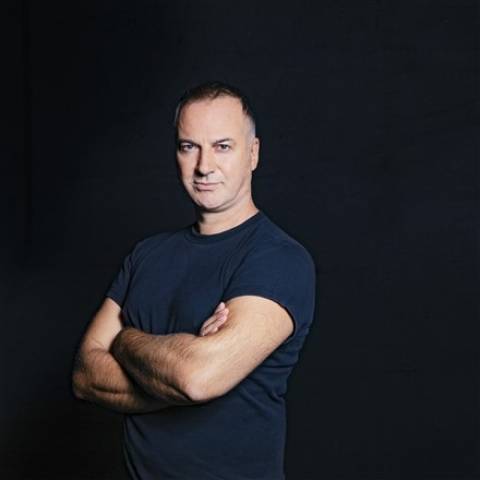
"It is important to know why one chooses this silent language to express oneself. To know that the discovery of a person is conducted through the body, by studying its uniqueness. To know why one chooses to pursue this lonely yet precious career on the stage, travelling into the furthest reaches of oneself, into areas untapped by everyday life! Beautiful, divine, magical… Never forget to be a student!"

DIRECTION
Angela-Kleopatra Saroglou
SETS
Yorgos Kollios
COSTUMES
Alexia Theodoraki
LIGHTS
Spyros Tzoras
PIANO
Sofia Tamvakopoulou
DON JOSÉ
Dimitris Sigalos
ESCAMILLO/MORALLÈS
Yannis Selitsaniotis
ZUNIGA/LE DANCAÏRE
Nikolaos Karagiaouris
CARMEN
Diamanti Kritsotaki
MICAËLA/FRASQUITA
Sofia Mitropoulou
MERCÉDÈS
Vicky Tsiliakou
23 May 2015
CULTURAL CENTRE, PREVEZA
Performances begin at 20.00 |
Free entrance for priority pass holders. Priority passes will be distributed one hour prior the starting time
[Carmen at a glance]
The composer / French composer Georges Bizet was born in Paris, in 1838 and died in Bougival, near Paris, in 1875. His first music teacher was his father, a vocal coach. Later, he studied at the Conservatoire de Paris, under Jacques Fromental Halévy, composer of the opera La Juive and whose daughter Bizet married in 1869. Apart from his studies at the Conservatoire, Georges Bizet also studied under Charles Gounod and was profoundly influenced by him. When in 1857 Bizet won the prestigious Grand Prix de Rome, he had already composed the noteworthy Symphony in C, which was performed for the very first time as late as 1935! The arrangement of his poor financial state was the first thing he did upon his return to Paris from the Villa Medici. His opera Les pêcheurs de perles (1863) was not as successful as anticipated. Following the Franco-Prussian War (1870), he was appointed chorus master at the Opéra de Paris, but he opted for the position of the rehearsal pianist & répétiteur at the Opéra Comique. In 1872 he scored his first great success thanks to the music he composed for the theatrical play L'Arlésienne, based on the eponymous novel by Alphonse Daudet. In March 1875 he experienced the tumultuous premiere of his Carmen, but did not enjoy the work’s huge recognition for he died only a few months later, at the age of 37.
The opera / Carmen is a four-act French opera and belongs to the genre opéra comique. It is based on a libretto written by Henry Meilhac and Ludovic Halévy, based on Prosper Mérimée's namesake novel (1845). The term opéra comique does not suggest the existence of comic elements, but relates to structural and aesthetical features, one of which being spoken dialogues. In 1875, on the occasion of presenting Carmen in Vienna, Ernest Guiraud replaced the dialogues with recitatives. Also, he added some dance scenes by borrowing music from the suite L'Arlésienne and from Bizet's opera La jolie fille de Perth.
Premieres / Carmen first premiered in Paris at the Salle Favart. It was staged by the Opéra Comique on 3 March 1875. The leading role was performed by Célestine Galli-Marié. The performance staged in Vienna (October 1875) was pivotal as to the acknowledgment of the opera. Carmen was included in the repertoire of the Greek National Opera in 1941-2, with Kitsa Damasioti as Carmen and Antonis Delendas and Nikos Glinos at the role of José, Fani Aidali as Micaëla and Spyros Kalogeras as Escamillo. Antiochos Evangelatos was the conductor.
Act I / At a café in a square of Seville, soldiers comment leisurely on the passers-by while waiting for Carmen who works nearby to show up. Eventually, Carmen comes and almost threatens her admirers by singing a song about the fickle nature of love. Reacting to Zuniga's persistent flirt, she takes refuge to Don José by kissing him in a provocative manner and throwing him a flower. Although Don José seems to be annoyed, he keeps the flower. Carmen and Mercédès return to work. Micaëla enters the stage and gives José a kiss and a letter from his mother. In the letter his mother designates Micaëla as a suitable wife for him. Voices are heard, Carmen and Zuniga enter the stage again, but this time in dispute. Carmen keeps a suspicious object in her bag, but she won't give any explanations. Zuniga asks Don José to lead her to prison. Once they are left alone, Carmen charms the officer and in exchange of liberating her she pledges her love to him. Don José helps her escape.
Act II / In a bar. Carmen and Mercédès work night shift. Escamillo, the famous toreador, arrives. Carmen seems to be disinterested, but she lets him hope. Don José arrives and Carmen joyously dances for his sake. When he explains to her that duty calls him and has to leave, Carmen is outraged; she remains unmoved both at the view of the flower of their first encounter and by his marriage proposal. As she explains, if he loves her, he must leave her and make a fresh start someplace else. The lieutenant of the guards (Zuniga) returns hoping to find Carmen alone. Don José, jealous of Zuniga, attacks him. Now he has no other choice but to follow Carmen.
Act III / In a deserted place where Carmen and Don José have taken refuge. Micaëla comes dispirited only to inform Don José that his mother is dying. When she perceives that someone is following her, she hides. The person following her is Escamillo who has come to claim Carmen. Don José is furious and challenges him in a duel. At this point Carmen interrupts them and Escamillo invites everyone to his next bullfighting. Micaëla turns up informing Don José that his mother is on her death bed. He threatens Carmen and follows the girl. Carmen is mesmerised by Escamillo and follows his voice.
Act IV / In Escamillo's dressing room. Carmen helps him in his preparations for the arena. Escamillo bids her a warm goodbye and enters the arena. Carmen is left alone and watches the bullfighting on a monitor. Don José rushes in and insists on her following him. She openly tells him that she does not love him and that she would rather die than losing her freedom. Through the arena she can hear the cheering crowd and she is about to dash and take a taste of Escamillo's triumph, but Don José stands in her way. She gives him back the ring he had given her as a token of his love and kills her the very moment the bull strikes a deadly blow at Escamillo.
Director's note / Although today Carmen is synonymous with Spain, nobody remembers that its composer had never visited the Iberian Peninsula before composing this work that was to reserve him a place amongst the most celebrated opera composers. In the abridged version of the work we prepared for the Suitcase Opera, our aim was to narrate the story from a different angle with regard to Spain and its particular character. We kept intact the opera's dramatic core in which the dynamic rapport that develops among the main characters is skilfully outlined through music and dramatic performance. However, the grand spectacle and the vivid, crowded scenes were left out. In essence, every abridged version is a new creation. Consequently, our intent was to place our own Carmen in the Spain of the 1990s, in Seville; a city whose history is always evident and where the past encounters the present, and both engage in a discourse with daily life.
Almodovar's films are our focal point of reference as far the aesthetics are concerned. Through his cinematography we saw Spain from a different viewpoint and we became familiarised with the country, perhaps more than Bizet was in his time. Our version presents two different worlds that meet and eventually come into conflict: on the one hand we see the conservative, Catholic and provincial Spain (especially Southern Spain); on the other hand there is the emancipated Spain and its big cities of the post-Franco era, the way it is depicted in Almodovar's films. The gypsy element was consciously omitted from our narration because in the past it bore different connotations from today and especially because in the original text it is used as an explanation for the deviant nature of Carmen and her comrades. Our decision to dispense with this outdated pseudo-exotic element did not emerge from the need to be politically correct, but rather from our choice to be more loyal to the spirit of the work and our decision to depict Carmen as a contemporary woman who is trying to survive by working day and night. She is a woman who knows the nitty-gritty of the world both under the bright light of day and in the darkness of night, making her a lot more experienced than Don José who grew up in a safe bourgeois environment. Carmen does not aspire to have a family and children; she knows that her desires would cost her dearly. However, she had never imagined the price would be so high…
The Children’s Chorus of the Greek National Opera was founded in September 2012. It has an exclusively educational character and its goals, among others, are the study of choral singing, the cultivation of the wider musical education of its members and the development of the feeling of partnership and cooperation. Its priority is also the experiential music education, which is achieved through the participation of the children in performances, concerts and various artistic activities of the organisation.
Till today, the GNO Children’s Chorus has participated to great acclaim in such productions of the Greek National Opera as La bohème, Tosca, Werther, Otello, Die Zauberflöte, Carmen, Wozzeck, The Cunning Little Vixen, The Nutcracker, Suor Angelica, Carmencitas, The Murderess, Halima, Leporella, The Magic Pillows, Falstaff, Juditha triumphans, Gianni Schicchi, Le Voyage dans la Lune, Cavalleria rusticana, Pagliacci, as well as in the works The Era of Melissanthi, Magnus Eroticus and Sweet Movie by Manos Hadjidakis and 2nd Symphony by Mikis Theodorakis, in such venues as Olympia Theatre, Odeon of Herodes Atticus, Alexandra Trianti Hall (Athens Concert Hall), Stavros Niarchos Hall and Alternative Hall of the GNO (SNFCC), etc. In addition, the Chorus has participated in productions that were presented online such as When Will, When Will Summer Come, No! You Won't Get Up Our Noses!, A Shepherdess I Loved... and has given numerous concerts, performing a very extensive repertoire, at the Presidential Mansion, the Acropolis Museum, the Pnyx, the Archaeological site of Brauron (Vravrona), the Stavros Niarchos Foundation Cultural Center, etc.
The Children’s Chorus’ first mistress was soprano Mata Katsouli. Since autumn 2017, the ensemble has been directed by Konstantina Pitsiakou. The Chorus comprises about one hundred children aged 6 to 15 years old from all Attica. The participation is free of admission, while the members are selected through an audition, which takes place after a relevant announcement by the Greek National Opera.
A graduate of the Music Department of the University of Cardiff (Wales), she studied with a scholarship methodology of teaching, chorus conducting, classical singing and piano at the International Pedagogical Institute Zoltán Kodály (Franz Liszt Academy, Kecskemét, Hungary). Moreover, in Athens she studied singing (diploma) with Christina Yannakopoulou. She has sung with the Patras Contemporary Music Ensemble and the String Quartet of the Municipal Conservatory of Patras, while she has given concerts of Early music with the ensembles Ex Silentio and Os Orphicum. She has collaborated with the Choruses of the GNO and the Hellenic Broadcasting Corporation, as well as with the Patras Municipal Conservatory Chamber Chorus. She is a member of the Equábili vocal ensemble. She has taught at the Municipal Conservatory of Patras, as well as at the Drama Schools of the National Theatre of Greece and the Patras Municipal and Regional Theatre. Since September 2017 she is the mistress of the GNO Children’s Chorus with numerous productions at the Stavros Niarchos Hall and the Alternative Stage, Odeon of Herodes Atticus, Athens Concert Hall.
GNO Children's Chorus - Active Members 2025-2026
Marianna Adelfoulakou
Nikolas Akritidis
Melina Asteriadi
Zoe Balioukou
Evaggelos Bartsokas
Angelos Batagiannis
Dimitra Bereti
Stathis-Maximos Bikoulis
Vasileios Boutas
Vasiliki Chadio
Alkinoos Chnarakis
Margarita Dokouzi
Rafaela Dokouzi
Evangelos Drampalis
Ariadne Emirza
Iason Fragkopoulos
Polytimi Fylaktidi
Melina Georganta
Eleni Georgiadou
Marietta Gerakari
Helen Giannakopoulou
Faidra-Yvonni Giannopoulou
Freideriki-Nantin Giannopoulou
Maro Giouspasoglou-Stavropoulou
Aggelina Istaurioglou
Daphne Kampoukou
Amalia Karagkiozova
Christina Karantakou
Matina Karayiannopoulou
Nicole Karlovych
Anna Kataga
Athina Katsari
Antonia Katsiki
Myrto Kokoromyti
Ira-Georgia Konsta
Εrina Konstantopoulou
Konstantina Korompili
Xenia Kostopoulou
Maria-Eleni Koulocheri
Marianna Koursoumi
Christina Kovaiou
Ioanna-Maria Kyriaki-Bitzarou
Dafni Kyrimi
Filippos Labrinos
Pari Ladakakou
Magdalini Lamprou
Marios Mataragkas
Ilia-Zoi Mavrokefalou
Iakovos Meletios
Petros Mililis
Ioanna-Maria Mouka
Myrsini Nasiakou
Eleni-Eirini Nasiopoulou
Sofia Natsiou
Olia Orfanioti
Sotiria Palla
Sofia Panou
Aegle Papadiamandi
Ioanna Papalexi
Elisavet Papamarkou
Eleni Papanikolaou
Anna Parthenidi
Efraimia Patsou
Panagiotis Perdikis
Lyda Perraki
Eirini Petrokokkinou
Tommaso-Filippos Plevrakis
Katerina Prigkopoulou
Theodora Rackham
Theodoros Rackham
Sofia Rantavella
Ariana Rementza
Panagiota Samiou
Eirini Samouchou
Dimitra Schiza
Vasiliki Sinanoglou
Eudokia Sklaveniti
Yvonni Sofaki
Olga Sofogianni
Artemis Sopilis-Köksal
Eirini Spinou
Pelenope Stergianou
Filothei Terzi
Amalia Tsaknia
Angelos Tsalikis
Aimilia Tsiledaki-Gkoutromichou
Lydia Tsoumou

IDEA - CONCEPT
Isma Toulatos
DIRECTION
Konstantinos Rigos
SPECIAL GUEST
Loukia
DILIGENCE OF COSTUMES
Giorgos Segredakis
TRANSFORMATIONS' SUPERVISOR
Achilleas Charitos
LIGHTING DESIGN
Christos Tziogas
MUSIC SUPERVISOR - PIANO
Dimitris Giakas
VIOLIN
Panagiotis Tziotis
21 May 2015
Athens Conservatory
Starts at 21.00 |
Free entrance upon priority coupons that will be distributed at the entrance one hour before the starting time of the performance

DIRECTION
Angela-Kleopatra Saroglou
SETS
Yorgos Kollios
COSTUMES
Alexia Theodoraki
LIGHTS
Spyros Tzoras
PIANO
Sofia Tamvakopoulou
DON JOSÉ
Dimitris Sigalos
ESCAMILLO/MORALLÈS
Yannis Selitsaniotis
ZUNIGA/LE DANCAÏRE
Nikolaos Karagiaouris
CARMEN
Diamanti Kritsotaki
MICAËLA/FRASQUITA
Sofia Mitropoulou
MERCÉDÈS
Vicky Tsiliakou
21 May 2015
PAPASTRATIO MEGARO, AGRINIO
Performances begin at 20.00 |
Free entrance for priority pass holders. Priority passes will be distributed one hour prior the starting time
[Carmen at a glance]
The composer / French composer Georges Bizet was born in Paris, in 1838 and died in Bougival, near Paris, in 1875. His first music teacher was his father, a vocal coach. Later, he studied at the Conservatoire de Paris, under Jacques Fromental Halévy, composer of the opera La Juive and whose daughter Bizet married in 1869. Apart from his studies at the Conservatoire, Georges Bizet also studied under Charles Gounod and was profoundly influenced by him. When in 1857 Bizet won the prestigious Grand Prix de Rome, he had already composed the noteworthy Symphony in C, which was performed for the very first time as late as 1935! The arrangement of his poor financial state was the first thing he did upon his return to Paris from the Villa Medici. His opera Les pêcheurs de perles (1863) was not as successful as anticipated. Following the Franco-Prussian War (1870), he was appointed chorus master at the Opéra de Paris, but he opted for the position of the rehearsal pianist & répétiteur at the Opéra Comique. In 1872 he scored his first great success thanks to the music he composed for the theatrical play L'Arlésienne, based on the eponymous novel by Alphonse Daudet. In March 1875 he experienced the tumultuous premiere of his Carmen, but did not enjoy the work’s huge recognition for he died only a few months later, at the age of 37.
The opera / Carmen is a four-act French opera and belongs to the genre opéra comique. It is based on a libretto written by Henry Meilhac and Ludovic Halévy, based on Prosper Mérimée's namesake novel (1845). The term opéra comique does not suggest the existence of comic elements, but relates to structural and aesthetical features, one of which being spoken dialogues. In 1875, on the occasion of presenting Carmen in Vienna, Ernest Guiraud replaced the dialogues with recitatives. Also, he added some dance scenes by borrowing music from the suite L'Arlésienne and from Bizet's opera La jolie fille de Perth.
Premieres / Carmen first premiered in Paris at the Salle Favart. It was staged by the Opéra Comique on 3 March 1875. The leading role was performed by Célestine Galli-Marié. The performance staged in Vienna (October 1875) was pivotal as to the acknowledgment of the opera. Carmen was included in the repertoire of the Greek National Opera in 1941-2, with Kitsa Damasioti as Carmen and Antonis Delendas and Nikos Glinos at the role of José, Fani Aidali as Micaëla and Spyros Kalogeras as Escamillo. Antiochos Evangelatos was the conductor.
Act I / At a café in a square of Seville, soldiers comment leisurely on the passers-by while waiting for Carmen who works nearby to show up. Eventually, Carmen comes and almost threatens her admirers by singing a song about the fickle nature of love. Reacting to Zuniga's persistent flirt, she takes refuge to Don José by kissing him in a provocative manner and throwing him a flower. Although Don José seems to be annoyed, he keeps the flower. Carmen and Mercédès return to work. Micaëla enters the stage and gives José a kiss and a letter from his mother. In the letter his mother designates Micaëla as a suitable wife for him. Voices are heard, Carmen and Zuniga enter the stage again, but this time in dispute. Carmen keeps a suspicious object in her bag, but she won't give any explanations. Zuniga asks Don José to lead her to prison. Once they are left alone, Carmen charms the officer and in exchange of liberating her she pledges her love to him. Don José helps her escape.
Act II / In a bar. Carmen and Mercédès work night shift. Escamillo, the famous toreador, arrives. Carmen seems to be disinterested, but she lets him hope. Don José arrives and Carmen joyously dances for his sake. When he explains to her that duty calls him and has to leave, Carmen is outraged; she remains unmoved both at the view of the flower of their first encounter and by his marriage proposal. As she explains, if he loves her, he must leave her and make a fresh start someplace else. The lieutenant of the guards (Zuniga) returns hoping to find Carmen alone. Don José, jealous of Zuniga, attacks him. Now he has no other choice but to follow Carmen.
Act III / In a deserted place where Carmen and Don José have taken refuge. Micaëla comes dispirited only to inform Don José that his mother is dying. When she perceives that someone is following her, she hides. The person following her is Escamillo who has come to claim Carmen. Don José is furious and challenges him in a duel. At this point Carmen interrupts them and Escamillo invites everyone to his next bullfighting. Micaëla turns up informing Don José that his mother is on her death bed. He threatens Carmen and follows the girl. Carmen is mesmerised by Escamillo and follows his voice.
Act IV / In Escamillo's dressing room. Carmen helps him in his preparations for the arena. Escamillo bids her a warm goodbye and enters the arena. Carmen is left alone and watches the bullfighting on a monitor. Don José rushes in and insists on her following him. She openly tells him that she does not love him and that she would rather die than losing her freedom. Through the arena she can hear the cheering crowd and she is about to dash and take a taste of Escamillo's triumph, but Don José stands in her way. She gives him back the ring he had given her as a token of his love and kills her the very moment the bull strikes a deadly blow at Escamillo.
Director's note / Although today Carmen is synonymous with Spain, nobody remembers that its composer had never visited the Iberian Peninsula before composing this work that was to reserve him a place amongst the most celebrated opera composers. In the abridged version of the work we prepared for the Suitcase Opera, our aim was to narrate the story from a different angle with regard to Spain and its particular character. We kept intact the opera's dramatic core in which the dynamic rapport that develops among the main characters is skilfully outlined through music and dramatic performance. However, the grand spectacle and the vivid, crowded scenes were left out. In essence, every abridged version is a new creation. Consequently, our intent was to place our own Carmen in the Spain of the 1990s, in Seville; a city whose history is always evident and where the past encounters the present, and both engage in a discourse with daily life.
Almodovar's films are our focal point of reference as far the aesthetics are concerned. Through his cinematography we saw Spain from a different viewpoint and we became familiarised with the country, perhaps more than Bizet was in his time. Our version presents two different worlds that meet and eventually come into conflict: on the one hand we see the conservative, Catholic and provincial Spain (especially Southern Spain); on the other hand there is the emancipated Spain and its big cities of the post-Franco era, the way it is depicted in Almodovar's films. The gypsy element was consciously omitted from our narration because in the past it bore different connotations from today and especially because in the original text it is used as an explanation for the deviant nature of Carmen and her comrades. Our decision to dispense with this outdated pseudo-exotic element did not emerge from the need to be politically correct, but rather from our choice to be more loyal to the spirit of the work and our decision to depict Carmen as a contemporary woman who is trying to survive by working day and night. She is a woman who knows the nitty-gritty of the world both under the bright light of day and in the darkness of night, making her a lot more experienced than Don José who grew up in a safe bourgeois environment. Carmen does not aspire to have a family and children; she knows that her desires would cost her dearly. However, she had never imagined the price would be so high…
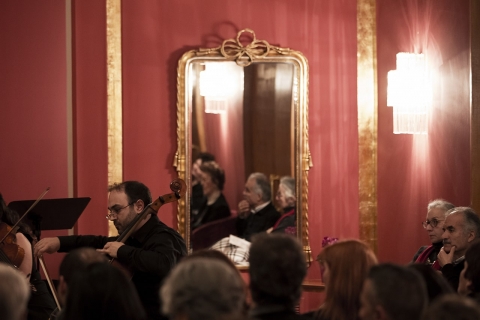
17 May 2015
Olympia Theatre's Foyer
Performances begin at 18.00 |
General admission: 5€

DIRECTION
Angela-Kleopatra Saroglou
SETS
Yorgos Kollios
COSTUMES
Alexia Theodoraki
LIGHTS
Spyros Tzoras
PIANO
Yiannis Tsanakaliotis
DON JOSÉ
Dimitris Paksoglou
ESCAMILLO/MORALLÈS
Yannis Selitsaniotis
ZUNIGA/LE DANCAÏRE
Costas Mavrogenis
CARMEN
Ines Zikou
MICAËLA/FRASQUITA
Sofia Mitropoulou
MERCÉDÈS
Eleni Davou
13 May 2015
REX CINEMA THEATRE, AGHIOS NIKOLAOS
Performances begin at 20.00 |
Free entrance for priority pass holders. Priority passes will be distributed one hour prior the starting time
[Carmen at a glance]
The composer / French composer Georges Bizet was born in Paris, in 1838 and died in Bougival, near Paris, in 1875. His first music teacher was his father, a vocal coach. Later, he studied at the Conservatoire de Paris, under Jacques Fromental Halévy, composer of the opera La Juive and whose daughter Bizet married in 1869. Apart from his studies at the Conservatoire, Georges Bizet also studied under Charles Gounod and was profoundly influenced by him. When in 1857 Bizet won the prestigious Grand Prix de Rome, he had already composed the noteworthy Symphony in C, which was performed for the very first time as late as 1935! The arrangement of his poor financial state was the first thing he did upon his return to Paris from the Villa Medici. His opera Les pêcheurs de perles (1863) was not as successful as anticipated. Following the Franco-Prussian War (1870), he was appointed chorus master at the Opéra de Paris, but he opted for the position of the rehearsal pianist & répétiteur at the Opéra Comique. In 1872 he scored his first great success thanks to the music he composed for the theatrical play L'Arlésienne, based on the eponymous novel by Alphonse Daudet. In March 1875 he experienced the tumultuous premiere of his Carmen, but did not enjoy the work’s huge recognition for he died only a few months later, at the age of 37.
The opera / Carmen is a four-act French opera and belongs to the genre opéra comique. It is based on a libretto written by Henry Meilhac and Ludovic Halévy, based on Prosper Mérimée's namesake novel (1845). The term opéra comique does not suggest the existence of comic elements, but relates to structural and aesthetical features, one of which being spoken dialogues. In 1875, on the occasion of presenting Carmen in Vienna, Ernest Guiraud replaced the dialogues with recitatives. Also, he added some dance scenes by borrowing music from the suite L'Arlésienne and from Bizet's opera La jolie fille de Perth.
Premieres / Carmen first premiered in Paris at the Salle Favart. It was staged by the Opéra Comique on 3 March 1875. The leading role was performed by Célestine Galli-Marié. The performance staged in Vienna (October 1875) was pivotal as to the acknowledgment of the opera. Carmen was included in the repertoire of the Greek National Opera in 1941-2, with Kitsa Damasioti as Carmen and Antonis Delendas and Nikos Glinos at the role of José, Fani Aidali as Micaëla and Spyros Kalogeras as Escamillo. Antiochos Evangelatos was the conductor.
Act I / At a café in a square of Seville, soldiers comment leisurely on the passers-by while waiting for Carmen who works nearby to show up. Eventually, Carmen comes and almost threatens her admirers by singing a song about the fickle nature of love. Reacting to Zuniga's persistent flirt, she takes refuge to Don José by kissing him in a provocative manner and throwing him a flower. Although Don José seems to be annoyed, he keeps the flower. Carmen and Mercédès return to work. Micaëla enters the stage and gives José a kiss and a letter from his mother. In the letter his mother designates Micaëla as a suitable wife for him. Voices are heard, Carmen and Zuniga enter the stage again, but this time in dispute. Carmen keeps a suspicious object in her bag, but she won't give any explanations. Zuniga asks Don José to lead her to prison. Once they are left alone, Carmen charms the officer and in exchange of liberating her she pledges her love to him. Don José helps her escape.
Act II / In a bar. Carmen and Mercédès work night shift. Escamillo, the famous toreador, arrives. Carmen seems to be disinterested, but she lets him hope. Don José arrives and Carmen joyously dances for his sake. When he explains to her that duty calls him and has to leave, Carmen is outraged; she remains unmoved both at the view of the flower of their first encounter and by his marriage proposal. As she explains, if he loves her, he must leave her and make a fresh start someplace else. The lieutenant of the guards (Zuniga) returns hoping to find Carmen alone. Don José, jealous of Zuniga, attacks him. Now he has no other choice but to follow Carmen.
Act III / In a deserted place where Carmen and Don José have taken refuge. Micaëla comes dispirited only to inform Don José that his mother is dying. When she perceives that someone is following her, she hides. The person following her is Escamillo who has come to claim Carmen. Don José is furious and challenges him in a duel. At this point Carmen interrupts them and Escamillo invites everyone to his next bullfighting. Micaëla turns up informing Don José that his mother is on her death bed. He threatens Carmen and follows the girl. Carmen is mesmerised by Escamillo and follows his voice.
Act IV / In Escamillo's dressing room. Carmen helps him in his preparations for the arena. Escamillo bids her a warm goodbye and enters the arena. Carmen is left alone and watches the bullfighting on a monitor. Don José rushes in and insists on her following him. She openly tells him that she does not love him and that she would rather die than losing her freedom. Through the arena she can hear the cheering crowd and she is about to dash and take a taste of Escamillo's triumph, but Don José stands in her way. She gives him back the ring he had given her as a token of his love and kills her the very moment the bull strikes a deadly blow at Escamillo.
Director's note / Although today Carmen is synonymous with Spain, nobody remembers that its composer had never visited the Iberian Peninsula before composing this work that was to reserve him a place amongst the most celebrated opera composers. In the abridged version of the work we prepared for the Suitcase Opera, our aim was to narrate the story from a different angle with regard to Spain and its particular character. We kept intact the opera's dramatic core in which the dynamic rapport that develops among the main characters is skilfully outlined through music and dramatic performance. However, the grand spectacle and the vivid, crowded scenes were left out. In essence, every abridged version is a new creation. Consequently, our intent was to place our own Carmen in the Spain of the 1990s, in Seville; a city whose history is always evident and where the past encounters the present, and both engage in a discourse with daily life.
Almodovar's films are our focal point of reference as far the aesthetics are concerned. Through his cinematography we saw Spain from a different viewpoint and we became familiarised with the country, perhaps more than Bizet was in his time. Our version presents two different worlds that meet and eventually come into conflict: on the one hand we see the conservative, Catholic and provincial Spain (especially Southern Spain); on the other hand there is the emancipated Spain and its big cities of the post-Franco era, the way it is depicted in Almodovar's films. The gypsy element was consciously omitted from our narration because in the past it bore different connotations from today and especially because in the original text it is used as an explanation for the deviant nature of Carmen and her comrades. Our decision to dispense with this outdated pseudo-exotic element did not emerge from the need to be politically correct, but rather from our choice to be more loyal to the spirit of the work and our decision to depict Carmen as a contemporary woman who is trying to survive by working day and night. She is a woman who knows the nitty-gritty of the world both under the bright light of day and in the darkness of night, making her a lot more experienced than Don José who grew up in a safe bourgeois environment. Carmen does not aspire to have a family and children; she knows that her desires would cost her dearly. However, she had never imagined the price would be so high…

10 May 2015
SNFCC Visitors Center
Starts at 18.00 |
Free admission

9 May 2015
Olympia Theatre - Foyer
Performance begin at 17.30 |
Free entrance

DIRECTION
Angela-Kleopatra Saroglou
SETS
Yorgos Kollios
COSTUMES
Alexia Theodoraki
LIGHTS
Spyros Tzoras
PIANO
Yiannis Tsanakaliotis
DON JOSÉ
Dimitris Paksoglou
ESCAMILLO/MORALLÈS
Yannis Selitsaniotis
ZUNIGA/LE DANCAÏRE
Costas Mavrogenis
CARMEN
Ines Zikou
MICAËLA/FRASQUITA
Sofia Mitropoulou
MERCÉDÈS
Eleni Davou
9 May 2015
ASTORIA CINEMA THEATRE, HERAKLION
Performances begin at 20.00 |
Free entrance for priority pass holders. Priority passes will be distributed one hour prior the starting time
[Carmen at a glance]
The composer / French composer Georges Bizet was born in Paris, in 1838 and died in Bougival, near Paris, in 1875. His first music teacher was his father, a vocal coach. Later, he studied at the Conservatoire de Paris, under Jacques Fromental Halévy, composer of the opera La Juive and whose daughter Bizet married in 1869. Apart from his studies at the Conservatoire, Georges Bizet also studied under Charles Gounod and was profoundly influenced by him. When in 1857 Bizet won the prestigious Grand Prix de Rome, he had already composed the noteworthy Symphony in C, which was performed for the very first time as late as 1935! The arrangement of his poor financial state was the first thing he did upon his return to Paris from the Villa Medici. His opera Les pêcheurs de perles (1863) was not as successful as anticipated. Following the Franco-Prussian War (1870), he was appointed chorus master at the Opéra de Paris, but he opted for the position of the rehearsal pianist & répétiteur at the Opéra Comique. In 1872 he scored his first great success thanks to the music he composed for the theatrical play L'Arlésienne, based on the eponymous novel by Alphonse Daudet. In March 1875 he experienced the tumultuous premiere of his Carmen, but did not enjoy the work’s huge recognition for he died only a few months later, at the age of 37.
The opera / Carmen is a four-act French opera and belongs to the genre opéra comique. It is based on a libretto written by Henry Meilhac and Ludovic Halévy, based on Prosper Mérimée's namesake novel (1845). The term opéra comique does not suggest the existence of comic elements, but relates to structural and aesthetical features, one of which being spoken dialogues. In 1875, on the occasion of presenting Carmen in Vienna, Ernest Guiraud replaced the dialogues with recitatives. Also, he added some dance scenes by borrowing music from the suite L'Arlésienne and from Bizet's opera La jolie fille de Perth.
Premieres / Carmen first premiered in Paris at the Salle Favart. It was staged by the Opéra Comique on 3 March 1875. The leading role was performed by Célestine Galli-Marié. The performance staged in Vienna (October 1875) was pivotal as to the acknowledgment of the opera. Carmen was included in the repertoire of the Greek National Opera in 1941-2, with Kitsa Damasioti as Carmen and Antonis Delendas and Nikos Glinos at the role of José, Fani Aidali as Micaëla and Spyros Kalogeras as Escamillo. Antiochos Evangelatos was the conductor.
Act I / At a café in a square of Seville, soldiers comment leisurely on the passers-by while waiting for Carmen who works nearby to show up. Eventually, Carmen comes and almost threatens her admirers by singing a song about the fickle nature of love. Reacting to Zuniga's persistent flirt, she takes refuge to Don José by kissing him in a provocative manner and throwing him a flower. Although Don José seems to be annoyed, he keeps the flower. Carmen and Mercédès return to work. Micaëla enters the stage and gives José a kiss and a letter from his mother. In the letter his mother designates Micaëla as a suitable wife for him. Voices are heard, Carmen and Zuniga enter the stage again, but this time in dispute. Carmen keeps a suspicious object in her bag, but she won't give any explanations. Zuniga asks Don José to lead her to prison. Once they are left alone, Carmen charms the officer and in exchange of liberating her she pledges her love to him. Don José helps her escape.
Act II / In a bar. Carmen and Mercédès work night shift. Escamillo, the famous toreador, arrives. Carmen seems to be disinterested, but she lets him hope. Don José arrives and Carmen joyously dances for his sake. When he explains to her that duty calls him and has to leave, Carmen is outraged; she remains unmoved both at the view of the flower of their first encounter and by his marriage proposal. As she explains, if he loves her, he must leave her and make a fresh start someplace else. The lieutenant of the guards (Zuniga) returns hoping to find Carmen alone. Don José, jealous of Zuniga, attacks him. Now he has no other choice but to follow Carmen.
Act III / In a deserted place where Carmen and Don José have taken refuge. Micaëla comes dispirited only to inform Don José that his mother is dying. When she perceives that someone is following her, she hides. The person following her is Escamillo who has come to claim Carmen. Don José is furious and challenges him in a duel. At this point Carmen interrupts them and Escamillo invites everyone to his next bullfighting. Micaëla turns up informing Don José that his mother is on her death bed. He threatens Carmen and follows the girl. Carmen is mesmerised by Escamillo and follows his voice.
Act IV / In Escamillo's dressing room. Carmen helps him in his preparations for the arena. Escamillo bids her a warm goodbye and enters the arena. Carmen is left alone and watches the bullfighting on a monitor. Don José rushes in and insists on her following him. She openly tells him that she does not love him and that she would rather die than losing her freedom. Through the arena she can hear the cheering crowd and she is about to dash and take a taste of Escamillo's triumph, but Don José stands in her way. She gives him back the ring he had given her as a token of his love and kills her the very moment the bull strikes a deadly blow at Escamillo.
Director's note / Although today Carmen is synonymous with Spain, nobody remembers that its composer had never visited the Iberian Peninsula before composing this work that was to reserve him a place amongst the most celebrated opera composers. In the abridged version of the work we prepared for the Suitcase Opera, our aim was to narrate the story from a different angle with regard to Spain and its particular character. We kept intact the opera's dramatic core in which the dynamic rapport that develops among the main characters is skilfully outlined through music and dramatic performance. However, the grand spectacle and the vivid, crowded scenes were left out. In essence, every abridged version is a new creation. Consequently, our intent was to place our own Carmen in the Spain of the 1990s, in Seville; a city whose history is always evident and where the past encounters the present, and both engage in a discourse with daily life.
Almodovar's films are our focal point of reference as far the aesthetics are concerned. Through his cinematography we saw Spain from a different viewpoint and we became familiarised with the country, perhaps more than Bizet was in his time. Our version presents two different worlds that meet and eventually come into conflict: on the one hand we see the conservative, Catholic and provincial Spain (especially Southern Spain); on the other hand there is the emancipated Spain and its big cities of the post-Franco era, the way it is depicted in Almodovar's films. The gypsy element was consciously omitted from our narration because in the past it bore different connotations from today and especially because in the original text it is used as an explanation for the deviant nature of Carmen and her comrades. Our decision to dispense with this outdated pseudo-exotic element did not emerge from the need to be politically correct, but rather from our choice to be more loyal to the spirit of the work and our decision to depict Carmen as a contemporary woman who is trying to survive by working day and night. She is a woman who knows the nitty-gritty of the world both under the bright light of day and in the darkness of night, making her a lot more experienced than Don José who grew up in a safe bourgeois environment. Carmen does not aspire to have a family and children; she knows that her desires would cost her dearly. However, she had never imagined the price would be so high…
STAVROS NIARCHOS FOUNDATION
CULTURAL CENTER
364 Syggrou Avenue, Kallithea
Box Office:
+30 213 0885700
Box Office email:
boxoffice@nationalopera.gr
Daily 09.00-21.00
info@nationalopera.gr