











Contact
ADDRESS
STAVROS NIARCHOS FOUNDATION
CULTURAL CENTER
364 Syggrou Avenue, Kallithea
TEL.
Box Office:
+30 213 0885700
Box Office email:
boxoffice@nationalopera.gr
Daily 09.00-21.00
info@nationalopera.gr
Register to our Newsletter





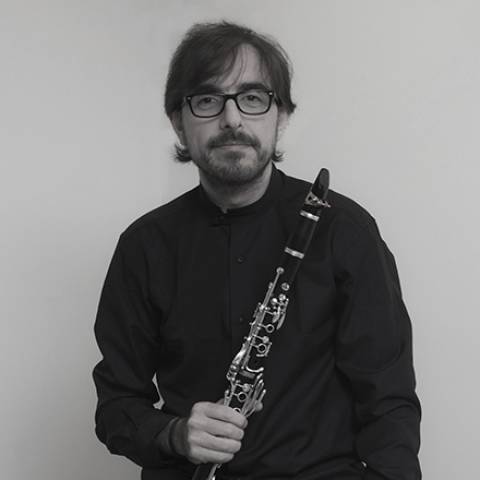
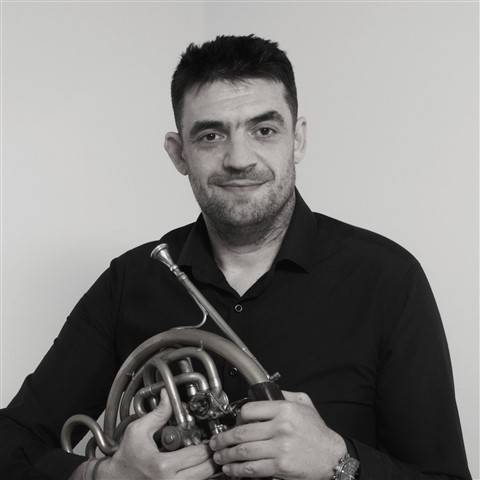
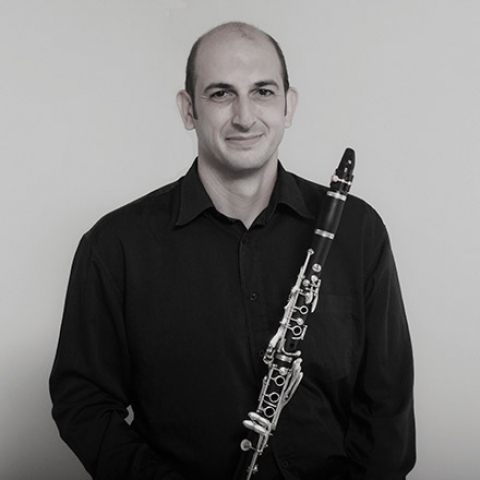
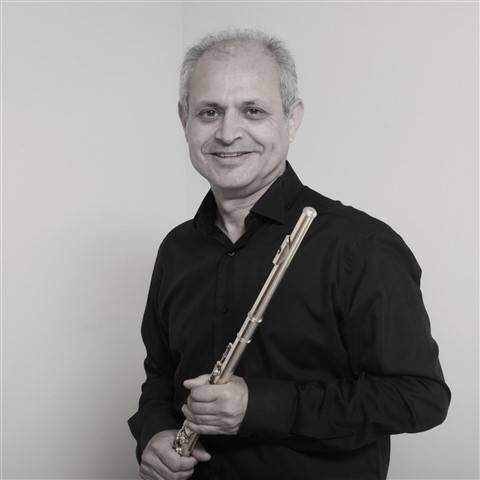
He took his first clarinet lessons at the Mantzaros Philharmonic Society under Nikolaos Dolianitis and continued at the Philippos Nakas Conservatory in the class of Stathis Kiosoglou. With scholarships from the State Scholarship Foundation and the Friends of Music Association, he studied in the class of Ronald van Spentonk at the Royal Conservatory of Music in Mons, Belgium; in the class of Walter Beckens at the Fontys School of Arts in the Netherlands; and in the course "Contemporary Music through Non-Western Techniques" at the Amsterdam Conservatory. He has collaborated with the most important orchestras, wind bands, cultural organisations and festivals in the country and is a founding member of two important Greek music ensembles, the ARTéfacts ensemble and the Ventus wind ensemble, with which he gives numerous concerts in Athens and in cities in Greece and abroad. Since 2007, he has been the principal clarinettist of the National Opera Orchestra and a clarinet teacher at the Acropolis Arts Centre Conservatory.
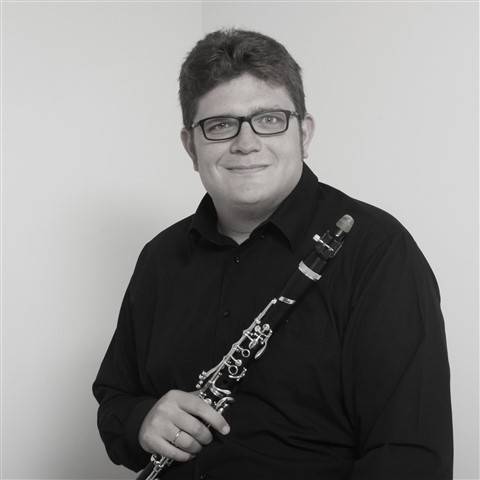
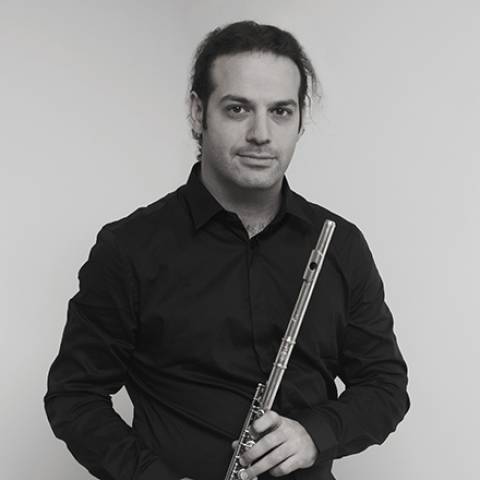
Born in Thessaloniki in 1985. He took his first piano lessons at the age of 5 with his mother and at the age of 11 he started studying the clarinet at the Contemporary Conservatory of Thessaloniki, receiving a Diploma with honours, B' Prize and a Commendation for Outstanding Musical Achievement (2007). In 2008, he began studying at the Musikhochschule Mannheim under Rainer Müller-van Recum graduating with honours (2010) and in 2011 he started his studies (Konzert Examen) at the same university, graduating with a Diploma in 2013. His teachers included Aurelian Octav Popa, Petko Radev, Chen Halevi, Miltos Mumoulidis, Stefan Zillmann, Laura Ruiz Ferreres, Ole Kristian Dahl, Emmanuel Abbühl. He has performed in numerous recitals and chamber music concerts and collaborated with orchestras in Greece, Austria, Italy, Italy, Romania, France, the Netherlands and Germany. His repertoire ranges from classical to contemporary music. He has been awarded in international (Jeunesses Musicalles, B' Prize 2008, etc.) and national competitions (Greek National Woodwind Competition of the Macedonian Art Company TECHNI 2007, etc.). As a soloist he has performed with Athens State Orchestra, Thessaloniki State Symphony Orchestra, Kalamaria Municipal Orchestra, Manheim Jazz Orchestra, Chamber Orchestra Mannheim. Since 2013, he has been the principal clarinetist of the GNO Orchestra and has taught the clarinet at the Philippos Nakas Conservatory.

DIRECTION
Angela-Kleopatra Saroglou
SETS
Yorgos Kollios
COSTUMES
Alexia Theodoraki
LIGHTS
Spyros Tzoras
PIANO
Yiannis Tsanakaliotis
DON JOSÉ
Dimitris Sigalos
ESCAMILLO/MORALLÈS
Dionyssis Tsantinis
ZUNIGA/LE DANCAÏRE
Giorgos Mattheakakis
CARMEN
Marissia Papalexiou
MICAËLA/FRASQUITA
Despina Skarlatou
MERCÉDÈS
Vicky Tsiliakou
7 March 2015
DANCE MEGARON, KALAMATA
Performances begin at 20.00 | 
Free entrance for priority pass holders. Priority passes will be distributed one hour prior the starting time
[Carmen at a glance]
The composer / French composer Georges Bizet was born in Paris, in 1838 and died in Bougival, near Paris, in 1875. His first music teacher was his father, a vocal coach. Later, he studied at the Conservatoire de Paris, under Jacques Fromental Halévy, composer of the opera La Juive and whose daughter Bizet married in 1869. Apart from his studies at the Conservatoire, Georges Bizet also studied under Charles Gounod and was profoundly influenced by him. When in 1857 Bizet won the prestigious Grand Prix de Rome, he had already composed the noteworthy Symphony in C, which was performed for the very first time as late as 1935! The arrangement of his poor financial state was the first thing he did upon his return to Paris from the Villa Medici. His opera Les pêcheurs de perles (1863) was not as successful as anticipated. Following the Franco-Prussian War (1870), he was appointed chorus master at the Opéra de Paris, but he opted for the position of the rehearsal pianist & répétiteur at the Opéra Comique. In 1872 he scored his first great success thanks to the music he composed for the theatrical play L'Arlésienne, based on the eponymous novel by Alphonse Daudet. In March 1875 he experienced the tumultuous premiere of his Carmen, but did not enjoy the work’s huge recognition for he died only a few months later, at the age of 37.
The opera / Carmen is a four-act French opera and belongs to the genre opéra comique. It is based on a libretto written by Henry Meilhac and Ludovic Halévy, based on Prosper Mérimée's namesake novel (1845). The term opéra comique does not suggest the existence of comic elements, but relates to structural and aesthetical features, one of which being spoken dialogues. In 1875, on the occasion of presenting Carmen in Vienna, Ernest Guiraud replaced the dialogues with recitatives. Also, he added some dance scenes by borrowing music from the suite L'Arlésienne and from Bizet's opera La jolie fille de Perth.
Premieres / Carmen first premiered in Paris at the Salle Favart. It was staged by the Opéra Comique on 3 March 1875. The leading role was performed by Célestine Galli-Marié. The performance staged in Vienna (October 1875) was pivotal as to the acknowledgment of the opera. Carmen was included in the repertoire of the Greek National Opera in 1941-2, with Kitsa Damasioti as Carmen and Antonis Delendas and Nikos Glinos at the role of José, Fani Aidali as Micaëla and Spyros Kalogeras as Escamillo. Antiochos Evangelatos was the conductor.
Act I / At a café in a square of Seville, soldiers comment leisurely on the passers-by while waiting for Carmen who works nearby to show up. Eventually, Carmen comes and almost threatens her admirers by singing a song about the fickle nature of love. Reacting to Zuniga's persistent flirt, she takes refuge to Don José by kissing him in a provocative manner and throwing him a flower. Although Don José seems to be annoyed, he keeps the flower. Carmen and Mercédès return to work. Micaëla enters the stage and gives José a kiss and a letter from his mother. In the letter his mother designates Micaëla as a suitable wife for him. Voices are heard, Carmen and Zuniga enter the stage again, but this time in dispute. Carmen keeps a suspicious object in her bag, but she won't give any explanations. Zuniga asks Don José to lead her to prison. Once they are left alone, Carmen charms the officer and in exchange of liberating her she pledges her love to him. Don José helps her escape.
Act II / In a bar. Carmen and Mercédès work night shift. Escamillo, the famous toreador, arrives. Carmen seems to be disinterested, but she lets him hope. Don José arrives and Carmen joyously dances for his sake. When he explains to her that duty calls him and has to leave, Carmen is outraged; she remains unmoved both at the view of the flower of their first encounter and by his marriage proposal. As she explains, if he loves her, he must leave her and make a fresh start someplace else. The lieutenant of the guards (Zuniga) returns hoping to find Carmen alone. Don José, jealous of Zuniga, attacks him. Now he has no other choice but to follow Carmen.
Act III / In a deserted place where Carmen and Don José have taken refuge. Micaëla comes dispirited only to inform Don José that his mother is dying. When she perceives that someone is following her, she hides. The person following her is Escamillo who has come to claim Carmen. Don José is furious and challenges him in a duel. At this point Carmen interrupts them and Escamillo invites everyone to his next bullfighting. Micaëla turns up informing Don José that his mother is on her death bed. He threatens Carmen and follows the girl. Carmen is mesmerised by Escamillo and follows his voice.
Act IV / In Escamillo's dressing room. Carmen helps him in his preparations for the arena. Escamillo bids her a warm goodbye and enters the arena. Carmen is left alone and watches the bullfighting on a monitor. Don José rushes in and insists on her following him. She openly tells him that she does not love him and that she would rather die than losing her freedom. Through the arena she can hear the cheering crowd and she is about to dash and take a taste of Escamillo's triumph, but Don José stands in her way. She gives him back the ring he had given her as a token of his love and kills her the very moment the bull strikes a deadly blow at Escamillo.
Director's note / Although today Carmen is synonymous with Spain, nobody remembers that its composer had never visited the Iberian Peninsula before composing this work that was to reserve him a place amongst the most celebrated opera composers. In the abridged version of the work we prepared for the Suitcase Opera, our aim was to narrate the story from a different angle with regard to Spain and its particular character. We kept intact the opera's dramatic core in which the dynamic rapport that develops among the main characters is skilfully outlined through music and dramatic performance. However, the grand spectacle and the vivid, crowded scenes were left out. In essence, every abridged version is a new creation. Consequently, our intent was to place our own Carmen in the Spain of the 1990s, in Seville; a city whose history is always evident and where the past encounters the present, and both engage in a discourse with daily life.
Almodovar's films are our focal point of reference as far the aesthetics are concerned. Through his cinematography we saw Spain from a different viewpoint and we became familiarised with the country, perhaps more than Bizet was in his time. Our version presents two different worlds that meet and eventually come into conflict: on the one hand we see the conservative, Catholic and provincial Spain (especially Southern Spain); on the other hand there is the emancipated Spain and its big cities of the post-Franco era, the way it is depicted in Almodovar's films. The gypsy element was consciously omitted from our narration because in the past it bore different connotations from today and especially because in the original text it is used as an explanation for the deviant nature of Carmen and her comrades. Our decision to dispense with this outdated pseudo-exotic element did not emerge from the need to be politically correct, but rather from our choice to be more loyal to the spirit of the work and our decision to depict Carmen as a contemporary woman who is trying to survive by working day and night. She is a woman who knows the nitty-gritty of the world both under the bright light of day and in the darkness of night, making her a lot more experienced than Don José who grew up in a safe bourgeois environment. Carmen does not aspire to have a family and children; she knows that her desires would cost her dearly. However, she had never imagined the price would be so high…
STAVROS NIARCHOS FOUNDATION
CULTURAL CENTER
364 Syggrou Avenue, Kallithea
Box Office:
+30 213 0885700
Box Office email:
boxoffice@nationalopera.gr
Daily 09.00-21.00
info@nationalopera.gr