
Contact
ADDRESS
STAVROS NIARCHOS FOUNDATION
CULTURAL CENTER
364 Syggrou Avenue, Kallithea
TEL.
Box Office:
+30 213 0885700
Box Office email:
boxoffice@nationalopera.gr
Daily 09.00-21.00
info@nationalopera.gr
Register to our Newsletter





CONDUCTOR
Elias Voudouris
CHOREOGRAPHY - LIBRETTO
Lorca Massine
ΑRTISTIC SUPERVISION
Renato Zanella
SETS
Sophia Pantouvaki
COSTUME DILIGENCE
Chryssanthi Psaropoulou
LIGHTING
Yannis Theodoridis
CHORUS MASTER
Agathangelos Georgakatos
SPECIAL APPEARANCE
Maria Farantouri
ZORBAS
Stratos Papanoussis
JOHN
Danilo Zeka
MARINA
Maria Kousouni
MANOLIOS
Aleksandar Neskov
ORTANCE
Stavroula Kaburakis
With the participation of the Orchestra, the Chorus, Principal Dancers, Soloists, Coryphées and Corps de ballet of the GNO
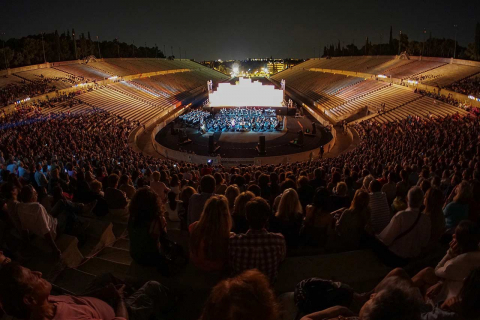
29 June 2014
Panathenaic Stadium [Kallimarmaro]
Starts at 21.00 | 
Presale at the Olympia Theatre Box Office (59-61, Akadimias str., tel.: 210 3662100)
& online at www.nationalopera.gr
Presale at:
the Olympia Theatre Box Office
(59-61, Akadimias str., tel.: 210 3662100)
the Greek Festival Box Office
(39, Panepistimiou str., inside the Pesmazoglou Arcade)
DIRECTOR
Alexandros Efklidis
SETS
Vassiliki Papadopoulou
COSTUMES
Natassa Dimitriou
LIGHTING
Spyros Tzoras
MUSICOLOGICAL COORDINATION
Dimitris Yakas
PIANO
Frixos Mortzos
DON GIOVANNI
Νikos Kotenidis
COMMENDATORE/ΜASETTO
George Roupas
DONNA ANNA
Μaria Mitsopoulou
DON OTTAVIO
Christos Kechris
DONNA ELVIRA
Julia Souglakou
LEPORELLO
Vangelis Maniatis
Zerlina
Despina Scarlatou
29 June 2014
STRATOUDAKEION CULTURAL CENTER, MEGARA
Starts at 20.00 |
Αdmission is free of charge with priority coupons which will be distributed at the entrance of the Stratoudakeion Cultural Center, one hour before the performance starts.
Stratoudakeion Cultural Center (nearby Megara Health Centre - Korkouria, τel.: 22963 00544)
Don Giovanni at a glance
The composer / Most people have a great sense of familiarity for Mozart, probably because his music is so pleasant at a first hearing. However, prevalent misconceptions about his life and work have formed an image that is much different to reality. These misconceptions, that have even altered his name, date as far back as the 19th century, when Mozart was first cast as a figure that inspired awe. That was when the rather bombastic Amadeus was introduced, a name that he used rarely and then only in jest, instead of the more prosaic Αmadé or Amadeo, which was how he usually signed his name. To this day, the misconceptions regarding Mozart continue to be propagated through popular presentations of his life and work, for example in film. There is certainly no doubt that Mozart was an intellectual and one of the most significant and introspective figures of his time. He was charismatic and sensitive, and embraced lofty ideals. However, recent research into his life and work continues to endow him with additional attributes, completing the portrait of a man who is constantly revealing new and exciting aspects of himself.
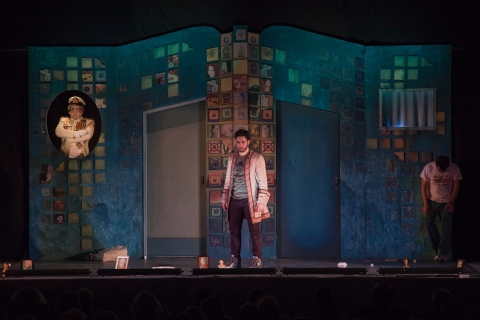
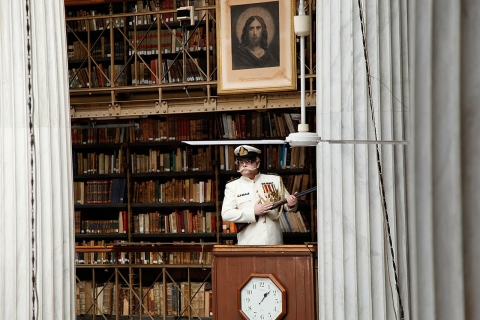
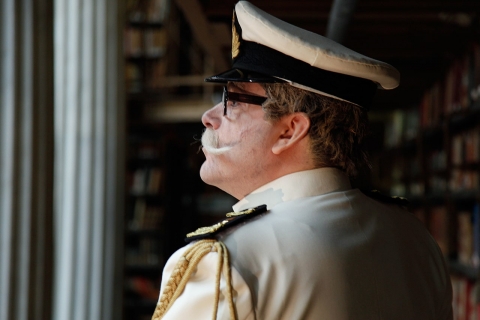
The opera / Don Giovanni is an opera in two acts. The libretto by Lorenzo Da Ponte was based on an earlier piece by Giovanni Bertati for Giuseppe Gazzaniga’s opera Don Giovanni Tenorio, or The Stone Guest, which premiered in Venice in 1787. The story revolves around the salacious adventures of the Spanish nobleman and libertine Don Giovanni. In one of these incidents, Don Giovanni tries to rape Donna Anna and kills her father in his effort to escape justice. But the elderly man returns from the dead to exact his revenge and Don Giovanni, unrepentant for his sins, is sent straight to hell. The opera ends with a moral, as was the usual practice at the time.
Premieres / Don Giovanni was first performed in Prague on 29 October 1787. For its premiere in Vienna on 7 May 1788, Mozart adapted the score to accommodate the new singers, while also adding a editing a number of the musical parts. The opera that is most often presented today is a combination of the original and adapted versions. The Greek National Opera first introduced Don Giovanni to its repertory on 20 March 1962 in a production directed by Antiochos Evangelatos. The Pocket Opera presents an abridged version of the original.
DIRECTOR
Alexandros Efklidis
SETS
Vassiliki Papadopoulou
COSTUMES
Natassa Dimitriou
LIGHTING
Spyros Tzoras
MUSICOLOGICAL COORDINATION
Dimitris Yakas
PIANO
Frixos Mortzos
DON GIOVANNI
Nikos Kotenidis
COMMENDATORE/ΜASETTO
Τheodore Moraitis
DONNA ANNA
Αnna Stylianaki
DON OTTAVIO
Nikos Stefanou
DONNA ELVIRA
Georgia Eliopoulos
LEPORELLO
Vangelis Maniatis
ZERLINA
Despina Scarlatou
27 June 2014
"ASTRON" ΟPEN AIR CINEMA, MANDRA
Starts at 21.00 |
Αdmission is free of charge with priority coupons which will be distributed at the entrance of the "Astron" Open Air Cinema, one hour before the performance starts.
Astron Open Air Cinema, (4, Vas. Liaskou str., Mandra, τel.: 210 5555311)
Don Giovanni at a glance
The composer / Most people have a great sense of familiarity for Mozart, probably because his music is so pleasant at a first hearing. However, prevalent misconceptions about his life and work have formed an image that is much different to reality. These misconceptions, that have even altered his name, date as far back as the 19th century, when Mozart was first cast as a figure that inspired awe. That was when the rather bombastic Amadeus was introduced, a name that he used rarely and then only in jest, instead of the more prosaic Αmadé or Amadeo, which was how he usually signed his name. To this day, the misconceptions regarding Mozart continue to be propagated through popular presentations of his life and work, for example in film. There is certainly no doubt that Mozart was an intellectual and one of the most significant and introspective figures of his time. He was charismatic and sensitive, and embraced lofty ideals. However, recent research into his life and work continues to endow him with additional attributes, completing the portrait of a man who is constantly revealing new and exciting aspects of himself.
The opera / Don Giovanni is an opera in two acts. The libretto by Lorenzo Da Ponte was based on an earlier piece by Giovanni Bertati for Giuseppe Gazzaniga’s opera Don Giovanni Tenorio, or The Stone Guest, which premiered in Venice in 1787. The story revolves around the salacious adventures of the Spanish nobleman and libertine Don Giovanni. In one of these incidents, Don Giovanni tries to rape Donna Anna and kills her father in his effort to escape justice. But the elderly man returns from the dead to exact his revenge and Don Giovanni, unrepentant for his sins, is sent straight to hell. The opera ends with a moral, as was the usual practice at the time.
Premieres / Don Giovanni was first performed in Prague on 29 October 1787. For its premiere in Vienna on 7 May 1788, Mozart adapted the score to accommodate the new singers, while also adding a editing a number of the musical parts. The opera that is most often presented today is a combination of the original and adapted versions. The Greek National Opera first introduced Don Giovanni to its repertory on 20 March 1962 in a production directed by Antiochos Evangelatos. The Pocket Opera presents an abridged version of the original.

CONDUCTOR
Nikos Vassiliou
DIRECTOR
Angela Saroglou
SETS
George Kolios
COSTUMES
Dina Antonopoulou
LIGHTING
Spyros Tzoras
CLARICE
Dimitra Kotidou
Erophili-Josephina Papadogia
LUCINDA
Dimitra-Roxani Papadimitriou
Ioanna Kokovika
DORINA
Maria-Christina Asimakopoulou
Elizabeth-Nepheli Papageorgiou
CONTE EUGENIO
Christos Kechris
DON ORAZIO
Stamatis Beris
MINGONE
Nikolaos Katsigiannis
MARCHESE CANOPPIO
Maxim Klonofski
With the participation of the GNO Opera Studio Orchestra
20, 22 June 2014
STUDIO OPERA
Olympia Theatre
Starts at 20.00 |
Ticket Prices: 10€, 12€
Children & student ticket prices: 8€
DIRECTOR
Alexandros Efklidis
SETS
Vassiliki Papadopoulou
COSTUMES
Natassa Dimitriou
LIGHTING
Spyros Tzoras
MUSICOLOGICAL COORDINATION
Dimitris Yakas
PIANO
Frixos Mortzos
DON GIOVANNI
Dionyssis Sourbis
COMMENDATORE/MASETTO
George Roupas
DONNA ANNA
Maria Mitsopoulou
DON OTTAVIO
Nikos Stefanou
DONNA ELVIRA
Elena Kelessidi
LEPORELLO, DON GIOVANNI'S SERVANT
Haris Andrianos
ZERLINA
Despina Scarlatou
21 June 2014
Εuropean Music Day
Municipal Theatre of Piraeus
Starts at 20.00 |
Αdmission is free of charge with priority coupons which will be distributed at the entrance of the Municipal Theatre of Piraeus, one hour before the performance starts.
Μunicipal Theatre of Piraeus (32 Iroon Polytechneiou Avenue, Piraeus, tel.: 210 4143300, 210 4143310)
Don Giovanni at a glance
The composer / Most people have a great sense of familiarity for Mozart, probably because his music is so pleasant at a first hearing. However, prevalent misconceptions about his life and work have formed an image that is much different to reality. These misconceptions, that have even altered his name, date as far back as the 19th century, when Mozart was first cast as a figure that inspired awe. That was when the rather bombastic Amadeus was introduced, a name that he used rarely and then only in jest, instead of the more prosaic Αmadé or Amadeo, which was how he usually signed his name. To this day, the misconceptions regarding Mozart continue to be propagated through popular presentations of his life and work, for example in film. There is certainly no doubt that Mozart was an intellectual and one of the most significant and introspective figures of his time. He was charismatic and sensitive, and embraced lofty ideals. However, recent research into his life and work continues to endow him with additional attributes, completing the portrait of a man who is constantly revealing new and exciting aspects of himself.
The opera / Don Giovanni is an opera in two acts. The libretto by Lorenzo Da Ponte was based on an earlier piece by Giovanni Bertati for Giuseppe Gazzaniga’s opera Don Giovanni Tenorio, or The Stone Guest, which premiered in Venice in 1787. The story revolves around the salacious adventures of the Spanish nobleman and libertine Don Giovanni. In one of these incidents, Don Giovanni tries to rape Donna Anna and kills her father in his effort to escape justice. But the elderly man returns from the dead to exact his revenge and Don Giovanni, unrepentant for his sins, is sent straight to hell. The opera ends with a moral, as was the usual practice at the time.
Premieres / Don Giovanni was first performed in Prague on 29 October 1787. For its premiere in Vienna on 7 May 1788, Mozart adapted the score to accommodate the new singers, while also adding a editing a number of the musical parts. The opera that is most often presented today is a combination of the original and adapted versions. The Greek National Opera first introduced Don Giovanni to its repertory on 20 March 1962 in a production directed by Antiochos Evangelatos. The Pocket Opera presents an abridged version of the original.

CONDUCTOR
Lukas Karytinos
DIRECTOR
Yannis Houvardas
SETS
Eva Manidaki
COSTUMES
Ioanna Tsami
LIGHTING
Lefteris Pavlopoulos
CHORUS MASTER
Agathangelos Georgakatos
DON GIOVANNI
Franco Pomponi (11, 13/6)
Dionyssis Sourbis (14, 15/6)
DONNA ANNA
Myrtò Papatanasiu (11, 13, 15/6)
Francesca Dotto (14/6)
DON OTTAVIO
Antonis Koroneos (11, 13, 15/6)
Μusa Nkuna (14/6)
IL COMMENDATORE
Dimitri Kavrakos (11, 13, 15/6)
Τassos Apostolou (14/6)
DONNA ELVIRA
Cellia Costea (11, 13, 15/6)
Μaria Luigia Borsi (14/6)
LEPORELLO
Christophoros Stamboglis (11, 13, 15/6)
José Fardilha (14/6)
ΜASETTO
Petros Magoulas (11, 13, 14, 15/6)
ZERLINA
Maria Mitsopoulou (11, 13, 14, 15/6)
11, 13, 14, 15 June 2014
ODEON OF HERODES ATTICUS
New production within the framework of the Athens Festival
Starts at 21.00 |

With the Orchestra and Chorus of GNO
Presale at:
the Olympia Theatre Box Office
(59-61, Akadimias str., tel.: 210 3662100)
the Greek Festival Box Office
(39, Panepistimiou str., inside the Pesmazoglou Arcade, tel.: 210 3272000)
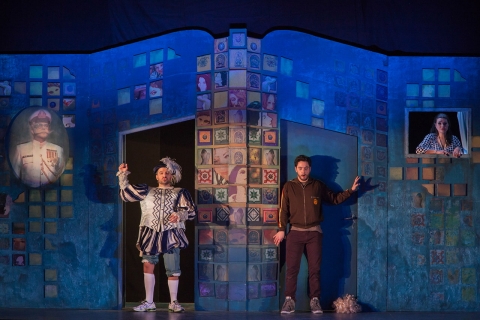
DIRECTOR
Alexandros Efklidis
SETS
Vassiliki Papadopoulou
COSTUMES
Natassa Dimitriou
LIGHTING
Spyros Tzoras
MUSICOLOGICAL COORDINATION
Dimitris Yakas
PIANO
Frixos Mortzos
DON GIOVANNI
Nikos Kotenidis
COMMENDATORE/MASETTO
Kostas Dotsikas
DONNA ANNA
Anna Stylianaki
DON OTTAVIO
Nikos Stefanou
Donna Elvira
Elena Kelessidi
LEPORELLO, DON GIOVANNI'S SERVANT
Vangelis Maniatis
ZERLINA
Myrsini Margariti
1 June 2014
CULTURAL CENTER "CHRISTOS BEKAS", SPATA
Starts at 20.00 |
Αdmission is free with priority tickets that are distributed one hour prior to the commencement of the performance at the event venue.
“Christos Bekas” Cultural Center (7, Stavrou Beka str., Spata, tel.: 210 6633124)
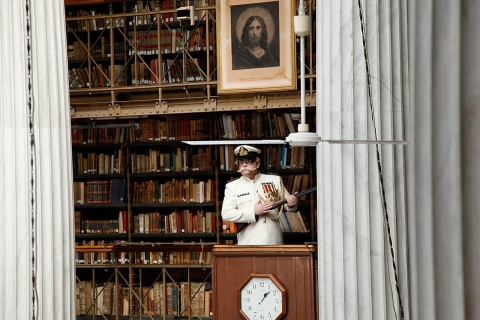
DIRECTOR
Alexandros Efklidis
SETS
Vassiliki Papadopoulou
COSTUMES
Natassa Dimitriou
LIGHTING
Spyros Tzoras
MUSICOLOGICAL COORDINATION
Dimitris Yakas
PIANO
Frixos Mortzos
DON GIOVANNI
Dionysos Tsantinis
COMMENDATORE/MASETTO
George Roupas
DONNA ANNA
Sophia Kyanidou
DON OTTAVIO
Christos Kechris
DONNA ELVIRA
Julia Souglakou
LEPORELLO, DON GIOVANNI'S SERVANT
Dimitris Kassioumis
ZERLINA
Vassia Zacharopoulou
30 May 2014
CITY HALL OF SARONIKOS AUDITORIUM
Starts at 20.00 |
Αdmission is free with priority tickets that are distributed one hour prior to the commencement of the performance at the event venue.
City Hall of Saronikos Auditorium
(Athinon Av. & Riga Feraiou str., Κalivia tel.: 22990 48509)
Don Giovanni at a glance
The composer / Most people have a great sense of familiarity for Mozart, probably because his music is so pleasant at a first hearing. However, prevalent misconceptions about his life and work have formed an image that is much different to reality. These misconceptions, that have even altered his name, date as far back as the 19th century, when Mozart was first cast as a figure that inspired awe. That was when the rather bombastic Amadeus was introduced, a name that he used rarely and then only in jest, instead of the more prosaic Αmadé or Amadeo, which was how he usually signed his name. To this day, the misconceptions regarding Mozart continue to be propagated through popular presentations of his life and work, for example in film. There is certainly no doubt that Mozart was an intellectual and one of the most significant and introspective figures of his time. He was charismatic and sensitive, and embraced lofty ideals. However, recent research into his life and work continues to endow him with additional attributes, completing the portrait of a man who is constantly revealing new and exciting aspects of himself.
The opera / Don Giovanni is an opera in two acts. The libretto by Lorenzo Da Ponte was based on an earlier piece by Giovanni Bertati for Giuseppe Gazzaniga’s opera Don Giovanni Tenorio, or The Stone Guest, which premiered in Venice in 1787. The story revolves around the salacious adventures of the Spanish nobleman and libertine Don Giovanni. In one of these incidents, Don Giovanni tries to rape Donna Anna and kills her father in his effort to escape justice. But the elderly man returns from the dead to exact his revenge and Don Giovanni, unrepentant for his sins, is sent straight to hell. The opera ends with a moral, as was the usual practice at the time.
Premieres / Don Giovanni was first performed in Prague on 29 October 1787. For its premiere in Vienna on 7 May 1788, Mozart adapted the score to accommodate the new singers, while also adding a editing a number of the musical parts. The opera that is most often presented today is a combination of the original and adapted versions. The Greek National Opera first introduced Don Giovanni to its repertory on 20 March 1962 in a production directed by Antiochos Evangelatos. The Pocket Opera presents an abridged version of the original.

CONDUCTOR
Michalis Economou (28/2 - 1, 2, 9/3 - 23, 24/4)
Zoi Tsokanou (5, 6, 7, 8/3)
Andreas Pylarinos (25/4 - 4, 7, 14/5)
DIRECTOR
Alexandros Efklidis
SETS
Sotiris Stelios
COSTUMES
Alexia Theodoraki
CHOREOGRAPHY
Maria Kousouni
LIGHTING
Melina Mascha
CHORUS MASTER
Agathangelos Georgakatos
LIBRETTO TRANSLATION
Dimitrios Dimopoulos
GABRIEL VON EISENSTEIN
Dionyssis Sourbis (28/2 - 2, 6, 8/3)
Dimitris Paksoglou (1, 5, 7, 9/3 - 23, 24, 25/4 - 4, 7, 14/5)
ROSALINDE
Maria Mitsopoulou (28/2 - 2, 6, 8/3 - 23/4)
Elena Kelessidi (1, 5, 7, 9/3 - 24/4)
Gina Poulou (25/4 - 4, 7, 14/5)
Frank
Angelo Simo (28/2 - 2, 6, 8, 9/3 - 4, 7, 14/5)
Stamatis Beris (1, 5, 7/3 - 23, 24, 25/4)
PRINCE ORLOFSKY
Eleni Voudouraki (28/2 - 2, 6, 9/3)
Marissia Papalexiou (1, 7/3 - 25/4 - 4/5)
Elena Marangou (5, 8/3 - 23, 24/4)
Marita Paparizou (7, 14/5)
ALFRED
Antonis Koroneos (28/2 - 2, 6, 7, 9/3 - 23, 25/4)
Nikos Stefanou (1, 5, 8/3 - 24/4)
Yannis Christopoulos (4, 7, 14/5)
DR. FALKE
Akis Laloussis (28/2 - 2, 6, 8/3 - 24/4 - 4/5)
Arkadios Rakopoulos (1, 9/3)
Haris Andrianos (5, 7/3 - 23, 25/4 - 7, 14/5)
DR. BLIND
Thanassis Evangelou (28/2 - 2, 6, 7, 9/3 - 25/4)
Dimitris Nalbantis (1, 5, 8/3 - 23, 24/4 - 4, 7, 14/5)
ADELE
Vassiliki Karayanni (28/2 - 2, 5, 7, 9/3 - 24/4 - 7, 14/5)
Katia Paschou (1, 8/3 - 23/4 - 4/5)
Marianna Mansola (6/3 - 25/4)
IDA
Vaya Kofou (28/2 - 2, 6, 9/3 - 24/4 - 4/5)
Lydia Angelopoulou (1, 5, 7, 8/3 - 23, 25/4 - 7, 14/5)
FROSCH/ALI BEY
Pavlos Maropoulos (28/2 - 2, 6/3 - 4, 7, 14/5)
Panagiotis Athanasopoulos (1, 5, 7, 8, 9/3 - 23, 24, 25/4)
ΜARREY
Christos Amvrazis (28/2 - 2, 6, 8/3 - 24/4 - 4, 7, 14/5)
Panayotis Priftis (1, 5, 7, 9/3 - 23, 25/4)
GINA
Irini Konsta (28/2 - 1, 2/3 - 23, 24, 25/4 - 7, 14/5)
Irini Athanassiou (5, 6, 7, 8, 9/3 - 4/5)
1, 2, 5, 6, 7, 8, 9 March 2014
23, 24, 25 April 2014
4, 7, 14 May 2014
Olympia Theatre
Performances begin at 20.00 |
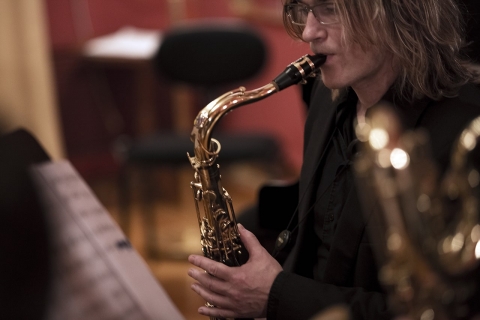
11 May 2014
Οpera Cycle
Starts at 18.00 |
Free admission
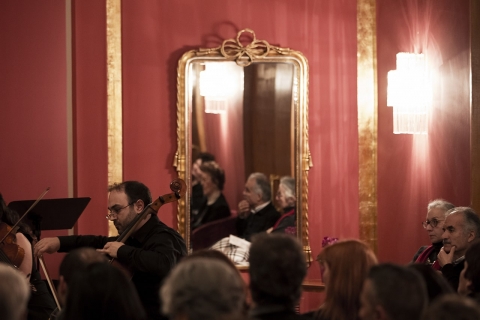
4 May 2014
Greek Opera Cycle
Starts at 18.00 |
Free admission

CONDUCTOR
Ilias Voudouris
DIRECTOR
Spyros A. Evangelatos
SETS – COSTUMES
Yorgos Patsas
VIDEO PROJECTION DESIGN
Stefanos Papadopoulos
GNO FEMALE CHOIR CONDUCTOR
Agathangelos Georgakatos
GNO CHILDREN'S CHOIR CONDUCTOR
Mata Katsouli
WERTHER
Jean-François Borras (11, 13, 27/4 - 3/5)
Yannis Christopoulos (12, 26, 30/4 - 2/5)
ALBERT
Dionissis Sourbis (11, 13, 27/4 - 3/5)
Kyros Patsalides (12, 26, 30/4 - 2/5)
LE BAILLI
Dimitris Kassioumis (11, 13, 27, 30/4 - 3/5)
Tasos Apostolou (12, 26/4 - 2/5)
SCHMIDT
Stavros Salabasopoulos (11, 13, 27/4 - 3/5)
Charalambos Alexandropoulos (12, 26, 30/4 - 2/5)
JOHANN
Petros Salatas (11, 13, 27/4 - 3/5)
Kostis Rasidakis (12, 26, 30/4 - 2/5)
BRÜHLMANN
Panagiotis Athanasopoulos (11, 13, 27/4 - 3/5)
Vassilis Kostopoulos (12, 26, 30/4 - 2/5)
CHARLOTTE
Irini Karaianni (11, 13, 27/4 - 3/5)
Μary-Ellen Nesi (12, 26, 30/4 - 2/5)
SOPHIE
Vassiliki Karagianni (11, 13, 27/4 - 3/5)
Mina Polychronou (12, 26, 30/4 - 2/5)
KATHCHEN
Katerina Krassa (11, 13, 27/4 - 3/5)
Miranda Makrynioti (12, 26, 30/4 - 2/5)
11, 12, 13, 26, 27, 30 April 2014
2, 3 May 2014
Olympia Theatre
Performances begin at 20.00 |
With the Orchestra, members of the Female Choir and members of the Children's Choir of GNO as part of its educational mission
Werther at a glance
The composer / French composer Jules Émile Frédéric Massenet was born on 12 May 1842. He took his first piano lessons from his mother and at the age of 11 he was able to enter the Paris Conservatoire. When his parents left Paris, Massenet continued his studies living with friends and supporting himself occasionally working as a timpanist at the Théâtre Lyrique. In 1862 he won the prestigious Prix de Rome. His first opera was produced in 1867 but it was his dramatic oratorio Marie-Magdeleine that won him praise from composers like Tchaikovsky, D’Indy and Gounod. Composer Ambroise Thomas and publisher Georges Hartmann played a major role in his career. Very early on Massenet was honored with the highest prices and at the age of 36 he was to become the youngest member of the Académie des Beaux Arts. He composed more than 30 operas among which Hérodiade (1881/4), Manon (1884), Werther (1992/3), Thaïs (1994/8), Don Quichotte (1910). He died in Paris in 1912 after a long battle with cancer.
The work / A drame lyrique in four acts, Werther is based on a libretto by Édouard Blau, Paul Milliet and Georges Hartmann, which draws on the epistolary novel by Johann Wolfgang von Goethe’s Die Leiden des jungen Werthers (1774). Having been composed almost a century after the novel, the opera adapts itself to the requisitions of its own time, focusing mainly on the passionate love Werther feels for Charlotte. When he realizes that there is no hope for his feelings, the young poet commits suicide. Charlotte arrives only in the last minute and Werther dies in her arms.
Premieres / The world premiere of the opera was given at the Vienna Hofoper on 16 February 1892, where the work was produced in German. The first production in French language followed a few months later, in Geneva on 27 December 1892. The Greek National Opera, founded in 1939 first produced the opera in Greek language at the Olympia theatre on 4 January 1962.
Act 1 / Germany, Wetzlar, July 1780. The widowed Bailiff teaches his younger children a Christmas carol. Charlotte dresses for a ball. Since her fiancé, Albert, is away, she will be escorted by Werther. He arrives and watches as Charlotte prepares her young siblings’ supper, just as her mother had before she died. Werther greets Charlotte and they leave for the ball.
Albert returns unexpectedly after a six month trip. He is unsure of Charlotte’s intentions and disappointed not to find her at home, but is reassured and consoled by Sophie, Charlotte’s younger sister. He leaves after promising to return in the morning.
Werther and Charlotte return from the ball very late. He is already in love with her. His declaration of love is interrupted by the announcement of Albert’s return. Charlotte recalls how she promised her dying mother she would marry Albert. Werther is in despair.
Act 2 / Three months later Charlotte and Albert are married. They walk happily to church, pursued by a gloomy Werther. Sophie tries to cheer him up. When Charlotte exits the church, he speaks to her of their first meeting. She begs Werther not to try to see her again until Christmas Day. Werther contemplates suicide. Charlotte comforts Sophie who does not understand Werther’s cruel behavior. Albert realizes that Werther is in love with Charlotte.
Act 3 / Charlotte is at home alone on Christmas Eve. She spends time rereading Werther’s letters, wondering how the young poet is and how she had the strength to send him away. Suddenly Werther appears, and while he reads poetry to her, he realizes that she returns his love. They embrace for a moment, but she quickly bids him farewell. He leaves with thoughts of suicide. Albert returns home to find his wife distraught. Werther has sent a message to Albert requesting to borrow his pistols, explaining he is going on an extended trip. A servant is sent to deliver the pistols. Charlotte has a terrible premonition and hurries to find Werther.
[An orchestral interlude leads without a break into the final Act].
Act 4 / At Werther's apartment, Charlotte has arrived too late. Werther is dying. She consoles him by declaring her love. He asks for forgiveness. After he dies, Charlotte faints. Outside children are heard singing a Christmas carol.
DIRECTOR
Alexandros Efklidis
SETS
Vassiliki Papadopoulou
COSTUMES
Natassa Dimitriou
LIGHTING
Spyros Tzoras
MUSICOLOGICAL COORDINATION
Dimitris Yakas
PIANO
Frixos Mortzos
DON GIOVANNI
Dionysos Tsantinis
COMMENDATORE/MASETTO
George Roupas
DONNA ANNA
Anna Stylianaki
DON OTTAVIO
Christos Kechris
DONNA ELVIRA
Julia Souglakou
LEPORELLO, DON GIOVANNI'S SERVANT
Vangelis Maniatis
ZERLINA
Myrsini Margariti
30 April 2014
CULTURAL SPACE MANOS LOIZOS, NIKAIA
Starts at 20.00 |
Αdmission is free of charge with priority coupons which will be distributed at the entrance of the Cultural Space "Manos Loizos" at Nikaia, one hour before the performance starts.
Cultural Space "Manos Loizos" (Thivon Avenue 245, Nikaia, tel.: 210 4936680 & 210 4838374)
Don Giovanni at a glance
The composer / Most people have a great sense of familiarity for Mozart, probably because his music is so pleasant at a first hearing. However, prevalent misconceptions about his life and work have formed an image that is much different to reality. These misconceptions, that have even altered his name, date as far back as the 19th century, when Mozart was first cast as a figure that inspired awe. That was when the rather bombastic Amadeus was introduced, a name that he used rarely and then only in jest, instead of the more prosaic Αmadé or Amadeo, which was how he usually signed his name. To this day, the misconceptions regarding Mozart continue to be propagated through popular presentations of his life and work, for example in film. There is certainly no doubt that Mozart was an intellectual and one of the most significant and introspective figures of his time. He was charismatic and sensitive, and embraced lofty ideals. However, recent research into his life and work continues to endow him with additional attributes, completing the portrait of a man who is constantly revealing new and exciting aspects of himself.
The opera / Don Giovanni is an opera in two acts. The libretto by Lorenzo Da Ponte was based on an earlier piece by Giovanni Bertati for Giuseppe Gazzaniga’s opera Don Giovanni Tenorio, or The Stone Guest, which premiered in Venice in 1787. The story revolves around the salacious adventures of the Spanish nobleman and libertine Don Giovanni. In one of these incidents, Don Giovanni tries to rape Donna Anna and kills her father in his effort to escape justice. But the elderly man returns from the dead to exact his revenge and Don Giovanni, unrepentant for his sins, is sent straight to hell. The opera ends with a moral, as was the usual practice at the time.
Premieres / Don Giovanni was first performed in Prague on 29 October 1787. For its premiere in Vienna on 7 May 1788, Mozart adapted the score to accommodate the new singers, while also adding a editing a number of the musical parts. The opera that is most often presented today is a combination of the original and adapted versions. The Greek National Opera first introduced Don Giovanni to its repertory on 20 March 1962 in a production directed by Antiochos Evangelatos. The Pocket Opera presents an abridged version of the original.
27 April 2014
Guest Composer Cycle
Starts at 18.00 |
Free admission

CONDUCTORS
Agathangelos Georgakatos
Mata Katsouli
CHORUS MASTER
Agathangelos Georgakatos
GNO CHILDREN’S CHOIR CONDUCTOR
Mata Katsouli
WITH THE SOLOISTS OF GNO'S OPERA STUDIO
Maria Dima
Dimitra Kotidou
Vasiliki Tsiliakou
Anastasia Kotsali
Roxanne Papadimitriou
Sotiria Giannoudi
Nikolaos Katsigiannis
13 April 2014
Olympia Theatre
Starts at 12.00 |
13 April 2014
Opera Cycle
Starts at 18.00 |
Admission is free of charge with priority coupons which will be distributed at the entrance of Olympia Theatre, one hour before the performance starts.
DIRECTOR
Alexandros Efklidis
SETS
Vassiliki Papadopoulou
COSTUMES
Natassa Dimitriou
LIGHTING
Spyros Tzoras
MUSICOLOGICAL COORDINATION
Dimitris Yakas
PIANO
Frixos Mortzos
DON GIOVANNI
Nikos Kotenidis
COMMENDATORE/MASETTO
Kostas Dotsikas
DONNA ANNA
Maria Mitsopoulou
DON OTTAVIO
Nikos Stefanou
DONNA ELVIRA
Elena Kelessidi
LEPORELLO, DON GIOVANNI'S SERVANT
Haris Andrianos
ZERLINA
Despina Scarlatou
9 April 2014
CITY HALL KOROPI
Starts at 20.00 |
Αdmission is free of charge with priority coupons which will be distributed at the entrance of the City Hall of Koropi, one hour before the performance starts.
City Hall Koropi (Vas. Konstantinou str. 47, Koropi, tel.: 210 6626295)
Don Giovanni at a glance
The composer / Most people have a great sense of familiarity for Mozart, probably because his music is so pleasant at a first hearing. However, prevalent misconceptions about his life and work have formed an image that is much different to reality. These misconceptions, that have even altered his name, date as far back as the 19th century, when Mozart was first cast as a figure that inspired awe. That was when the rather bombastic Amadeus was introduced, a name that he used rarely and then only in jest, instead of the more prosaic Αmadé or Amadeo, which was how he usually signed his name. To this day, the misconceptions regarding Mozart continue to be propagated through popular presentations of his life and work, for example in film. There is certainly no doubt that Mozart was an intellectual and one of the most significant and introspective figures of his time. He was charismatic and sensitive, and embraced lofty ideals. However, recent research into his life and work continues to endow him with additional attributes, completing the portrait of a man who is constantly revealing new and exciting aspects of himself.
The opera / Don Giovanni is an opera in two acts. The libretto by Lorenzo Da Ponte was based on an earlier piece by Giovanni Bertati for Giuseppe Gazzaniga’s opera Don Giovanni Tenorio, or The Stone Guest, which premiered in Venice in 1787. The story revolves around the salacious adventures of the Spanish nobleman and libertine Don Giovanni. In one of these incidents, Don Giovanni tries to rape Donna Anna and kills her father in his effort to escape justice. But the elderly man returns from the dead to exact his revenge and Don Giovanni, unrepentant for his sins, is sent straight to hell. The opera ends with a moral, as was the usual practice at the time.
Premieres / Don Giovanni was first performed in Prague on 29 October 1787. For its premiere in Vienna on 7 May 1788, Mozart adapted the score to accommodate the new singers, while also adding a editing a number of the musical parts. The opera that is most often presented today is a combination of the original and adapted versions. The Greek National Opera first introduced Don Giovanni to its repertory on 20 March 1962 in a production directed by Antiochos Evangelatos. The Pocket Opera presents an abridged version of the original.
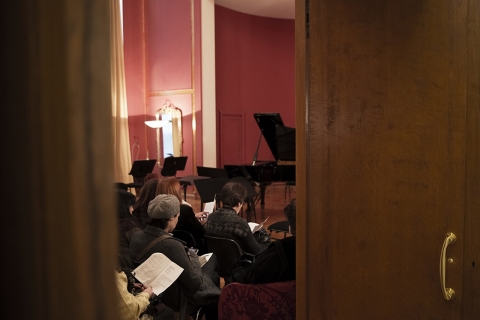
6 April 2014
Greek Operetta Cycle
Olympia Theatre's Foyer
Starts at 18.00 |
Admission is free of charge with priority coupons which will be distributed at the entrance of Olympia Theatre, one hour before the performance starts.
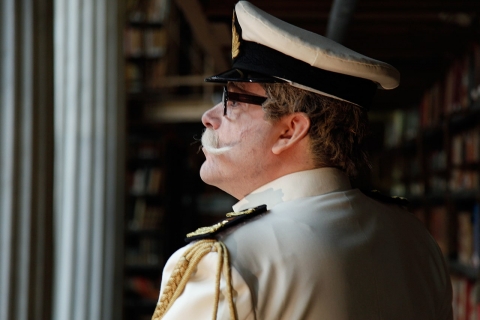
DIRECTOR
Alexandros Efklidis
SETS
Vassiliki Papadopoulou
COSTUMES
Natassa Dimitriou
LIGHTING
Spyros Tzoras
MUSICOLOGICAL COORDINATION
Dimitris Yakas
PIANO
Frixos Mortzos
DON GIOVANNI
Nikos Kotenidis
COMMENDATORE/MASETTO
George Roupas
DONNA ANNA
Anna Stylianaki
DON OTTAVIO
Nikos Stefanou
DONNA ELVIRA
Elena Kelessidi
LEPORELLO, DON GIOVANNI'S SERVANT
Haris Andrianos
ZERLINA
Myrsini Margariti
2 April 2014
MUNICIPAL THEATRE PEFKI
Starts at 20.00 |
Αdmission is free of charge with priority coupons which will be distributed at the entrance of the Municipal Theatre of Pefki, one hour before the performance starts.
Municipal Theatre of Pefki (Chrysostomou Smyrnis & Riga Feraiou str., Pefki, tel.: 210 6128825)
Don Giovanni at a glance
The composer / Most people have a great sense of familiarity for Mozart, probably because his music is so pleasant at a first hearing. However, prevalent misconceptions about his life and work have formed an image that is much different to reality. These misconceptions, that have even altered his name, date as far back as the 19th century, when Mozart was first cast as a figure that inspired awe. That was when the rather bombastic Amadeus was introduced, a name that he used rarely and then only in jest, instead of the more prosaic Αmadé or Amadeo, which was how he usually signed his name. To this day, the misconceptions regarding Mozart continue to be propagated through popular presentations of his life and work, for example in film. There is certainly no doubt that Mozart was an intellectual and one of the most significant and introspective figures of his time. He was charismatic and sensitive, and embraced lofty ideals. However, recent research into his life and work continues to endow him with additional attributes, completing the portrait of a man who is constantly revealing new and exciting aspects of himself.
The opera / Don Giovanni is an opera in two acts. The libretto by Lorenzo Da Ponte was based on an earlier piece by Giovanni Bertati for Giuseppe Gazzaniga’s opera Don Giovanni Tenorio, or The Stone Guest, which premiered in Venice in 1787. The story revolves around the salacious adventures of the Spanish nobleman and libertine Don Giovanni. In one of these incidents, Don Giovanni tries to rape Donna Anna and kills her father in his effort to escape justice. But the elderly man returns from the dead to exact his revenge and Don Giovanni, unrepentant for his sins, is sent straight to hell. The opera ends with a moral, as was the usual practice at the time.
Premieres / Don Giovanni was first performed in Prague on 29 October 1787. For its premiere in Vienna on 7 May 1788, Mozart adapted the score to accommodate the new singers, while also adding a editing a number of the musical parts. The opera that is most often presented today is a combination of the original and adapted versions. The Greek National Opera first introduced Don Giovanni to its repertory on 20 March 1962 in a production directed by Antiochos Evangelatos. The Pocket Opera presents an abridged version of the original.

CONDUCTORS
Nikos Vassileiou
Yorgos Aravidis
Jean Cristophe Charron
DIRECTOR – LIBRETTO
Thomas Moschopoulos
CONDUCTORS
Nikos Vassileiou (9, 10, 13, 16/11 - 1, 11/12 - 22, 24/1 - 5, 27/2)
Yorgos Aravidis (4, 5, 6, 8, 10, 12, 13, 15/12 - 12, 19, 21, 23, 26/1 - 2, 4, 9, 23, 25, 26, 28/2)
Jean Cristophe Charron (16, 18, 19, 20, 21, 23, 27, 28, 29, 30/3)
DIRECTOR – LIBRETTO
Thomas Moschopoulos
SETS
Evangelia Therianou
COSTUMES
Claire Bracewell
LIGHTING
Lefteris Pavlopoulos
MOVEMENT
Xenia Themeli
9, 10, 13, 16 November 2013
1, 4, 5, 6, 8, 10, 11, 12, 13, 15 December 2013
12, 19, 21, 22, 23, 24, 26 January 2014
2, 4, 5, 9, 23, 25, 26, 27, 28 February 2014
16, 18, 19, 20, 21, 23, 27, 28, 29, 30 March 2014
Olympia Theatre
Matinees (begin 11.00 | ):
10, 13, November 2013 / 4, 5, 6, 8, 10, 11, 12, 13, 15 December 2013
12, 19, 21, 22, 24, 26 January 2014 / 2, 4, 5, 9, 23, 25, 26, 28 February 2014
16, 18, 19, 20, 21, 23, 27, 30 March 2014
Evening performances (begin 20.00 | ):
9 & 16 November 2013, 1 December 2013, 23 January 2014, 27 February 2014, 28, 29 March 2014
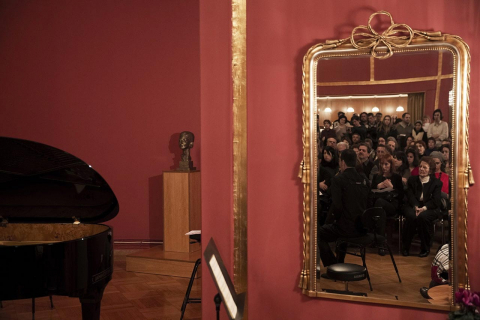
30 March 2014
Guest Composer Cycle
Olympia Theatre's Foyer
Starts at 18.00 |
Free admission
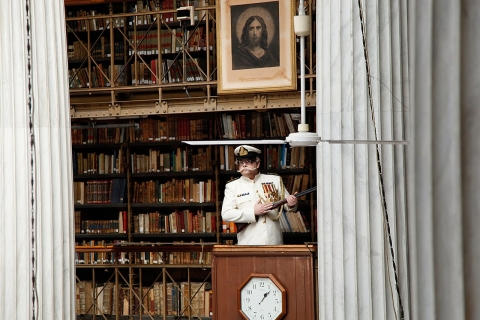
DIRECTOR
Alexandros Efklidis
SETS
Vassiliki Papadopoulou
COSTUMES
Natassa Dimitriou
LIGHTING
Spyros Tzoras
MUSICOLOGICAL COORDINATION
Dimitris Yakas
PIANO
Frixos Mortzos
DON GIOVANNI
Dionysos Tsantinis
COMMENDATORE/MASETTO
Kostas Dotsikas
DONNA ANNA
Anna Stylianaki
DON OTTAVIO
Nikos Stefanou
DONNA ELVIRA
Julia Souglakou
LEPORELLO, DON GIOVANNI'S SERVANT
Vangelis Maniatis
ZERLINA
Despina Scarlatou
27 March 2014
MUNICIPAL THEATRE KAROLOS KOUN, ALIMOS
Starts at 20.00 |
Αdmission is free of charge with priority coupons which will be distributed at the entrance of the Municipal Theatre Karolos Koun at Alimos, one hour before the performance starts.
Municipal Theatre Karolos Koun (Ipsilantou & Thiseiou, Alimos tel.: 210 9942500)
Don Giovanni at a glance
The composer / Most people have a great sense of familiarity for Mozart, probably because his music is so pleasant at a first hearing. However, prevalent misconceptions about his life and work have formed an image that is much different to reality. These misconceptions, that have even altered his name, date as far back as the 19th century, when Mozart was first cast as a figure that inspired awe. That was when the rather bombastic Amadeus was introduced, a name that he used rarely and then only in jest, instead of the more prosaic Αmadé or Amadeo, which was how he usually signed his name. To this day, the misconceptions regarding Mozart continue to be propagated through popular presentations of his life and work, for example in film. There is certainly no doubt that Mozart was an intellectual and one of the most significant and introspective figures of his time. He was charismatic and sensitive, and embraced lofty ideals. However, recent research into his life and work continues to endow him with additional attributes, completing the portrait of a man who is constantly revealing new and exciting aspects of himself.
The opera / Don Giovanni is an opera in two acts. The libretto by Lorenzo Da Ponte was based on an earlier piece by Giovanni Bertati for Giuseppe Gazzaniga’s opera Don Giovanni Tenorio, or The Stone Guest, which premiered in Venice in 1787. The story revolves around the salacious adventures of the Spanish nobleman and libertine Don Giovanni. In one of these incidents, Don Giovanni tries to rape Donna Anna and kills her father in his effort to escape justice. But the elderly man returns from the dead to exact his revenge and Don Giovanni, unrepentant for his sins, is sent straight to hell. The opera ends with a moral, as was the usual practice at the time.
Premieres / Don Giovanni was first performed in Prague on 29 October 1787. For its premiere in Vienna on 7 May 1788, Mozart adapted the score to accommodate the new singers, while also adding a editing a number of the musical parts. The opera that is most often presented today is a combination of the original and adapted versions. The Greek National Opera first introduced Don Giovanni to its repertory on 20 March 1962 in a production directed by Antiochos Evangelatos. The Pocket Opera presents an abridged version of the original.

CONDUCTOR
Ilias Voudouris
CHOREOGRAPHY - SETS
Renato Zanella
COSTUMES
Celia Kritharioti
LIGHTS
Stella Kaltsou
WHITE SWAN
Vicky Issakidou (15, 19, 23/3)
Stavroula Kamburaki (16, 21/3)
Christina Makridou (18, 22/3)
BLACK SWAN
Emilia Gaspari (15, 19, 23/3)
Popi Sakellaropoulou (16, 21/3)
Εleana Andreoudi (18, 22/3)
PRINCE
Danilo Zeka (15, 19, 23/3)
Vangelis Bikos (16, 21/3)
Igor Siatzko (18, 22/3)
TUTOR
Stratos Papanousis (15. 18, 19, 22/3)
Alexander Neskov (16, 21, 23/3)
QUEEN
Αlina Stergianou (15, 18, 19, 22/3)
Νatasha Siouta (16, 21, 23/3)
With the GNO’s Orchestra, Principal Dancers, Soloists, Coryphees and Corps de Ballet
15, 16, 18, 19, 21, 22, 23 March 2014
Athens Concert Hall – Alexandra Trianti Hall
Performances begin at 20.00 |

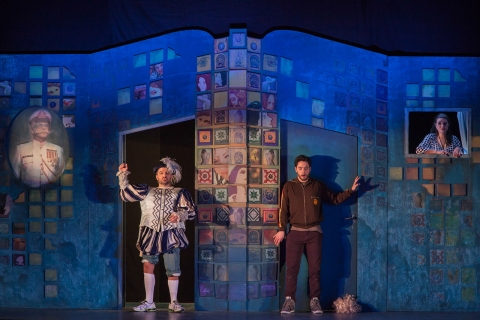
DIRECTOR
Alexandros Efklidis
SETS
Vassiliki Papadopoulou
COSTUMES
Natassa Dimitriou
LIGHTING
Spyros Tzoras
MUSICOLOGICAL COORDINATION
Dimitris Yakas
PIANO
Frixos Mortzos
DON GIOVANNI
Dionysos Tsantinis
COMMENDATORE/MASETTO
Theodore Moraitis
DONNA ANNA
Sophia Kyanidou
DON OTTAVIO
Nikos Stefanou
DONNA ELVIRA
Georgia Eliopoulos
LEPORELLO, DON GIOVANNI'S SERVANT
Haris Andrianos
ZERLINA
Vassia Zacharopoulou
20 March 2014
MUNICIPAL CONFERENCE CENTER, METAMORPHOSI
Starts at 20.00 |
Αdmission is free of charge with priority coupons which will be distributed at the entrance of the Municipal Conference Center at Metamorphosi, one hour before the performance starts.
Municipal Conference Center of Metamorphosi (Litous & Kimis, Metamorphosi, tel.: 213 2012902)
Don Giovanni at a glance
The composer / Most people have a great sense of familiarity for Mozart, probably because his music is so pleasant at a first hearing. However, prevalent misconceptions about his life and work have formed an image that is much different to reality. These misconceptions, that have even altered his name, date as far back as the 19th century, when Mozart was first cast as a figure that inspired awe. That was when the rather bombastic Amadeus was introduced, a name that he used rarely and then only in jest, instead of the more prosaic Αmadé or Amadeo, which was how he usually signed his name. To this day, the misconceptions regarding Mozart continue to be propagated through popular presentations of his life and work, for example in film. There is certainly no doubt that Mozart was an intellectual and one of the most significant and introspective figures of his time. He was charismatic and sensitive, and embraced lofty ideals. However, recent research into his life and work continues to endow him with additional attributes, completing the portrait of a man who is constantly revealing new and exciting aspects of himself.
The opera / Don Giovanni is an opera in two acts. The libretto by Lorenzo Da Ponte was based on an earlier piece by Giovanni Bertati for Giuseppe Gazzaniga’s opera Don Giovanni Tenorio, or The Stone Guest, which premiered in Venice in 1787. The story revolves around the salacious adventures of the Spanish nobleman and libertine Don Giovanni. In one of these incidents, Don Giovanni tries to rape Donna Anna and kills her father in his effort to escape justice. But the elderly man returns from the dead to exact his revenge and Don Giovanni, unrepentant for his sins, is sent straight to hell. The opera ends with a moral, as was the usual practice at the time.
Premieres / Don Giovanni was first performed in Prague on 29 October 1787. For its premiere in Vienna on 7 May 1788, Mozart adapted the score to accommodate the new singers, while also adding a editing a number of the musical parts. The opera that is most often presented today is a combination of the original and adapted versions. The Greek National Opera first introduced Don Giovanni to its repertory on 20 March 1962 in a production directed by Antiochos Evangelatos. The Pocket Opera presents an abridged version of the original.
Chanted by the Byzantine choir "Tropos"
Conducted by Constantinos Angelidis, cantor and teacher of psalmody
8 March 2014
Guest Composer Cycle
Olympia Theatre's Foyer
Starts at 18.00 |
Free admission
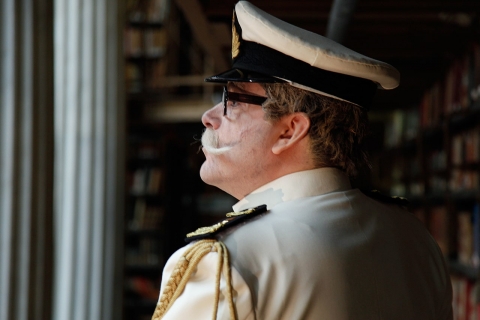
DIRECTOR
Alexandros Efklidis
SETS
Vassiliki Papadopoulou
COSTUMES
Natassa Dimitriou
LIGHTING
Spyros Tzoras
MUSICOLOGICAL COORDINATION
Dimitris Yakas
PIANO
Frixos Mortzos
DON GIOVANNI
Nikos Kotenidis
COMMENDATORE/MASETTO
Kostas Dotsikas
DONNA ANNA
Sophia Kyanidou
DON OTTAVIO
Nikos Stefanou
DONNA ELVIRA
Georgia Eliopoulos
LEPORELLO, DON GIOVANNI'S SERVANT
Dimitris Kassioumis
ZERLINA
Vassia Zacharopoulou
6 March 2014
CITIZENS THEATRE, PERISTERI
Starts at 20.00 |
Αdmission is free of charge with priority coupons which will be distributed at the entrance of the Citizens Theatre, one hour before the performance starts.
Citizens Theatre (Paparigopoulou 94, Peristeri tel.: 210 5779914)
Don Giovanni at a glance
The composer / Most people have a great sense of familiarity for Mozart, probably because his music is so pleasant at a first hearing. However, prevalent misconceptions about his life and work have formed an image that is much different to reality. These misconceptions, that have even altered his name, date as far back as the 19th century, when Mozart was first cast as a figure that inspired awe. That was when the rather bombastic Amadeus was introduced, a name that he used rarely and then only in jest, instead of the more prosaic Αmadé or Amadeo, which was how he usually signed his name. To this day, the misconceptions regarding Mozart continue to be propagated through popular presentations of his life and work, for example in film. There is certainly no doubt that Mozart was an intellectual and one of the most significant and introspective figures of his time. He was charismatic and sensitive, and embraced lofty ideals. However, recent research into his life and work continues to endow him with additional attributes, completing the portrait of a man who is constantly revealing new and exciting aspects of himself.
The opera / Don Giovanni is an opera in two acts. The libretto by Lorenzo Da Ponte was based on an earlier piece by Giovanni Bertati for Giuseppe Gazzaniga’s opera Don Giovanni Tenorio, or The Stone Guest, which premiered in Venice in 1787. The story revolves around the salacious adventures of the Spanish nobleman and libertine Don Giovanni. In one of these incidents, Don Giovanni tries to rape Donna Anna and kills her father in his effort to escape justice. But the elderly man returns from the dead to exact his revenge and Don Giovanni, unrepentant for his sins, is sent straight to hell. The opera ends with a moral, as was the usual practice at the time.
Premieres / Don Giovanni was first performed in Prague on 29 October 1787. For its premiere in Vienna on 7 May 1788, Mozart adapted the score to accommodate the new singers, while also adding a editing a number of the musical parts. The opera that is most often presented today is a combination of the original and adapted versions. The Greek National Opera first introduced Don Giovanni to its repertory on 20 March 1962 in a production directed by Antiochos Evangelatos. The Pocket Opera presents an abridged version of the original.
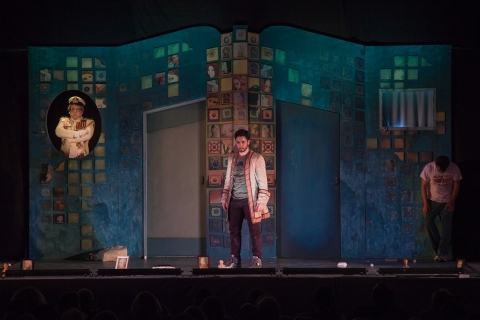
DIRECTOR
Alexandros Efklidis
SETS
Vassiliki Papadopoulou
COSTUMES
Natassa Dimitriou
LIGHTING
Spyros Tzoras
MUSICOLOGICAL COORDINATION
Dimitris Yakas
PIANO
Frixos Mortzos
DON GIOVANNI
Dionysos Tsantinis
COMMENDATORE/MASETTO
George Roupas
DONNA ANNA
Anna Stylianaki
DON OTTAVIO
Nikos Stefanou
DONNA ELVIRA
Georgia Eliopoulos
LEPORELLO, DON GIOVANNI'S SERVANT
Vangelis Maniatis
ZERLINA
Vassia Zacharopoulou
27 February 2014
MUNICIPAL THEATRE, ILIOUPOLI
Starts at 20.00 |
Αdmission is free of charge with priority coupons which will be distributed at the entrance of the Municipal Theatre of Ilioupoli, one hour before the performance starts.
Don Giovanni at a glance
The composer / Most people have a great sense of familiarity for Mozart, probably because his music is so pleasant at a first hearing. However, prevalent misconceptions about his life and work have formed an image that is much different to reality. These misconceptions, that have even altered his name, date as far back as the 19th century, when Mozart was first cast as a figure that inspired awe. That was when the rather bombastic Amadeus was introduced, a name that he used rarely and then only in jest, instead of the more prosaic Αmadé or Amadeo, which was how he usually signed his name. To this day, the misconceptions regarding Mozart continue to be propagated through popular presentations of his life and work, for example in film. There is certainly no doubt that Mozart was an intellectual and one of the most significant and introspective figures of his time. He was charismatic and sensitive, and embraced lofty ideals. However, recent research into his life and work continues to endow him with additional attributes, completing the portrait of a man who is constantly revealing new and exciting aspects of himself.
The opera / Don Giovanni is an opera in two acts. The libretto by Lorenzo Da Ponte was based on an earlier piece by Giovanni Bertati for Giuseppe Gazzaniga’s opera Don Giovanni Tenorio, or The Stone Guest, which premiered in Venice in 1787. The story revolves around the salacious adventures of the Spanish nobleman and libertine Don Giovanni. In one of these incidents, Don Giovanni tries to rape Donna Anna and kills her father in his effort to escape justice. But the elderly man returns from the dead to exact his revenge and Don Giovanni, unrepentant for his sins, is sent straight to hell. The opera ends with a moral, as was the usual practice at the time.
Premieres / Don Giovanni was first performed in Prague on 29 October 1787. For its premiere in Vienna on 7 May 1788, Mozart adapted the score to accommodate the new singers, while also adding a editing a number of the musical parts. The opera that is most often presented today is a combination of the original and adapted versions. The Greek National Opera first introduced Don Giovanni to its repertory on 20 March 1962 in a production directed by Antiochos Evangelatos. The Pocket Opera presents an abridged version of the original.
23 February 2014
Greek Operetta Cycle
Olympia Theatre's Foyer
Starts at 18.00 |
Free admission
CONDUCTORS
Miltos Logiadis (1, 2, 5, 7/ 2/ 2014)
Anastasios Simeonidis (8, 9/ 2/ 2014)
CHOREOGRAPHY
Renato Zanella
SETS - COSTUMES
Katerina Angelopoulou
LIGHTING
Vinicio Cheli
1, 2, 5, 7, 8, 9 February 2014
Olympia Theatre
Performances begin at 20.00 |
A few words from Renato Zanella:
“The music of Karaindrou is a journey by itself. The word “journey” is also very close to the context that this performance is supposed to have: a short journey”
“My intention is not to narrate a story about the movies. The movies are a world on their own. I wanted to let myself free to be inspired by the music and the films and to create something that describes what I felt while watching them, everything they talk about: all those wonderful and so intense things from which I immediately feel I had to take a distance, strong feelings, passion, despair and sorrow. “
“It was unavoidable for this work to develop under the shadow of this giant director and the truth is that I felt great pressure in the beginning. But all 3 of us, Eleni, Katerina and myself decided that we had to be freed from the films and to interpret the music for this new work.”
“The “journey” and “eternity” are two concepts which have a direct influence to the artist. Creativity, in which you give a personal imput, is like a journey, you never know where you are going to reach, or if what you have done will last in time.”
MUSIC SUPERVISION - TEACHING - ORCHESTRATION
Stelios Katsianis
Stratis Psaradellis
Maria Theofanidis
Constantina Kyriazis
9 February 2014
Guest Composer Cycle
Olympia Theatre's Foyer
Starts at 18.00 |
Free admission
STAVROS NIARCHOS FOUNDATION
CULTURAL CENTER
364 Syggrou Avenue, Kallithea
Box Office:
+30 213 0885700
Box Office email:
boxoffice@nationalopera.gr
Daily 09.00-21.00
info@nationalopera.gr