
Contact
ADDRESS
STAVROS NIARCHOS FOUNDATION
CULTURAL CENTER
364 Syggrou Avenue, Kallithea
TEL.
Box Office:
+30 213 0885700
Box Office email:
boxoffice@nationalopera.gr
Daily 09.00-21.00
info@nationalopera.gr
Register to our Newsletter





It is announced that on Saturday 5 October, the Greek National Opera Box Office at the Stavros Niarchos Foundation Cultural Center will be closed between 09.00 - 17.00, due to security measures at the premises in relation to the visit of the US Secretary of State, Mike Pompeo.
The GNO Learning & Participation participate in the pan-European programme “Tandem Europe”. The programme focuses on developing strategies for organizations, encourages innovation, and proposes creative and transnational solutions to the modern challenges faced by European societies. In “Tandem Europe 2019-20” Learning & Participation collaborate with the “Bozar” organization in Belgium and “E-DA” in Portugal.
DESIGN / IMPLEMENTATION: Learning & Participation Department of the GNO
PROJECT MANAGERS: Ann-Kristin Sofroniou, Niki Xenou
Tandem Europe, an initiative developed by the European Cultural Foundation and MitOst e.V., is supported by the Stavros Niarchos Foundation, amongst others.


Transmedia Labworks returns for a third year with the participation of young artists. The programme investigates innovative structures, forms and methods of performativity and dramatization in audiovisual spatial events, through experimentation and digital transmediality. This year, the workshop’s starting and return point will be the operatic singing and, in particular, Georg Friedrich Handel’s (1685-1759) aria “V’adoro pupille” from the opera Giulio Cesare (1724).
Participants with a background at visual and sound / music background will be selected through an open call process.
DESIGN / IMPLEMENTATION:
Stavros Gasparatos (composer, sound artist)
Tasos Kanellos (architect, MSc Computation)
Dr. Anna Laskari (architect, MSc Computation)
Panos Tsigkos (Music Technology
IMPLEMENTATION DATES: 19, 20 October, 2, 3, 9, 10, 30 November & 1, 14, 15, 21 December 2019
The Transmedia Labworks project is implemented in collaboration with the Athens Conservatoire’s Centre for Early Music
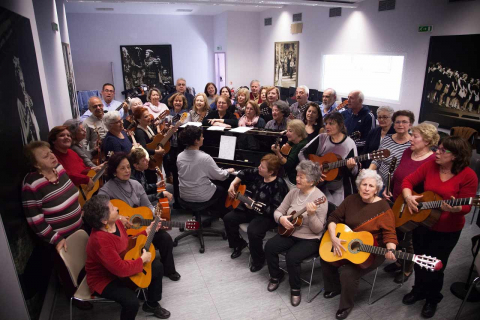
A guitar brought down from the attic, positive mood and beloved songs, that’s all that’s needed for the Guitar Express company to begin its musical alchemy. In the successful programme’s weekly meetings, time and current obligations are left outside the class. It is time for guitar strumming, adored songs, joy and relaxation. It is time to make music in the present with materials from the past so as to win over the future.
DESIGN / IMPLEMENTATION:
Kiki Kerzeli
SCIENTIFIC CONSULTANT:
Ioanna Etmektsoglou
IMPLEMENTATION DATES: Tuesdays and Wednesdays (11.00 – 13.00)
INFORMATION / REGISTRATION: This email address is being protected from spambots. You need JavaScript enabled to view it., 213 088 5742 (Monday – Friday 10.00 – 15.00)
Free participation on a first come, first served basis
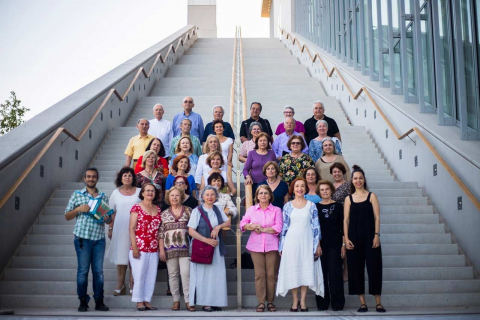
“The chorus is for women and men over 65 who want to share the joy of music. For those who have a secret wish to experiment with different songs – known or unknown. For those who want to unite their voices with the voices of other people. For those who need to sing. For those who feel the time has come to be heard.” – Dimitra Papastavrou
CHORUS CONDUCTOR:
Dimitra Papastavrou
PIANO:
Kostas Papathymnios
IMPLEMENTATION DATES: Mondays (16.00 – 18.00)
INFORMATION / REGISTRATION: This email address is being protected from spambots. You need JavaScript enabled to view it., 213 088 5752 (Monday – Friday 10.00 – 15.00)
Free participation on a first come, first served basis
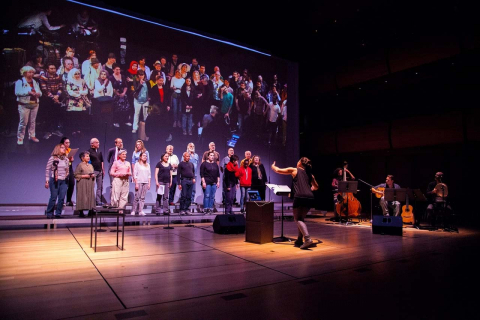
In the fourth year since its formation, the GNO Alternative Stage’s Intercultural Choir continues its thrilling multicultural journey into the four corners of the world. Songs of imperishable melodic richness from the traditional music of the countries of origin of its members (it already numbers more than 25 members) make up its repertoire which is constantly enriched with new material. Each meeting is a unique musical experience!
CHOIR CONDUCTOR: Vassula Delli
IMPLEMENTATION DATES: Mondays (18.30 – 20.00)
INFORMATION / REGISTRATION: This email address is being protected from spambots. You need JavaScript enabled to view it., 213 088 5752 (Monday – Friday 10.00. – 18.00)
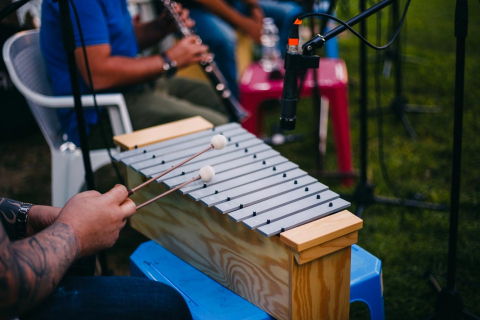
The Music Workshop at the male wing of the Korydallos Penitentiary continues with a fifth cycle of meetings. Through experimentation and guidance by experienced musicians, participants will acquire basic music and performing skills.
DESIGN / IMPLEMENTATION:
Maria-Christina Harper (musician, music healer), t.b.a.
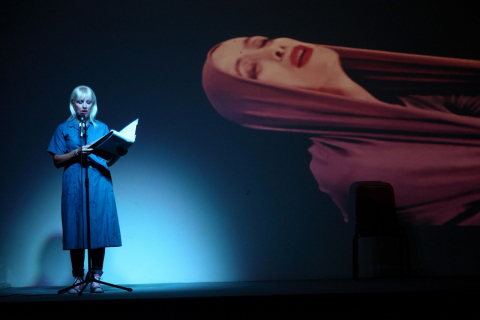
The Dance Workshop at the Eleonas Penitentiary in Thebes continues with a new cycle of meetings aiming at cultivating the free expression stemming from group dance processes. Through guided exercises, female participants create their own original choreographies, which will be presented at the end of the workshop as a dance-theatre performance.
DESIGN / IMPLEMENTATION:
Hara Kotsali (dancer, choreographer)
Katerina Spyropoulou (dancer, choreographer)
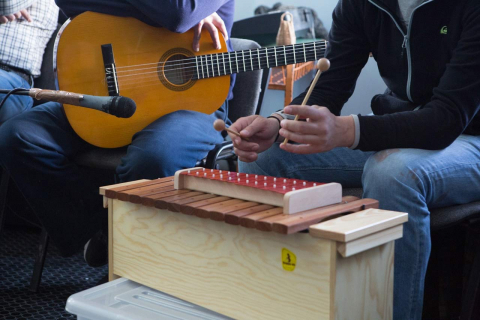
For a second year in a row, GNO’s Learning & Participation continue the music workshop at the General Penitentiary of Thessaloniki (Diavata Prison). The workshop’s goal is to acquaint participants with the sound of different musical instruments and rhythm as creative tools of expression and help them compose and perform their own original pieces through a guided group process.
DESIGN / IMPLEMENTATION:
Kostas Makrygiannakis (musician)
Michalis Sionas (director, musician)
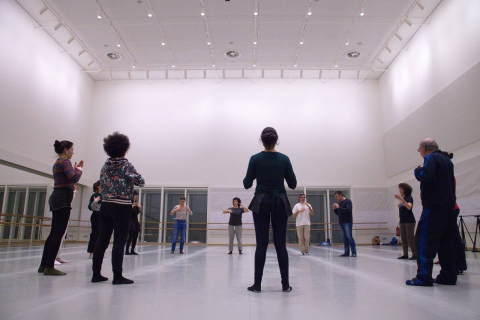
The workshop Connecting body focuses on the development process of kinesthetics and music perception, as participants learn to harmoniously share space and time. A basic instrument for attaining this result is body music, which proposes an experiential way of co-existing and communicating based exclusively on the use of the body for producing music. The workshop is targeted at people of all ages and it can simultaneously include persons with or without sensory disabilities. The result is every time unique and it depends on the group’s special character.
DESIGN: Yiota Peklari
IMPLEMENTATION: Yiota Peklari, Vicky Skordali
IMPLEMENTATION DATES: Mondays (17.00 – 19.00)
INFORMATION / REGISTRATION: This email address is being protected from spambots. You need JavaScript enabled to view it., 213 088 5752 (Monday – Friday 10.00. – 18.00)

A new music and speech workshop is launched by the GNO’s Learning & Participation, this time at the Nigrita Penitentiary in Serres. The workshop’s basic goal is to cultivate participants’ creativity, team spirit and free expression.
DESIGN / IMPLEMENTATION:
Kostas Makrygiannakis (musician)
Michalis Sionas (director, musician)
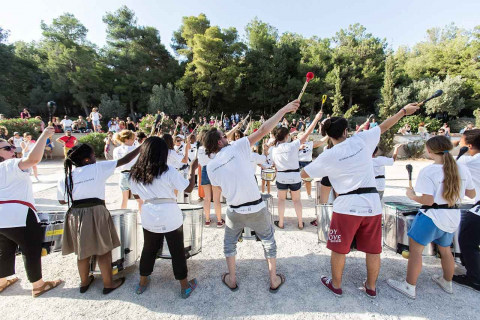
Learning & Participation deepen their collaboration with the explosive Drum Works from East London introducing a series of weekly workshops of music, composition and performance through the use of percussion instruments. Drum Works will once again visit the Greek National Opera for a series of intensive workshops in collaboration with “Atrapos”, Schedia – street magazine and other community groups of Athens. Workshops will climax with a big concert, a percussion marathon, and open workshops for the audience (March 2020).
PLANNING / IMPLEMENTATION:
Drum Works
Myrto Tikof (musician)
Alexis Stavropoulos (musician)
Dimitris Bourzoukos (musician)
INFORMATION / REGISTRATION: This email address is being protected from spambots. You need JavaScript enabled to view it., 213 088 5752 (Monday – Friday 10.00. – 18.00)


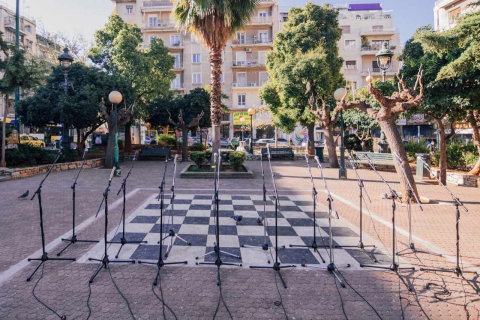
The Co-OPERAtive: An intercultural and collaborative opera hub for young people project, winner of the 2019 Fedora European Prize for Education, is an opera hub for a mixed group of 60 young Athenians and unaccompanied minor asylum seekers aged 14-18 from across Attica.
A few words about the project
The Co-OPERAtive project is an opera hub for a mixed group of 60 young Athenians and unaccompanied asylum-seeking minors aged 15-17 from across Attica. The project is inspired by opera, which is a common language for creating the first intercultural youth opera hub in Europe. Co-OPERAtive aims to expand opera’s appeal and make it more known to youth audiences, while bringing out cultural diversity and social cohesion. Foregrounding opera’s cooperative nature, the Co-OPERAtive project places collaboration at the heart of its design and implementation, building strong alliances with three partner-organizations, ARSIS, The HOME Project and Melissa Network.
The project will be implemented from January to June 2020 in the Greek National Opera’s venues at the Stavros Niarchos Foundation Cultural Center. Detailed information about the project and the participation process will be announced in September 2019 on the GNO webpage (www. nationalopera.gr).
The Co-OPERAtive project brings out three of opera’s basic disciplines: music, theatre and dance. The music section includes instrumental music composition, vocal and improvisation workshops. The theatre section includes creative writing, acting, and directing workshops, and the dance section ballet, contemporary dance, and choreography classes. Alongside the artistic team, the GNO’s professional personnel will contribute in the areas of lighting design, stage management, sound engineering, etc.
Artistic Team
Director: Themelis Glynatsis
Music supervision/ Conductor: Andys Skordis
Music workshop Leaders: Nikolaos Zaziaris, Ann-Kristin Sofroniou
Theatre workshop Leaders: Panagiotis Exarcheas, Eleni Moleski
Movement coach: Edgen Lame
Dance workshop Leaders: Edgen Lame & Katerina Gevetzi
Sets & Costumes: Christina Spanou
Fedora Platform
The Fedora Platform is a European Organization established to support the revival of opera and ballet. Its network of supporters consists of people and companies in Europe, wishing to support the genre of Opera and expand its audience on a global level through their philanthropic work.
Opera Europe
Opera Europa is the largest network of opera houses and Opera and Ballet professionals in Europe. Its main office is in Brussels. It currently serves over 200 member organizations from 43 different countries across Europe. The GNO is an active member of Opera Europa and participates in all its activities on a yearly basis.
FINAL PERFORMANCES: 13 & 14 June 2020, GNO Alternative Stage
INFORMATION / REGISTRATION: This email address is being protected from spambots. You need JavaScript enabled to view it., 213 088 5752 (Monday – Friday, 10.00 – 18.00)





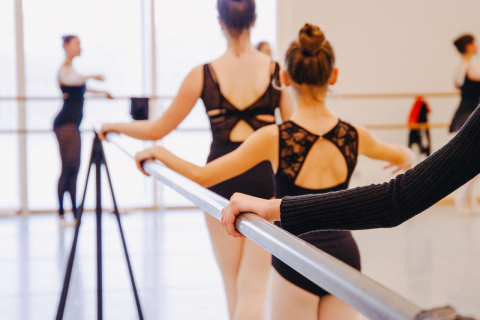
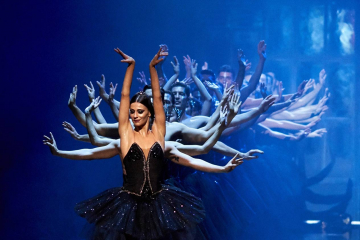
The Greek National Opera invites for a second year children, teenagers, adults and people aged over 65 to get to know the work of Marius Petipa (1818-1910) through a workshop held on the occasion of the 200th anniversary of his birth. The Meet Petipa workshop aims at introducing the top choreographer’s work to young audiences through the teaching of excerpts from his original, imaginative choreography for the masterly Swan Lake.
DESIGN / IMPLEMENTATION: T.B.A.
IMPLEMENTATION DATES: 7, 8, 14, 15 December 2019 (15.00 – 17.00)
INFORMATION / REGISTRATION: This email address is being protected from spambots. You need JavaScript enabled to view it., 213 088 5752 (Monday – Friday 10.00 – 18.00)
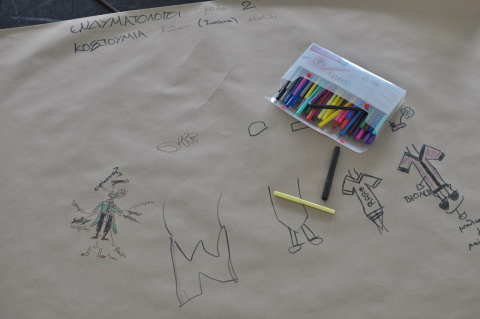
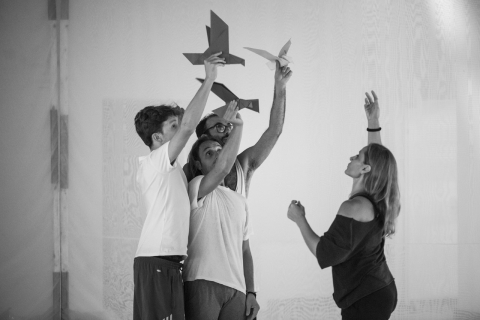
A project that awakens the motor and auditory development of infants and pre-schoolers through four periods of classical music: Baroque, classicism, romanticism and 20th-century music, with an approach including parent participation.
Through music-and-movement games children within the group discover timbre and style and get acquainted with the sound of classical music and the basic categories of musical instruments.
The workshop is targeted at two age groups: 0-24 months old and 2-4 years old. The presence of at least one parent is necessary for both age groups.
ANIMATEUR Daphne Tsiouni (music educator / sound artist)
IMPLEMENTATION DATES 15,22,29 March, 5 April 10a.m.– 12p.m.
INFORMATION/REGISTRATION: This email address is being protected from spambots. You need JavaScript enabled to view it., 213 088 5752 (Monday - Friday 10.00 – 18.00)
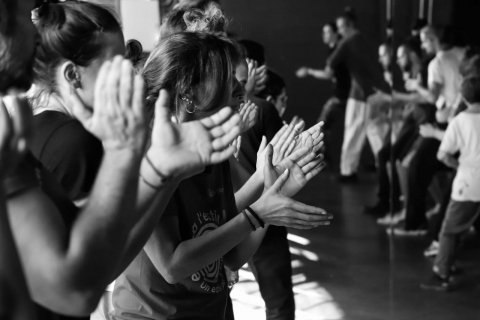
In the Visualizing Sound movement workshop, people with or without sensory disabilities interact, express themselves, and mainly feel by using exclusively their body to produce music. This is body music, the most ancient form of music. A form of expression that combines rhythm, movement and music and allows for the participant to live an unprecedented musical experience. Through the exploration of space and the potential of body sounds, original soundscapes based on contemporary dance techniques, improvisation and body music will be created, while at the same time the kinaesthetic perception, the ability to read and produce sound through one’s body, the handling of expressive means, communication and the stimulation of imagination will be developed.
PARTICIPATION IS FREE ON A FIRST COME FIRST SERVED BASIS
Registration Period: September – October 2018
Επικοινωνία – Eγγραφές
This email address is being protected from spambots. You need JavaScript enabled to view it.
Monday - Friday, 9.00-15.00
Tel. 2130885742
Music workshop at Korydallos Penitentiary
Dance workshop at the Eleonas Penitentiary in Thebes
Music workshop at the Diavata Penitentiary in Thessaloniki
Regional troupes meeting in Larissa
The Nightingale Whispered To Me
Head of GNO Learning & Participation 2018/19: Evi Nakou
Conductor
Elias Voudouris
Choreography-director-sets
Konstantinos Rigos, with references to the choreographies of Marius Petipa and Lev Ivanov
Original composition
Thodoris Regklis
Dramaturgy consultant
Alexandros Efklidis
Costumes
George Segredakis
Lighting
Christos Tziogkas
Associate architect
Mary Tsagari
Video
Konstantinos Garinis
Siegfried
Vangelis Bikos (4, 6/10)
Danilo Zeka (5/10)
Odette
Maria Kousouni (4, 6/10)
Eleana Andreoudi (5/10)
Odile
Eleana Andreoudi (4, 6/10)
Maria Kousouni (5/10)
Queen
Natassa Siouta (4, 5, 6/10)
Tutor
Stratos Papanoussis (4, 6/10)
Yorgos Varvariotis (5/10)
Rothbart
Yorgos Varvariotis (4, 6/10)
igor Siadzko (5/10)
With the GNO Orchestra, Principal dancers, Soloists, Demi-Soloists and Corps de Ballet
Ticket prices: 25, 30, 40 €
Students, reduced: 12 €
Thessaloniki Concert Hall
M1 - Hall of the Friends of Music
Starts at: 21.00 |  2 hours and 30 minutes

ACT I A magnificent park outside the palace. Prince Siegfried is celebrating his birthday with his tutor, friends and peasants.The revelries are interrupted by Siegfried’s mother, the Queen, who is concerned about her son’s carefree lifestyle. She tells him that he must choose a bride at the royal ball the following evening. Siegfried is upset that he cannot marry for love. His friend Benno and the tutor try to lift his troubled mood. As evening falls, Benno sees a flock of swans flying overhead and suggests they go on a hunt. Siegfried and his friends take their crossbows and set off in pursuit of the swans.
ACT II That night at the lake Siegfried is transfixed by the appearance of a swan, which changes before his eyes into the princess Odette. She and her maidens are prisoners of the sorcerer Rothbart, and condemned to be swans for all but a few hours of each night. Only a vow of true love and fidelity can break the spell. Rothbart suddenly appears. Siegfried threatens to kill him but Odette intercedes – if Rothbart dies before the spell is broken, it can never be undone. As Rothbart disappears, the swan maidens fill the clearing. Siegfried breaks his crossbow, and sets about winning Odette’s trust as the two fall in love. But as dawn arrives, the evil spell draws Odette and her companions back to the lake and they are turned into swans again.
ACT III The next night in the palace ballroom. A great ball is in progress, and this evening the distracted prince is expected to choose a future consort to reign with him. None are aware of his secret love for Odette. The festivities are interrupted by the arrival of Rothbart and his retinue, which includes his daughter Odile. Strangely resembling Odette, the seductive beauty captivates Siegfried. Odette appears and attempts to warn Siegfried, but he does not see her. He then proclaims to the court that he will marry Odile, believing her to be Odette, before Rothbart shows him a magical vision of Odette. Grief-stricken and realizing his mistake, Siegfried hurries back to the lake.
ACT IV That night at the lake Odette is distraught. The swan-maidens try to comfort her. Siegfried returns to the lake and makes a passionate apology. She forgives him, but his betrayal cannot be undone. Rather than remain a swan forever, Odette chooses to die. Siegfried chooses to die with her and they leap into the lake. This breaks Rothbart’s spell over the swan maidens, causing him to lose his power over them and he dies. The lake rises from the storm and drowns Odette and Siegfried. The storm quiets, and a group of swans appears on the lake.
Greek National Opera Alternative Stage
Stavros Niarchos Foundation Cultural Center
Free admission upon priority vouchers
Starts at: 20.00 |
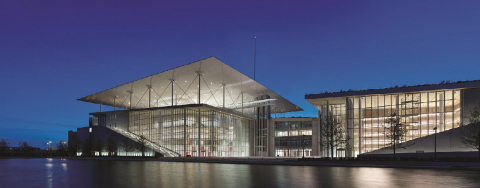
Presale of the Greek National Opera September to December 2019 production will start on Friday 2 August 2019.

It is announced that, due to illeness, the soprano Ekaterina Siurina will not be able to perform the role of Violetta Valéry in the performanceof La traviata, on Wednesday 31 July. The role will be performed by the soprano Maria Mudryak.

Libretto: Efthimis Filippou
English translation: Kyriacos Karseras
German translation: Yorgos Depastas
Directors: Christos Passalis, Angeliki Papoulia
Music – Dramaturgy: Angélica Castelló, Angeliki Papoulia, Christos Passalis, Tom Pauwels, Diederik Peeters, Michael Schmid
Set designer: Clio Boboti
Costume designer: Vassilia Rozana
Lighting designer: Eliza Alexandropoulou
Make up: Niki Ovakoglou
Set designer's assistant: Filanthi Bougatsou
Production manager: Maria Dourou
Performers: Angélica Castelló, Angeliki Papoulia, Christos Passalis, Tom Pauwels, Diederik Peeters, Michael Schmid
Guest appearance: Yorgos Stefanakos, Maria Dourou
World premiere / A co-production with the Ictus Ensemble / Belgium
Greek National Opera Alternative Stage
Stavros Niarchos Foundation Cultural Center
Starts at: 20.30 (Sunday: 19.00) |
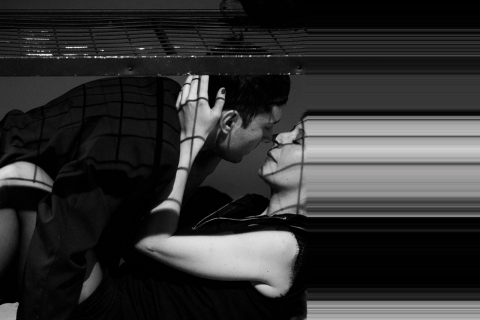
MUSIC
Herbert Mitschke
CONCEPT, DIRECTOR
Kostas Papakostopoulos
SETS, COSTUMES
Zezo Dinekov
Lighting
Julia Kaindl
VIDEO
John Seidler
DRAMATURGY
Christina Ripeanu
GRAPHIC DESIGNER
Andreas Tsortanidis
CAST
Thomas Franke, Florian Gierlichs, Nikos Goudanakis, Stefan Kleinert, Lisa Sophie Kusz, Antonis Michalopoulos, Vassilis Nalbantis
Based on Lars von Trier’s film of the same title
A co-production with Deutsch Griechischen Theater - Kostas Papakostopoulos
Greek National Opera Alternative Stage
Stavros Niarchos Foundation Cultural Center
In German with greek surtitles
Starts at: 20.00 |
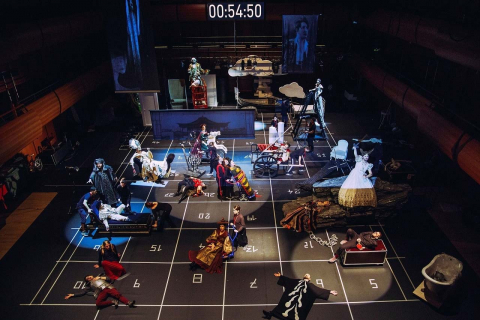
DIRECTOR
Zoe Hadjiantoniou
VISUAL CURATING: SPACE, SETS, PROPS AND THE ARCHIVE OF THE HISTORICAL COSTUMES OF GNO
Petros Touloudis
CONDUCTOR
Michalis Papapetrou
VIDEO MAPPING
Pantelis Makkas
SELECTION OF HISTORIC PHOTOGRAPHS AND RECORDINGS OF THE GNO ARCHIVE
Yannis Svolos
SOFTWARE DEVELOPMENT AND ELECTROACOUSTIC SOUND DESIGN
Giorgos Mizithras
LIGHTING
Eliza Alexandropoulou
In collaboration with “Youth Opera”. Performing (in alphabetical order):
Mary Gougousi, Vasileios Gkounelas, Konstantinos Zampounis, Drosiella Kaloudi, Andreas Karaoulis, Maxim Klonovskiy, Liana Kokosi, Zoi Liapi, Caterina Mirtsiou, Katerina Botoni, Georgios Papadimitriou, Ioulia Spanou, Vivi Sykioti, Marinos Tarnanas
Assistants
Panos Argyropoulos, Dafne Doulie, Alexandra Drandaki, Giannis Englezos, Drosiella Kaloudi, Dimitris Karamanos, Zoi Liapi, Grigoria Metheniti, Eleni Boti, Ada Pourani, Stella Tripolitaki, Dimitris Charalampopoulos
With the participation of the Athens Youth Symphony Orchestra (ASON)
Free admission upon priority vouches
For the purposes of the performance the Alternative Stage’s stall seats have been removed, and viewers will only be able to watch the show from the balconies. The philosophy of the performance allows the alternation and free movement of viewers throughout its duration. The maximum number of viewers cannot be over 250. Admission is free upon priority vouchers which will be distributed at the GNO box office an hour before the beginning of the performance, as well as during it, should there still be any available seats left.
Greek premiere
Greek National Opera Alternative Stage
Stavros Niarchos Foundation Cultural Center
Starts at: 20.30 |
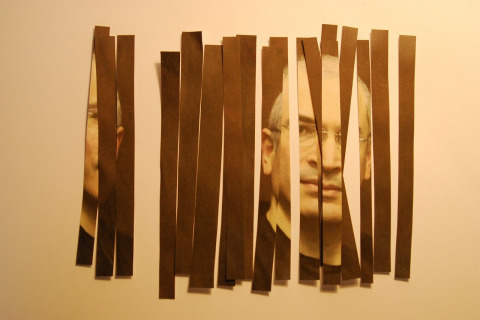
CONDUCTOR
Jury Everhartz
LIBRETTO, DIRECTOR
Kristine Tornquist / Assistant Roberta Cortese
SETS
Andrea Költringer
COSTUME DESIGN
Markus Kuscher / Assistant Claire Blake
CHOREOGRAPH
Bärbel Strehlau
LIGHTING DESIGNER / TECHNICAL DIRECTOR
Edgar Aichinger
DIRECTOR OF STUDIES
Petra Giacalone
PRODUCTION
Martin Scharnhorst
Mikhail Borisovich Khodorkovsky
Clemens Kölbl
Marina Filippovna Khodorkovskaya
Ingrid Habermann
Vladimir Vladimirovich Putin
Alexander Mayr
Igor Ivanovich Sechin
Steven Scheschareg
Leonid Borissovich Nevzlin
Gernot Heinrich
Ivan Ivanovich
Sébastien Soulès
Natasha
Lisa Rombach
Xenia Kritikovskaya, TV-reporter
Elsa Giannoulidou
Kate, Company PR
Tehmine Schaeffer
Alexei Vladimirovich Pitchugin
Matthias Haid
Vladimir Petukhov
Martin Mairinger
Roman Arkadyevich Abramovich
Richard Klein
Matteo Tiziani
Dieter Kschwendt-Michel
Fortuna
Bärbel Strehlau
With the participation of a 13-member instrumental ensemble
Ticket prices: €15, €20
Students: €10
Greek premiere
A Königsdrama with text by Kristine Tornquist and music by Periklis Liakakis
A co-production with Sirene Operntheater / Austria
Greek National Opera Alternative Stage
Stavros Niarchos Foundation Cultural Center
Starts at: 20.30 |
A Russian proverb summarizes it into a simple picture: you cannot draw clean water from a well that you yourself have been spitting into for years. In the last few years of the Soviet Union, the shadow economy called „na levo“ was a necessary survival practice in a collapsing system. But in the post-Soviet chaos the freedom to spit everywhere was almost unlimited. During this time, when not law but Fortuna was governing, two young, ambitious men worked their way up. When the leader of the oligarch pack, Khodorkovsky, and Putin, the newly elected president, met at the top, not only two powerful men were standing in each others way, but also the two principles of power they represented - the power of money and the power of politics. I wrote the libretto in 2013. Khodorkovsky had bought politics often enough and corrupted it, but after all Putin had defeated him and the money with the help of the corrupt judiciary.
Mikhail Borisovich had been in prison for ten years and there was no telling if he would ever leave it alive. But he was not absent. I followed his public correspondence with Lyudmila Ulitzkaja and his other writings from custody. I was impressed by the polite and careful tone of the letters - the letters show a man who realizes his own mistakes. 20 years of uncontrolled capitalism and liberalism had destroyed civil society and poisoned the wells. He changed his mind, he thinks ahead. A strong and open civil society (with clean wells) is a country's greatest wealth and strength and the only way to guarantee security.
Democracy never follows a revolution. Revolutionary forces are too rough for something so fragile. It is a long and effortful process to balance democracy - an exhausting and endless process of mistakes, of rethinking and giving in. Not only in Russia there is a need to think about history and learn from it but everywhere.
Kristine Tornquist
BIOGRAPHIES
Periklis Liakakis Composition
Born in Athens, he received prizes and scholarships for his work by the Cities of Vienna and Graz, the University of Music and Performing Arts in Vienna, the Austrian Office of the Federal Chancellor, the Greek Friends of Classical Music Society and the Thüringen Philharmonie. He collaborated with such ensembles as Ensemble Modern, Die Reihe, Athens State Orchestra, National Symphony Orchestra of Hellenic Broadcasting Corporation, Phace, Oktoplus and Dramagraz. He has been commissioned to compose works by the City of Trossingen (Germany), the Ensemble Modern International Academy, Vienna Saxophon Quartet and sirene Operntheater. In 2017 Chodorkowski was nominated as the best new production for music theatre at the Austrian Music Theatre Awards. In his work he blends different musical styles such as orchestral, operatic, electronics and pop / rock, which has led him to a very personal musical style. He holds a teaching position for over a decade at the University of Music and the Performing Arts in Vienna and since 2010 he is a Senior Lecturer.
Christine Tornquist Libretto, director
Born in Graz, Austria, she studied metal sculpture at the University of Applied Arts of Vienna and learned the craft of goldsmithing. Since then, she has been circling freely between visual arts, theatre, writing and thinking.
The desire for collaboration with other artists led her to the creation of the art group 31.Mai (1986-1991), the artist duo Burkert / Tornquist, the foundation of the Theater am Sofa (1998-2006) and the opera company sirene Operntheater (since 1998, with Jury Everhartz). She has written forty two libretti, which were set to music and directed for more than fifty new operas for sirene Operntheater, Vienna Chamber Opera, Tyrolean State Theatre (Innsbruck), Carinthian Summer and others. As a visual artist, she works in video formats and as a painter.
Jury Everhartz Conductor
Born in Berlin, he lives in Vienna as a composer, organist, conductor and curator. He studied theology, philosophy, musicology, church music and composition in Berlin and Vienna. He is married to the author and director Kristine Tornquist, with whom he founded the sirene Operntheater in 1998. Αs a conductor he is specialized to contemporary music. Moreover, as a conductor he premiered numerous works of Austrian composers and conducted in Berlin, Cairo, London, Ossiach, Steyr and Zagreb, including festivals such as Wien Modern, Zagreb Music Biennial, Carinthian Summer and many others. He has composed ten stage works and numerous compositions for chamber music ensembles. One focus of his work here is on vocal music, in almost all of his compositions the focus is on the human voice. Moreover, he is a sought-after curator and juror, for example for the Belvedere Singing Competition at the Vienna State Opera, as well as at the opera houses in Yerevan, Istanbul, Udine, Wroclaw, Hamburg, Cologne and Stuttgart. He works as a music adviser in the Austrian Federal Chancellery.
Andrea Költringer Sets
After her studies at the Mozarteum University in Salzburg (Austria), she worked as a costume and set designer for Salzburg State Theatre [Salzburger Landestheater], Schauspielhaus Salzburg, Linz State Theatre, Vereinigte Bühnen Graz, Vereinigte Bühnen Bozen, Volkstheater Wien, TAG Vienna, Hamakom Vienna and Coburg State Theatre. Furthermore, she collaborated in free productions with L.U.S. Theatre, the association o r t s z e i t and the “new space company”. She also created several set designs for Music High school in Munich, Scene Salzburg and sirene Operntheater. Guest performances led her with sirene Operntheater to Zagreb and Cairo and with o r t s z e i t to São Paulo (Brazil). She took part in several art projects with a social impact. In 2008 together with the “new space company” she won the Nestroy Theatre Prize for the best off production for the play komA.
Markus Kuscher Costumes
Born in Klagenfurt, Austria, he did his apprenticeship as a tailor at the Vienna State Opera and worked later as a technical director for several Viennese fashion design and costume workshops. Since 1992 he is working as a freelancer, mostly as a costume and set designer. He collaborated among others with Barrie Kosky, Michael Sturminger, Vintilă Ivănceanu, Barbara Albert, Homunculus, Messing, Robert Lepage, Jan Fabre, Christoph Marthaler, Peter Sellars, Kristine Tornquist.
Bärbel Strehlau Choreography, Fortuna
Born in East-Berlin, she studied dancing at the State Ballet School, Berlin, and choreography at the University of Performing Arts Ernst Busch, Berlin. In 1992 she was founding member of the Freies-Tanztheater Berlin. From 1991 to 2008 beside her activity as a freelancer, she worked as a dancer, trainer and choreographer at several theatres in Germany. Since 2008 she lives in Vienna, where she works as a free choreographer, dancer, director and author. Since then she has been working in several projects such as Theater Drachengasse, Kosmostheater, Jungle Vienna, Nestroyhof and Palais Kabelwerk. In 2012 she was founding member and artistic director of “artfusion”, producing the theatre trilogy Goodbye Europe (2013/17), where she worked as an author and a director. Chodorkowski (2015) was her first collaboration with sirene Operntheater. Recently she worked on a comic book for the theatre project Meet Europe in Person, which was published in 2019.
Edgar Aichinger Lighting
He has been working for more than thirty years as a lighting and sound designer, as a technician and occasionally as a musician, mainly in the fields of music, theatre, exhibition and dance. He has designed and realized numerous lighting concepts for theatre performances and dance shows and has been on tour, sometimes all over Europe, Mexico, New York, Turkey and Egypt. Since 1997 he has been working, almost each summer, at the Viennese Ιnternational Dance festival ImPulsTanz, in collaboration with some of the world’s biggest dance companies. He is co-founding member of sirene Operntheater and has taken part in the majority of its works as a technical director and a “lighting captain” in regular theatre halls as well as in unusual venues like industrial buildings, orphaned authority offices, dance halls and public spaces.
Elsa Giannoulidou Xenia Kritikovskaya
Greek mezzo-soprano, she was born in Athens, she received her biology degree from the Aristotle University of Thessaloniki before starting her musical studies. She graduated with honors from the University of Music and Performing Arts of Vienna, where she studied opera, Lied and oratorio. She was awarded scholarships from the Richard Wagner Foundation, the Janacek-Sobotka Foundation and the University of Music and Performing Arts in Vienna. She was a member of the International Opera Studio in Zurich and won first prizes in international competitions. As a soloist at the Landestheater Linz (Austria), she sang, among other, Isabella (L’Italiana in Algeri), Angelina (La Cenerentola), Nicklausse (Les Contes d'Hoffmann), Suzuki (Madama Butterfly), Dorabella (Così fan tutte), Nancy (Albert Herring), Cherubino (Le nozze di Figaro). As a concert singer she gave song recitals, sang in chamber music concerts in Austria (Musikverein Vienna, St. Stephen's Cathedral, Landesgalerie Linz), Greece, Germany, Italy, Serbia and France and worked with ensembles such as Belgrader Philharmoniker, Bruckner Orchester, Virtuosi Brunensis and Capella Istropolitana.
Ingrid Habermann Marina Filippovna Khodorkovskaya
Soprano, born in Linz. She studied at the Mozarteum, Salzburg. Her first engagement was at the Bern Theatre, where she sang among others Sophie (Der Rosenkavalier) and Norina (Don Pasquale). Later, followed a position as ensemble member at the Linz State Theatre. Her roles entailed all significant of Mozart’s repertoire, as well as Violetta in (La traviata), Gilda (Rigoletto), Leila (Les Pêcheurs de perles) and Rosalinde (Die Fledermaus). She performed at the La Monnaie, Brussels, (cond. Antonio Pappano), Graz and Klagenfurt Operas. She worked with directors such as Christof Loy, Stein Winge, Beverly Blankenship and David Pountney. A focus of her career are works of the 20th and 21st century. She sang Sophie Scholl (Die Weiße Rose), Marie (Wozzeck), Pierrot Lunaire at the Gmundner Festival and played a part in numerous Austrian debut performances. She sang the Duchess (Powder Her Face) in Vienna and at the De Vlaamse Opera Antwerpen and performed La Voix humaine in Linz, at the Concert hall Vienna and in the Netherlands. Over the past few years she collaborates closely with the sirene Operntheater.
Matthias Haid Alexei Vladimirovich Pitchugin
Austrian baritone, he studied voice and piano at the Mozarteum, Salzburg. He has performed numerous roles in various opera houses in Austria and Germany, including Hänsel und Gretel, Hello Dolly, Il barbiere di Siviglia, La traviata, Der Bettelstudent and Chodorkowski. In addition, he regularly gives concerts singing such repertoire as A German Requiem by Brahms, Christmas Oratorio by Bach, Telemann and Distler. He currently lives in Paris as a singer, pianist and teacher.
Gernot Heinrich Leonid Borisovich Nevzlin
Austrian tenor, he began his musical training as soloist of the Vienna Boys Choir [Wiener Sängerknaben]. He studied trumpet at the University of Music in Graz and singing at the University of Music in Vienna. He has performed in over forty opera and operetta productions and has sung in the Ulan Bator State Theater (Mongolia), Frankfurt Opera, New Opera Vienna, Vienna Chamber Opera and in such festivals as Bregenz Festival, Seefestspiele Mörbisch, Carinthian Summer Music Festival, Ruhr Festival in Recklinghausen, Wien Modern, Vienna Festival [Vienna Festwochen], Styriarte, Osterfestival Psalm, Festival dell' Aurora in Crotone, Budapest Spring Festival, Kyburgiade. He sang in several contemporary operas, at sirene Operntheater’s productions as well as for Neue Oper Wien. A further focus of his work lies in concerts and oratorios: he sang Händel’s Messiah, Haydn’s Stabat Mater and two Clemencic-Consort concerts (Vienna Musikverein), Bach's Johannespassion (Polen) and Matthäuspassion (Klagenfurt), Orff’s Carmina Burana (Liszt Centre, Raiding), Haydn’s Schöpfung (Organ festival, Lockenhaus).
Richard Klein Roman Arkadyevich Abramovich
Tyrolean tenor, he studied jazz piano at the Tyrolean State Conservatory, but subsequently switched to classical singing. He graduated from the University of Music and Performing Arts Vienna. His repertoire reaches from early music over classical and romantic opera, Lied and oratorio to operetta and contemporary musical theatre. He performed at Tyrolean State Theatre (Innsbruck), Berlin State Opera, Innsbruck Festival of Early Music, children's tent of the Vienna State Opera, sirene Operntheater, Musica Festival in Strasbourg, Elbphilharmonie Hamburg, Konzerthaus Vienna, Oldenburg State Theatre, Klagenfurt State Theatre, Theater an der Rott, Linz State Theatre and Tyrolean Festival Erl. He has worked with conductors like René Jacobs, Konrad Junghänel, Dietfried Bernet, Andreas Spörri, Thomas Rösner, Karsten Januschke, Caspar Richter and Gustav Kuhn. In 2006 he founded the vocal quartet Mundschenk, performing primarily works of Franz Schubert and Felix Mendelssohn. In the summer of 2008, he completed his law studies at the University of Innsbruck.
Clemens Kölbl Mikhail Borisovich Khodorkovsky
Baritone, born in Innsbruck, Austria. He received his first musical education within the family, playing piano from early ages. He started studying architecture but soon was caught by bands, chorus, and musical theatre projects, along with his first singing lessons. In 2000 he enrolled for vocal studies at the University of Music and Performing Arts, Vienna. Further stages were two years at the Royal College of Music in London (Prof. Neil Mackie, Prof. David Ward), a Post Graduate Diploma with distinction, various opera and recital projects, works with Austrian and UK’s choirs and ensembles, a study visit to Paris, numerous masterclasses. In 2007 he concluded his Master Studies with Prof. Ralf Döring and Prof. David Lutz in Vienna and since 2009 he has been coached by Wicus Slabbert. His work stretches from teaching singing and Lied repertoire at the University Vienna, over conducting children’s and detainees’ choirs, students’ and amateur orchestras, up to performing in original new music projects, off-theatre productions, experimental Lieder recitals, as well as singing classical sacred and operatic works.
Dieter Kschwendt-Michel Matteo Tiziani
Baritone, he was born in Vienna, Austria. Before pursuing the career of an opera singer, he studied history and politics at the University of Vienna and worked as a journalist. He also entered the opera and operetta class at the Vienna Conservatory of Music. Engagements and guest contracts then led him to the Volksoper Wien, Neue Oper Vienna, Stadttheater Baden, Theater am Kornmarkt Bregenz, Regensburg Theatre, Ulmer Theatre, Sarajevo National Opera, Teatro Lope de Vega, in Seville, and to the Angelico Auditorium San Francisco. He is a regular guest at European festivals (Bregenz Festival, St. Margarethen Opera Festival, Seefestspiele Mörbisch). The singer’s extensive repertoire reaches from opera to operetta, musical and contemporary music. On stage he has sung more than fifty different roles and was a leading soloist in more than twenty first performances.
Martin Mairinger Vladimir Petukhov
Tenor, born in Horn, Austria. He studied singing as well as operetta, lied and oratorio at the Vienna Conservatory, attending also vocal lessons under Gerhard Kahry. He has engagements at Burgtheater, Volkstheater, Theater an der Wien, Vienna Konzerthaus, Vienna Musikverein, Salzburg Festival, Bregenz Festival, Festival Origen, Opera de Lille, Opera Klosterneuburg, Musiktheaterfrühling Kilb and others, as well as in worldwide concerts and tours. In his repertoire are roles such as Tamino (Die Zauberflöte), Fenton (The Merry Wives of Windsor), Rosillon (Die lustige Witwe), Stanislaus (Der Vogelhändler), Lieutenant Niki (Ein Walzertraum), Swan (Carmina Burana), Uriel (Die Schӧpfung), Evangelist (St. John's Passion), Freddy (My Fair Lady), Phantom and Raoul (The Phantom of the Opera), Jesus (Godspell) and others.
Alexander Mayr Vladimir Vladimirovich Putin
Tenor, he studied voice at the Mozarteum Salzburg and at the University of Music and Performing Arts Vienna. As a specialist for high tenor roles such as the Sergeant (The Nose, Shostakovich), Arkenholz (Die Gespenstersonate, Reimann), he has performed at various international venues including Innsbruck, Basel and Oldenburg Opera Houses, Opera Zuid (Maastricht), Deutsche Opera am Rhein (Düsseldorf), Cologne Opera, Frankfurt Opera, Aldeburgh and Almeida Festivals, as well as Salzburg and Bregenz Festival. There, he has collaborated with artists such as Johannes Kalitzke, Christof Loy, Brigitte Fassbaender and Sir Peter Ustinov. He was invited to sing various concert programs at Vienna Konzerthaus, Dortmund Konzerthaus, Radio Studio Ernest Ansermet in Geneva, Mozarteum Concert Hall in Salzburg, e.g. opera and operetta galas. He holds a Doctor of Arts and he is currently teaching voice training as a professor at the Haute École de Musique in Geneva and as a senior lecturer at the University in Vienna.
Lisa Rombach Natasha
Soprano, she was born into a musical environment and after years of intensive training as a violinist, she ultimately decided to become a singer. She studied with Edith Lienbacher, Marjana Lipovsek and Gabriele Fontana at the University for Music and Performing Arts, Vienna. Shortly after graduation she won the 2nd prize in the International Johannes Brahms competition in Pörtschach and made her Japanese debut with Mahler's Des Knaben Wunderhorn with the Osaka Symphony Orchestra at the Osaka Symphony Hall. Together with pianist Alejandro Píco-Leonís she creates diverse recital programs centered around the Lieder of Austrian composers. Her concerts have brought her to Britain, Croatia, Finland, Germany, Italy, Malta, Poland, Hungary, the Netherlands, Japan and Taiwan. At the Helsinki Town Festival she performed also a program encompassing both Finnish and Austrian contemporary music. Due to her specialization in the interpretation of contemporary music, she was cast in several opera world premieres in cooperation with Wien Modern, Viener Taschenoper [Vienna pocket opera], and sirene Operntheater.
Tehmine Schaeffer Kate
Armenian soprano, after graduating with honors from the Komitas State Conservatory of Yerevan in vocal studies, organ and composition, she won several international vocal competitions in Russia such as Victoria International Vocal and Choral Festival Competition (Kazan 2014), Moscow International Competition of Russian Romantic Songs Singers (Romansiada 2015) and the 25th Glinka International Vocal Contest (2014). In concert she performed with Yuri Bashmet and the New Russia State Symphony Orchestra at the Tchaikovsky Concert Hall, Moscow. She sang Pergolesi's Stabat Mater (Vyatka Chamber Orchestra), Gliere's Concerto for Coloratura Soprano (Cairo Opera House) and Tariverdiev's Concerto for Coloratura Soprano (Bolshoi Orchestra, Tchaikovsky Concert Hall). Her operatic roles include Podtochina's Daughter (Shostakovich’s The Nose), First Flowermaiden (Wagner's Parsifal), Nerina (Haydn's La fedeltà premiata), Arsena (Strauss' Der Zigeunerbaron), Queen of the Night (Mozart's Die Zauberflöte). She has performed at many prestigious international festivals a.o. International Festival d'Aix-en-Provence (2011), North Aegean Music Festival (2014) and Fermata International Festival (2015). She currently resides in Vienna.
Steven Scheschareg Igor Ivanovich Sechin
Austro-American baritone, winner of the Vienna State Opera George London Prize and Grammy Award nominee. He studied singing at the Juilliard and Eastman Schools with Jan DeGaetani and Thomas Hampson and at the Vienna Music University with Walter Berry. Next to opera roles including Escamillo (Carmen), Father (Hänsel und Gretel) and Don Pizarro (Fidelio), he also specializes in creating contemporary works. He debuted at the Bavarian State Opera in Britten’s Billy Budd and performs regularly at the Mannheim National Theatre and at the Vienna Volksoper. His recent performances of Weinberg’s Idiot and Hölszky’s Böse Geister were named “Best New Operas of 2013 and 2014.” He sang title roles in Olga Neuwirth’s Outcast and Brand’s Maschinist Hopkins and in operas by Berg, Bernstein, Furrer (La Fenice, Venice), Glass, Heggie (Theater an der Wien), Ligeti, Messiaen, Reimann, Sausengand, Schönberg. He often performs music by composers exiled from Austria and Germany in 1938.
Sébastien Soulès Ivan Ivanovich
Baritone, born in Orléans (France), he studied singing at the Conservatoire National Supérieur de Musique de Paris and at the Hochschule der Künste in Berlin. He attended masterclasses with Walter Berry, Dietrich Fischer-Dieskau, Brigitte Fassbaender and Jose van Dam and is a winner of the Willi Domgraf-Fassbaender Singing Competition, Munich. Recently, he was highly successful in the title roles in George Enescu's Oedipe (Theater Altenburg Gera) and Alban Berg's Wozzeck (Theater Augsburg), Vicomte de Fontrailles (Cinq-Mars, Leipzig Opera), Kaspar (Der Freischütz, Bühne Baden), Scarpia (Tosca), Golaud (Pélleas et Mélisande, New Opera House Linz). He sings both repertoire and modern opera. He performed among others Don Quixote (Don Quixote), Don Pizarro (Fidelio), Figaro (Le nozze di Figaro), Escamillo (Carmen), The Dutchman (Der fliegende Holländer), Don Giovanni (Don Giovanni) and Marcello (La bohème) in opera houses in Bern, Biel, Warsaw, Madrid, Vienna, Tours, Wiesbaden, Halle) as well as at festivals such as Wiesbaden Festival, Wiener Festwochen, Musiktheatertage Vienna, Bregenz Festival and Styriarte (Graz).
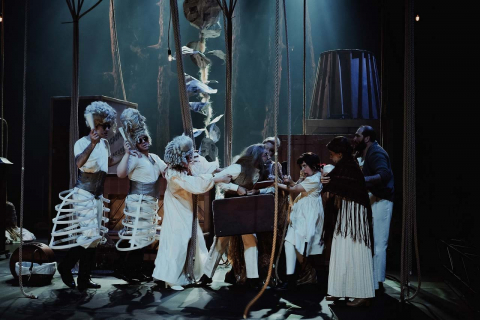
CONDUCTOR, MUSIC COACHING
Stathis Soulis
DIRECTOR, ADAPTATION
Dimitris Bogdanos
LYRICS RENDITION
Julia Diamantopoulou
SETS, COSTUMES
Lina Pigadioti
MOVEMENT
Konstantinos Kounellas
LIGHTING
Sakis Birbilis
CAST
Nandia Kontogeorgi, Hara Kefala, Apostolis Psychramis, Maria Grampsa, Daphne David, Ioannis Kontellis, Lefteris Kalpaktsidis, Thanos Lekkas, Danai Moutsopoulou, Dimitris Bogdanos, Olga Papakonstantinou, Lydia Tzanoudaki
PIANO
Stathis Soulis
PERCUSSIONS
Kostas Seremetis, Thodoris Vazakas
Ticket prices: €15, €20
Students, children: €10
Greek National Opera Alternative Stage
Stavros Niarchos Foundation Cultural Center
Greek premiere
Starts at: 20.30 (Sunday: 19.00) |

Composition
Konstantinos Bhta
Video creation
Nikko Patrelakis
Ticket prices: €15, €20
Students, children: €10
World premiere
Greek National Opera Alternative Stage
Stavros Niarchos Foundation Cultural Center
Evening performances (30/1 - 2/2) : 20.30
Morning performances (31/1 & 1/2): 22.00

LIBRETTO
Ioulita Iliopoulou
CONDUCTOR
Nicolas Vassiliou
DIRECTOR, SET & COSTUME DESIGNER
Paris Mexis
LIGHTING DESIGNER
Giorgos Tellos
CHILDREN'S CHORUS MISTRESS
Konstantina Pitsiakou
LEPORELLA
Irini Karaianni (11, 17, 25/1)
Artemis Bogri (12, 18, 26/1)
CAST
Tassos Apostolou, Myrsini Margariti, Niki Haziraki, Evita Hioti, Vassia Zacharopoulou, Petros Magoulas
With the participation of an 11-member instrumental ensemble and members of the GNO Children’s Chorus as part of its educational mission
Ticket prices: €15, €20
Students: €10
Based on Stefan Zweig’s novella of the same title
World premiere / GNO Alternative Stage commission
With English surtitles
Greek National Opera Alternative Stage
Stavros Niarchos Foundation Cultural Center
Starts: 20.30 (Sunday: 19.00) |
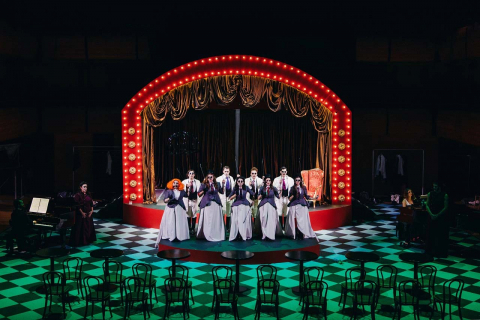
CONDUCTOR
Stathis Soulis
DIRECTOR
Giannos Perlegkas
LYRICS TRANSLATION
Dimitris Dimopoulos
PROSE TRANSLATION
Maria Kyriazi
Giannos Perlegkas
SETS, COSTUMES
Loukia Houliara
COLLABORATOR IN DIRECTION, CHOREOGRAPHER
Dimitra Efthymiopoulou
LIGHTING DESIGNER
Nikos Vlasopoulos
Eliza: Vassia Zacharopoulou (21, 23, 29/11 & 1, 5, 7, 13, 15, 19, 21, 24, 27, 29/12)
Christina Asimakopoulou (22, 24, 28, 30/11 & 6, 8, 12, 14, 20, 22, 26, 28, 31/12)
Higgins: Giannos Perlegkas
CAST
Michalis Titopoulos, Vassilis Dimakopoulos, Ioanna Forti, Elli Dadira, Maria Grampsa, Nicolas Maraziotos, Athina Dimitrakopoulou, Maria Alexandrou, Yiannis Maniatopoulos, Christos Rammopoulos, Nikolas Douros, Antonis Antoniadis, Magda Kafkoula, Electra Fragiadaki
FIRST PIANO
Stathis Soulis
SECOND PIANO
Victoria-Fjoralba Kiazimi
Ticket prices: €18, €25
Students, children: €15
Book and Lyrics by Music by
ALAN JAY LERNER FREDERICK LOEWE
Adapted from George Bernard Shaw’s Play and
Gabriel Pascal’s Motion Picture PYGMALION
Original Production Directed by Moss Hart
Greek National Opera Alternative Stage
Stavros Niarchos Foundation Cultural Center
With English surtitles
Starts at: 20.00 (Sundays & 24, 26, 27/12 at 19.00 , 31/12 at 18.30) |
The first encounter between Professor Henry Higgins, the brilliant, crotchety, middle-aged bachelor who is England’s leading phoneticist, and Eliza Doolittle, the little cockney gutter sparrow, takes place near the Royal Opera House, Covent Garden, late on a cold March night. Eliza is selling violets. Higgins is out on his endless quest for new dialects of London’s speech (“Why Can’t The English?”). A handsome young aristocrat, Freddy Eynsford-Hill, takes no notice of her when she tries to sell him violets (“Wouldn’t It Be Loverly?”). Colonel Pickering, also a linguistic expert, comes to stay with Higgins at his flat. Eliza’s squalid father, Alfred Doolittle, outlines his optimistic if somewhat unorthodox philosophy of life in the rousing “With a Little Bit of Luck.”
Eliza comes to Higgins’ flat to be instructed in the English language, in order to transform herself into a “lidy.” Pickering challenges Higgins to “metamorphose the guttersnipe into a paragon of verbal correctitude.” Higgins looks upon her not as a person but as raw material for his experiment; he drills Eliza for weeks. As no hint of progress is made, Eliza loses her courage, Higgins loses his temper, and even Pickering’s patience wears thin. In her anger and futility, Eliza creates a set of mean fantasies involving her professor (“Just You Wait”). At last she improves, and they all proclaim the victor in “The Rain in Spain.”
In the flush of his first success, Higgins puts Eliza to a preliminary test. He will introduce her to his mother’s snobbish guests at the Ascot Race Meeting the following week. Eliza expresses her own towering exaltation in “I Could Have Danced All Night.” Eliza, strikingly pretty in her new gown and hairdo, appears at the races (“Ascot Gavotte”). Instructed to restrict her conversation to the weather and everyone’s health, she says her little set pieces flawlessly. The illusion is shattered when her enthusiasm for the horse she is backing impels her to indulge in a bout of violently unladylike cheering.
Freddy Eynsford-Hill falls hopelessly in love with the new Eliza, and later pours out “On the Street Where You Live” at her window. Six weeks later, Higgins – in a crucial test – presents Eliza at a full-dress Embassy ball. She is the object of admiration, and everyone speculates on her identity. It becomes obvious that Eliza must charm Karpathy, a European phonetics expert. At the height of the ball, Karpathy invites her to dance and comments on the pureness of her English.
Pickering and Higgins, back at the flat, indulge in self congratulation (“You Did It”). Neither of them takes into account Eliza’s personal accomplishment in the matter. Eliza has absorbed the sophistication and the courage to see the unfairness of this, and she blows up, demanding recognition. The Professor is not so much affronted as astonished; it is as though a statue had come to life and spoken.
Infuriated and frustrated, Eliza storms out of the house. She encounters Freddy and turns her fury on him (“Show Me”). Eliza aimlessly walks the streets of the town the remainder of the night. She encounters her father, drunk and dressed for a fashionable wedding. He has become wealthy, and Eliza’s mother is marrying him at last (“Get Me to the Church on Time”).
Higgins discovers that he is hurt because Eliza left him. He meets her at his mother’s flat where she has gone for advice. They argue violently (“Without You”) and she storms out. It is only a moment after her departure that Higgins finally wakes up to the fact that Eliza has become an entirely independent and admirable human being. He realizes that he will have a difficult time getting on without her (“I’ve Grown Accustomed to Her Face”).
Back at his flat, he sinks into his chair prepared to face a bleak, lonely future. But just then – a moment before the final curtain falls – a figure emerges from the shadowy corner of the room, and Higgins recognizes Eliza. He leans back with a long, contented sigh and speaks softly: “Eliza? Where the devil are my slippers?”
– Copyright ©1962 by Alan J. Lerner and Frederick Loewe
Lerner and Loewe’s MY FAIR LADY is presented by arrangement with Tams-Witmark, A Concord Theatricals Company: www.tamswitmark.co.uk
STAVROS NIARCHOS FOUNDATION
CULTURAL CENTER
364 Syggrou Avenue, Kallithea
Box Office:
+30 213 0885700
Box Office email:
boxoffice@nationalopera.gr
Daily 09.00-21.00
info@nationalopera.gr