






























Contact
ADDRESS
STAVROS NIARCHOS FOUNDATION
CULTURAL CENTER
364 Syggrou Avenue, Kallithea
TEL.
Box Office:
+30 213 0885700
Box Office email:
boxoffice@nationalopera.gr
Daily 09.00-21.00
info@nationalopera.gr
Register to our Newsletter





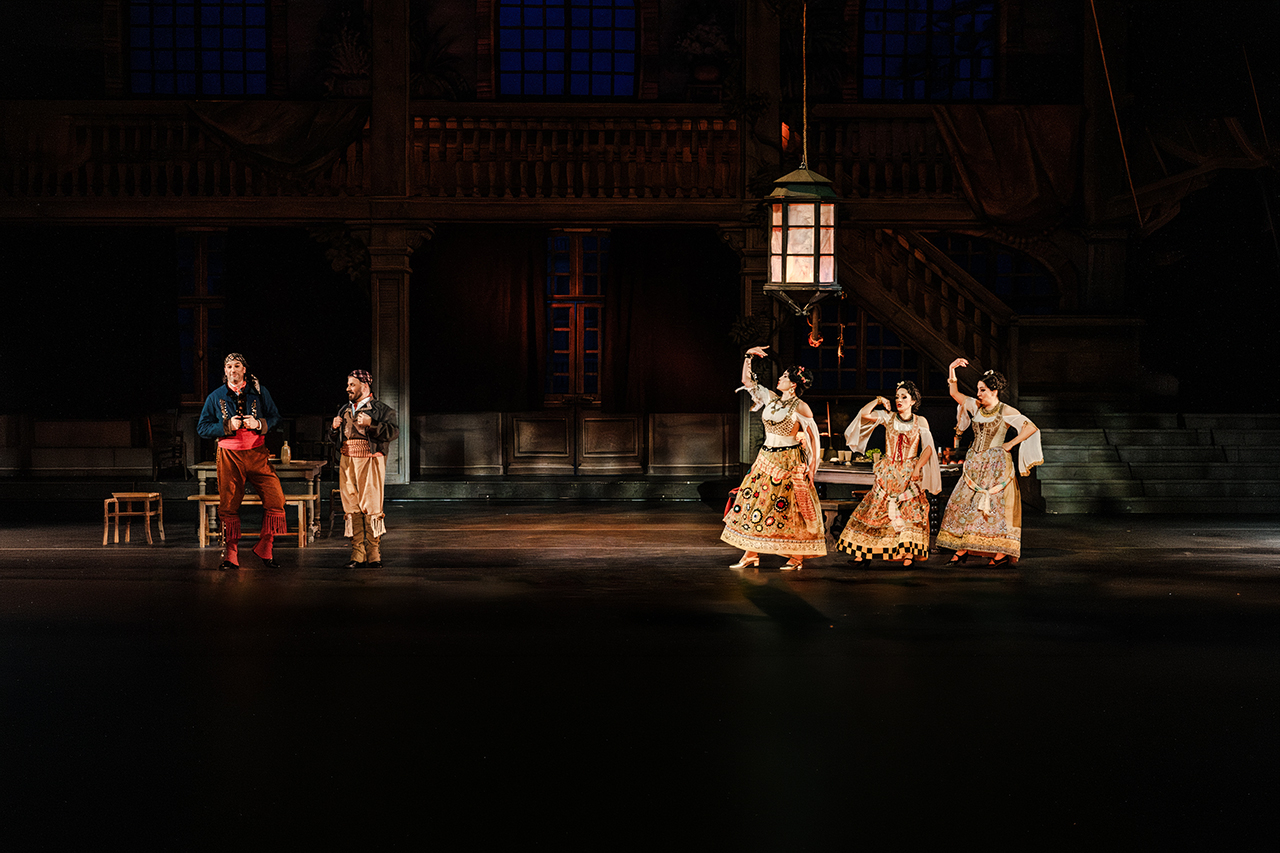

The performances of the opera Carmen will be fully accessible on the 24th & 31st of May 2026
Conductor: Konstantinos Terzakis
Stage direction: Romain Gilbert
Sets: Antoine Fontaine
Costumes: Christian Lacroix
Lighting: Hervé Gary
Lighting revival: Stéphane Le Bel
Choreography: Vincent Chaillet
Chorus master: Agathangelos Georgakatos
Children’s chorus mistress: Konstantina Pitsiakou
Anita Rachvelishvili (2, 17, 20, 24, 31/5/2026)
Marina Viotti (26, 28/5/2026 & 4/6/2026)
With the Orchestra, Chorus, and Children’s Chorus of the GNO (as part of its educational mission)
Ticket prices: €15, €20, €35, €55, €60, €80*/70**, €100*/90**, €130*/120**
Students, children: €15
Limited visibility seats: €10
* CATEGORY A PRICES
** CATEGORY B PRICES
Executive producer: Bru Zane France
Sets: Atelier Devineau and the workshops of the Opéra Orchestre Normandie Rouen
Costumes: Atelier Caraco and the workshops of the Opéra Orchestre Normandie Rouen
Score published by: Choudens (revised by: Palazzetto Bru Zane)
Historical advice: Palazzetto Bru Zane scientific research team
Opera • New production • Historical staging of 1875
GNO Stavros Niarchos Hall – SNFCC
Starts at: 19.00 (Sunday: 18.30) | 
Lead Donor of the GNO
Production sponsor

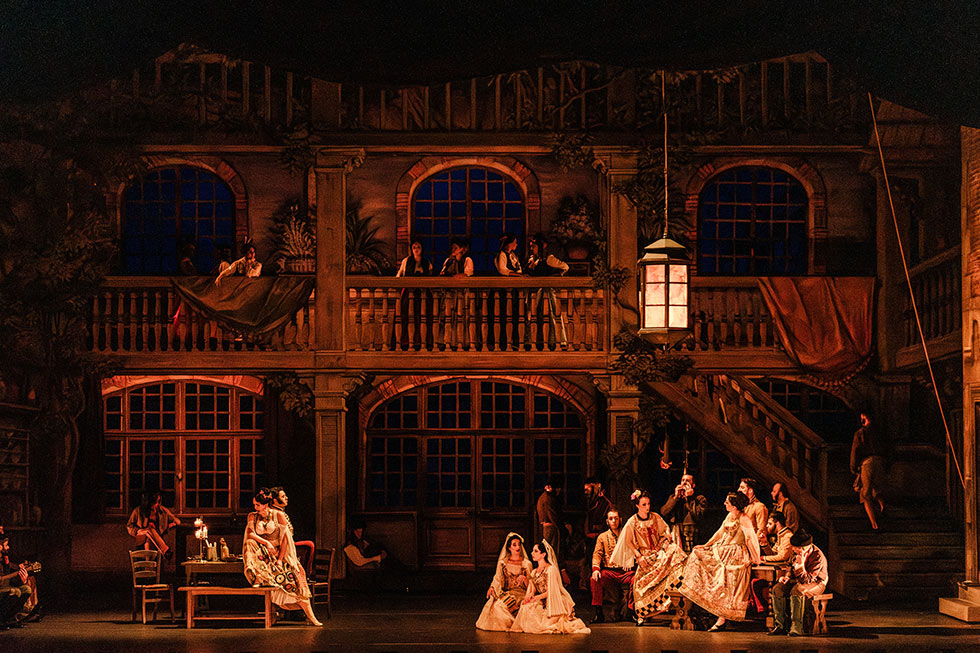
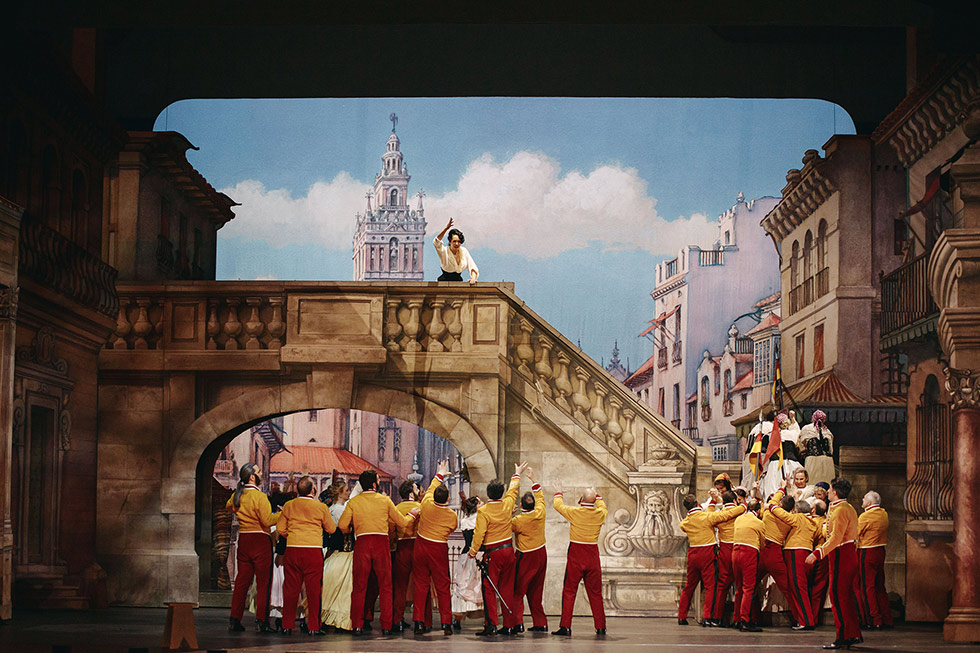
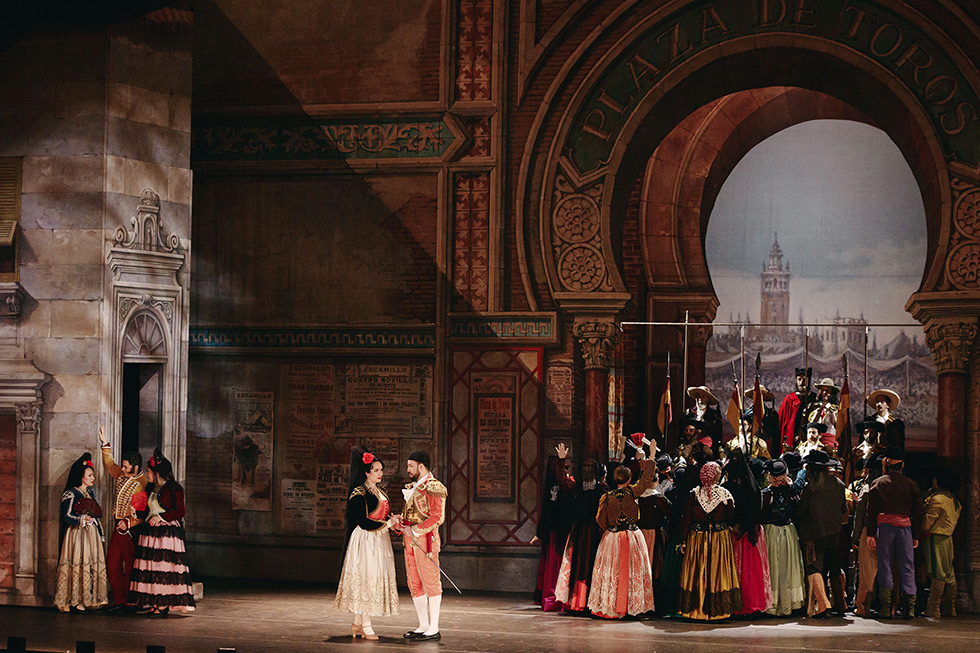
The Greek National Opera presents Carmen in a unique production that re-creates the historic premiere of Georges Bizet’s masterpiece, which originally took place at the Opéra-Comique in Paris in 1875. The production will be performed at the Stavros Niarchos Hall of the GNO at the SNFCC from 30 April to 4 June 2026, conducted by Konstantinos Terzakis, directed by Romain Gilbert, and featuring a cast of world-class opera stars. The title role will be shared by Gaëlle Arquez, Anita Rachvelishvili and Marina Viotti.
Carmen by Georges Bizet is an emblematic landmark of the global operatic repertoire, marking the final break from the artistic conventions of its time and the transition of opera towards the brutal realism of verismo. It had its world premiere on 3 March 1875 at the Opéra-Comique in Paris. Despite its initially turbulent reception, it eventually evolved into one of the most celebrated works in opera history, redefining the relationship between musical language and dramaturgy. Carmen is an existential drama filled with fatal passions and themes of social marginalisation, which, combined with the exploration of exotic sound worlds and folk melodies, fascinatingly elevates the titular character as a symbol of absolute freedom.
The story transports us to Seville in 1830, where an encounter between the wild Gypsy woman Carmen and Lieutenant Don José sets off a series of catastrophic events. When José, captivated by her charm, helps her escape, his downfall becomes inevitable. The arrival of the famous toreador Escamillo, who wins Carmen’s heart, along with the futile effort of the loyal Micaëla to bring José back to his dying mother, drives his jealousy to extremes. In a final confrontation outside the arena in Seville, Carmen stubbornly refuses to deny herself and chooses death over submission. As the crowd celebrates the victorious Escamillo, she falls dead from José’s knife, sealing with her blood the timeless struggle of women against a societal system that fails to control them.
Carmen tells a captivating story of passion and defiance, clearly revealing the character of its heroes through its uniquely inspired musical composition. The libretto by Meilhac and Halévy, based on Mérimée’s novel, recounts a woman’s pursuit of absolute freedom and her refusal to conform to societal conventions. Carmen does not just tell the story of a tragic romance; it also addresses questions of self-determination, gender violence, and the individual’s struggle against patriarchal structures, turning the music into a ‘mirror’ that reflects society’s internal conflicts and dead ends.
In the context of the GNO 2025/26 season’s thematic focus, ‘The opera of the future arises from the womb of the past’, the GNO presents, for the first time in Greece, a faithful reconstruction of the historical premiere of Carmen, which took place at the Opéra-Comique in Paris in 1875. Through extensive study of the original staging manuals and the designs for the sets and costumes from that inaugural production, the Palazzetto Bru Zane – Centre de musique romantique française has created a unique reconstruction of the performance, preserving the stunning sets and costumes that Georges Bizet himself personally oversaw 151 years ago.
Through the recreation of the 1875 premiere, this production—which has been successfully presented at the Opéra Orchestre Normandie Rouen, the Opéra Royal – Château de Versailles Spectacles, Opera Hong Kong, Hanoi Opera House, and the Dallas Opera—offers contemporary audiences the possibility to explore the ‘first youth’ of opera and discover ways in which we can ‘illuminate’ the past through modern artistic mechanisms.
The production is directed by the acclaimed young French stage director, Romain Gilbert, who has recently staged major repertoire works in prestigious venues, including the operas of Barcelona, Naples, Dallas, Bordeaux, Versailles, and the Aix-en-Provence and Baden-Baden Festivals. The directorial challenge lies in the director’s ability to create within a framework that appears, from the start, to be completely predefined by the surviving archival documents from the opera’s world premiere. As Romain Gilbert pointedly remarks, “that intoxicating thing: freedom!” is not cancelled, but rather demarcated and redefined through profound knowledge of the material. The staging manuals (livrets de mise en scène), the set and costume designs as well as the historical sources do not function as a constraint, but rather as a fertile context, “in which variety, creativity, imagination, and subtlety” can be highlighted. Where the sources are exhaustively accurate—such as in the arrangement of the stage, the movements of the chorus, and the geometry of bodies—the stage direction must follow as precisely as possible. However, where “the source suddenly switches from garrulity to virtual silence”, a meaningful space opens for creation and dialogue between the historical documents and a new artistic expression. In the extensive melodic sections, duets, and moments of inner tension, the director’s work shifts from creating an overall image to focusing on the micro-scale of human expression, including gestures, looks, and body positions. The direction of the performers thus takes on great importance and comes back to the foreground, demanding precision, insistence, and an almost pictorial approach to the stage “tableaux”. Through this process, certain lesser-known aspects of Romantic theatre are also highlighted: its subtlety and discipline, which have often been overshadowed by subsequent perceptions. The modern director, armed with this knowledge, does not just reproduce the past; they bring it to life again, stamping their own aesthetic signature on it. At this point, too, the very dramaturgy of Carmen meets artistic creativity through the stage direction and the idea that “whoever wants to be free, is free”—an idea through which the reconstruction turns into a vibrant and lively experience of freedom.
The work’s scenography by Antoine Fontaine, who has extensive experience in creating stage worlds for opera, moves between historical documentation and creative reconstruction in a way distinct from the stage direction, as the lack of documentation for the original sets requires the artist to intervene in the set design. Drawing on sources of visual art from that era, he has reconstructed a stage world through painted canvases and perspectives, while using modern lighting techniques to evoke the warm atmosphere of a gas-lit stage. Meanwhile, the iconic fashion designer Christian Lacroix’s vision for Carmen’s costumes draws on elements from that period’s illustrations, using rare materials and techniques to capture the aesthetic and spirit of 1875, while taking into account the inevitable distance introduced by the passage of time. The reconstruction of the costumes is not seen as an exact copying process, but as a delicate ‘translation’ of forms, textures, and colours that are brought back to life on stage. The goal is to reveal the work’s original glamour through a filter of theatricality and poetic atmosphere. The creative team is completed by choreographer Vincent Chaillet, who directs the movement of the protagonists, the dancers and the Chorus, and lighting designer Hervé Gary, whose atmospheres enhance the stage magic of this production.
The Orchestra of the Greek National Opera will be led by the emerging conductor Konstantinos Terzakis, in his sixth collaboration with the GNO, following the opera La bohème, the concert presentation of Flora mirabilis, the ballets Coppélia and Carmen, and the 2025 International Opera Awards Ceremony. The GNO Chorus has been coached by Agathangelos Georgakatos, and the GNO Children’s Chorus has been trained by Konstantina Pitsiakou.
For this production of Carmen, the GNO has assembled a world-class cast that includes renowned Greek opera singers, thereby underscoring its role as a global centre for operatic creation. The title role will be shared by Gaëlle Arquez, Anita Rachvelishvili and Marina Viotti. The distinguished French mezzo-soprano Gaëlle Arquez, who has performed this role at Europe’s most prestigious venues (like the Opéra de Paris, Frankfurt Opera, and the Royal Opera House in London), is coming to the GNO for five unique performances. Arquez has gained international recognition through her memorable performances in leading roles in the repertoire, including Juditha in Vivaldi’s Juditha triumphans and Iphigénie in Gluck’s Iphigénie en Tauride, demonstrating her strong interpretive skills and vocal versatility. After her unforgettable performance at the Odeon of Herodes Atticus in 2018, Anita Rachvelishvili returns as Carmen. The renowned mezzo-soprano, who has received triumphant reviews for her performances at the world’s most important opera houses, has tackled some of the most challenging roles in the repertoire. Since her 2009 debut at La Scala in Milan, she has been hailed as one of the most iconic Carmen performers worldwide. The Grammy-winning Franco-Swiss mezzo-soprano Marina Viotti, who has carved out a remarkable international career at the world’s leading opera houses, will introduce herself, for the first time, to the GNO audiences after making a strong impression at the Paris Olympics Opening Ceremony, where she performed Carmen, as well as heavy metal music. Viotti is distinguished for her performative boldness and tendency to bridge diverse musical genres, thereby redefining the boundaries of opera. She has also stood out for her portrayals in roles such as Bizet’s Carmen, Rosina in Rossini’s Il barbiere di Siviglia, and Charlotte in Massenet’s Werther, among others. In 2019, she was awarded ‘Best Young Singer of the Year’ at the International Opera Awards.
One of the most successful tenors of recent decades, Charles Castronovo, has built his reputation as the ideal performer of Italian and French repertoire, thanks to his voice’s warm, lyrical tone and deep expressiveness. He is famous for his dramatic approach to the role of Don José, which he has performed at many of the world’s most prestigious opera houses. Castronovo will share the role of Don José with the exceptional tenor Andrea Carè, who is well known to the Greek audience from his recent performance in the GNO production of Madama Butterfly at the Odeon of Herodes Atticus. Highly experienced in the Italian dramatic repertoire, Carè has performed major roles at such venues as the Metropolitan Opera in New York, La Scala in Milan, and the Royal Opera House in London. Escamillo will be performed by three distinguished Greek artists: the world-acclaimed baritone Dionysios Sourbis, who was recently seen in the role of Ford in Verdi’s Falstaff, Tassos Apostolou, one of the most renowned basses of his generation with extensive experience in major repertoire roles; and the younger baritone Nikos Kotenidis. Similarly, emphasising the domestic artist’s talent, the role of Micaëla will be shared among three celebrated GNO sopranos: Vassiliki Karayanni, one of the most prominent Greek sopranos of her generation with a strong international presence, will make her debut in the role and Maria Mitsopoulou, who has performed countless repertoire roles, will return to one of the roles most associated with her. The cast will be completed by emerging and established Greek performers, including Yannis Selitsaniotis, Georgios Papadimitriou, Georgios Iatrou, Sotiris Triantis, Chrissa Maliamani, Matina Tsaroucha, Chrysanthi Spitadi, Diamanti Kritsotaki, Haris Andrianos, Marios Sarantidis, Yannis Kalyvas, and Andreas Karaoulis.
Fully accessible performances
The performances of the opera Carmen will be fully accessible on the 24th & 31st of May 2026, providing an inclusive audiovisual experience for all audiences. In this context, there will be designated seats for individuals who are deaf or hard of hearing and use Greek Sign Language, places for those who rely on captions (CAPS) covering the entire audio channel, as well as seats for individuals who are blind or have limited access to the visual channel of communication and use the audio description (AD) service. Guide dogs for the visually impaired will also be permitted.
Audience members who wish to use the accessibility services are requested to purchase their tickets at the GNO Box Office, over the phone at 2130885700, or via email at This email address is being protected from spambots. You need JavaScript enabled to view it..The full accessibility services for this production are included in the accessibility initiative cycle Altogether at the Opera, implemented with the support of Alpha Bank, as part of its Corporate Responsibility Initiative Culture for All.
STAVROS NIARCHOS FOUNDATION
CULTURAL CENTER
364 Syggrou Avenue, Kallithea
Box Office:
+30 213 0885700
Box Office email:
boxoffice@nationalopera.gr
Daily 09.00-21.00
info@nationalopera.gr