




























Contact
ADDRESS
STAVROS NIARCHOS FOUNDATION
CULTURAL CENTER
364 Syggrou Avenue, Kallithea
TEL.
Box Office:
+30 213 0885700
Box Office email:
boxoffice@nationalopera.gr
Daily 09.00-21.00
info@nationalopera.gr
Register to our Newsletter






Conductor: Jacques Lacombe
Stage direction: Themelis Glynatsis
Sets: Leslie Travers
Original costumes: Nicholas Georgiadis
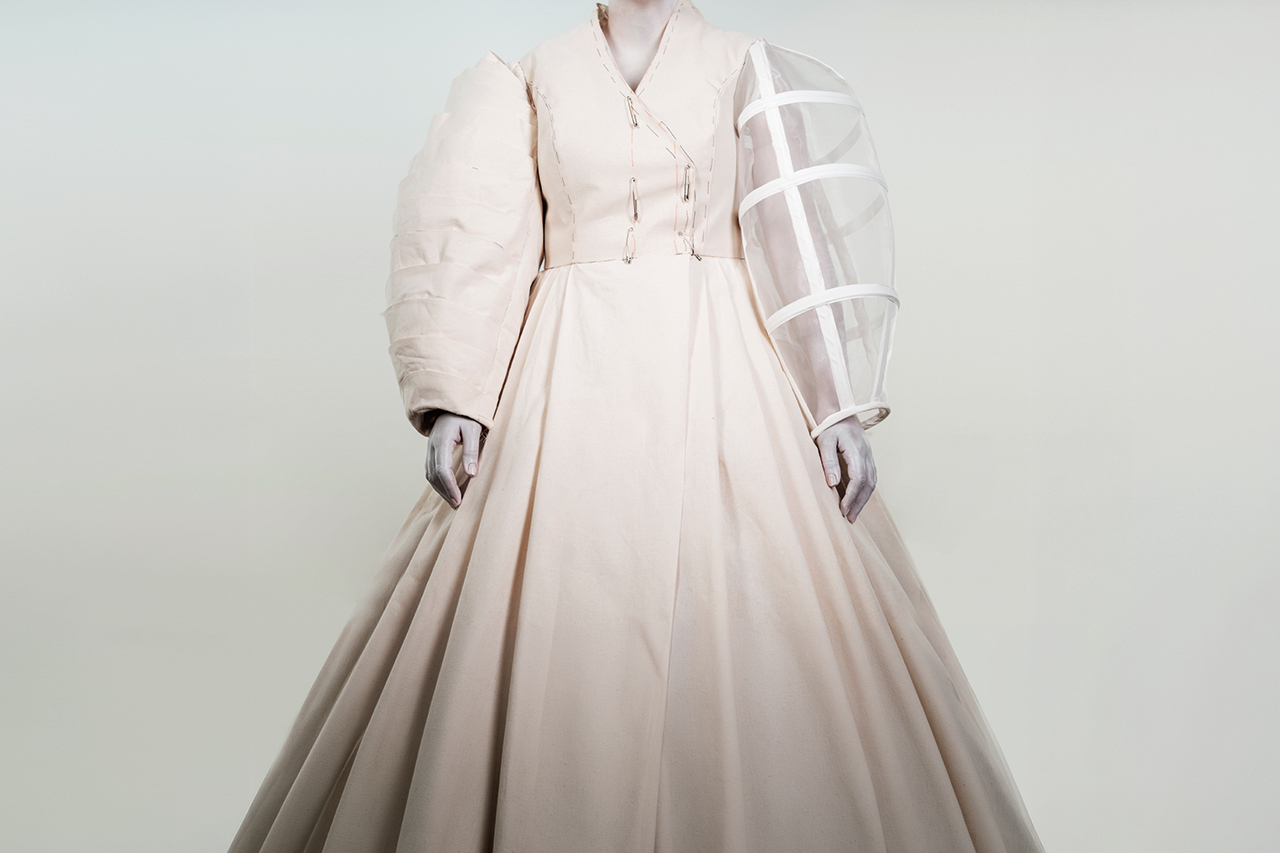
Costume revival: Niki Psyhogiou, Themelis Glynatsis
Movement: Katerina Gevetzi
Lighting: Howard Hudson
Sound curator: Thanos Polymeneas-Liontiris
Chorus master: Agathangelos Georgakatos
With the Orchestra and Chorus of the GNO
Ticket prices: €15, €20, €35, €55, €60, €70, €90, €120
Students, children: €15
Limited visibility seats: €10
Opera • New production
GNO Stavros Niarchos Hall – SNFCC
Starts at: 19.30 (Sunday: 18.30) | 
Lead Donor of the GNO
Production sponsors

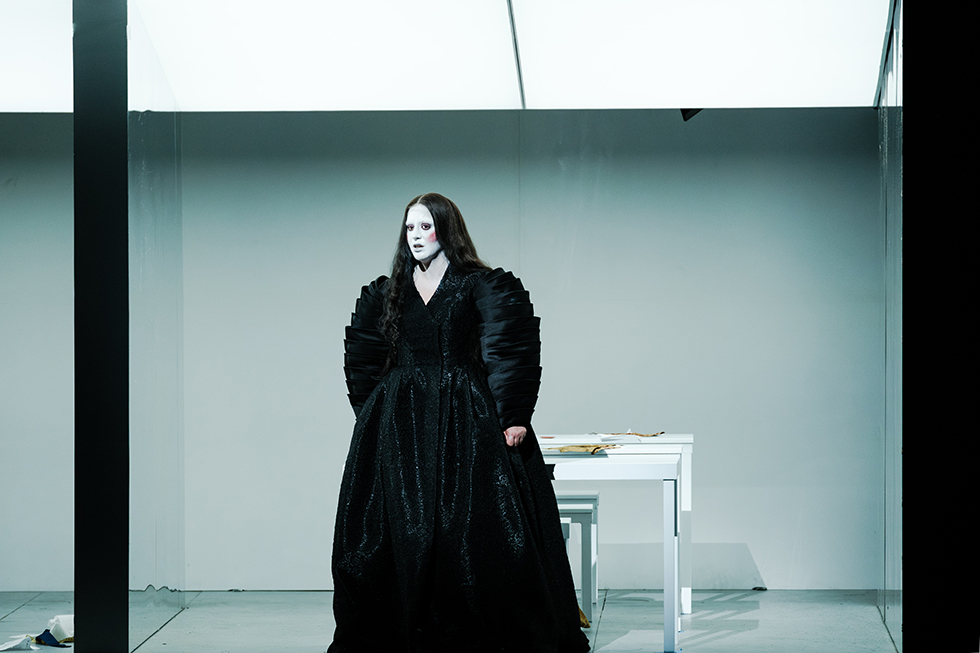
The Greek National Opera presents a new, captivating production of Anna Bolena, conducted by Jacques Lacombe and directed by Themelis Glynatsis. The performance will run for six shows at the Stavros Niarchos Hall of the GNO at the SNFCC starting on 26 March 2026. As part of the 2025/26 season’s key theme, ‘The opera of the future arises from the womb of the past’, Gaetano Donizetti’s emblematic masterpiece will feature Nicholas Georgiadis’ historical costumes in a creative dialogue with a new stage world created by Leslie Travers. Making her debut in the title role will be the young soprano Maria Kosovitsa.
Anna Bolena is a unique milestone in the Italian Romantic repertoire, marking the transition of bel canto from mere vocal exhibitionism to a meaningful tool for dramaturgy. The work premiered to immense success on 26 December 1830 at the Carcano Theatre in Milan, signaling Donizetti’s first international success, as, immediately after the premiere, it was performed across the world. It features a dramatic story filled with passion, political intrigue, and betrayal, which, in combination with its inspired musical and poetic language, fascinatingly unveils the characters in the work, especially Anna’s. Felice Romani’s libretto tells the story of the final days of the Queen at the court of Henry VIII. The downfall of Anna is foreshadowed when the King’s romantic focus shifts to Giovanna Seymour. The return of Anna’s old lover, Lord Percy, and young Smeton’s unfortunate intervention give Henry the pretext to accuse her of adultery, which leads to her arrest. At the Tower of London, Anna refuses to confess despite Giovanna’s urging and the sacrifices of Percy and Smeton. Shortly before her execution, she raves, reminiscing about her past. She forgives her enemies and is then led to the gallows, while the King and Seymour’s wedding is being announced.
Anna Bolena not only recounts a historical downfall; it also sheds light on the timeless themes of power, public image, and personal vulnerability, showcasing the voice as a space of inner conflict and memory. Through its music and dramaturgy, this masterful opera provides contemporary audiences with the opportunity to reflect on the relationship between the individual and the system, making each new performance a lively and relevant artistic statement.
Anna Bolena, which is part of the ‘Tudor Trilogy’, was composed by Donizetti in just a month. After its world premiere, it remained popular for approximately fifty years. Following a long period of obscurity, it reentered the repertoire during the 1950s, mostly thanks to Maria Callas’ performance at La Scala in Milan in 1957, which paved the way for the revival of even more ‘forgotten’ bel canto works. Callas’ approach to the role, which combines the vocal artistry of bel canto with a powerful expression of the tragic quality, remains a model performance to this day, while the work’s live recording is regarded as a historic record of the opera and a point of reference for the role.
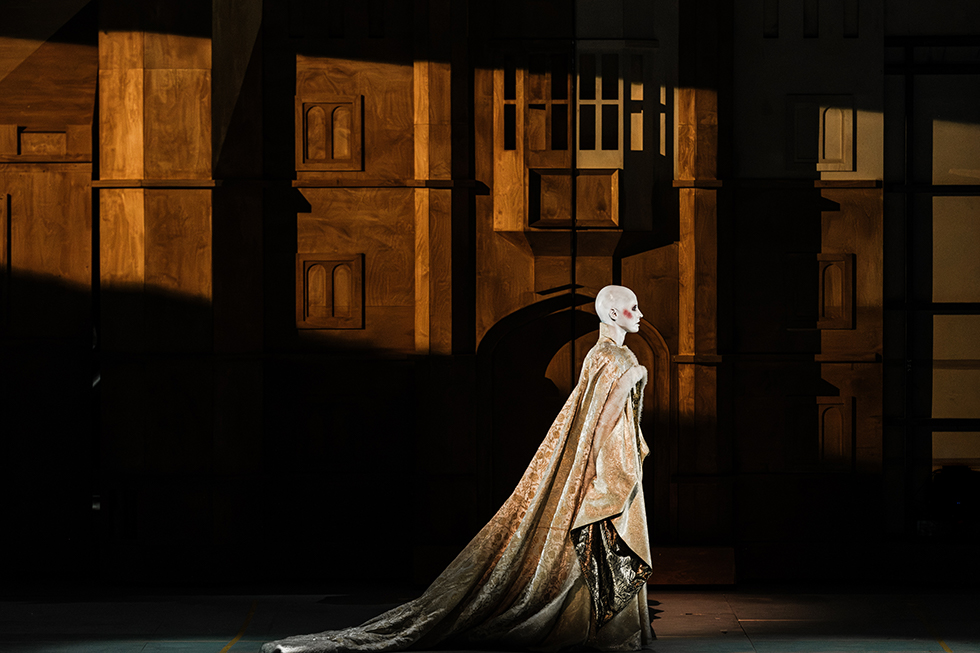
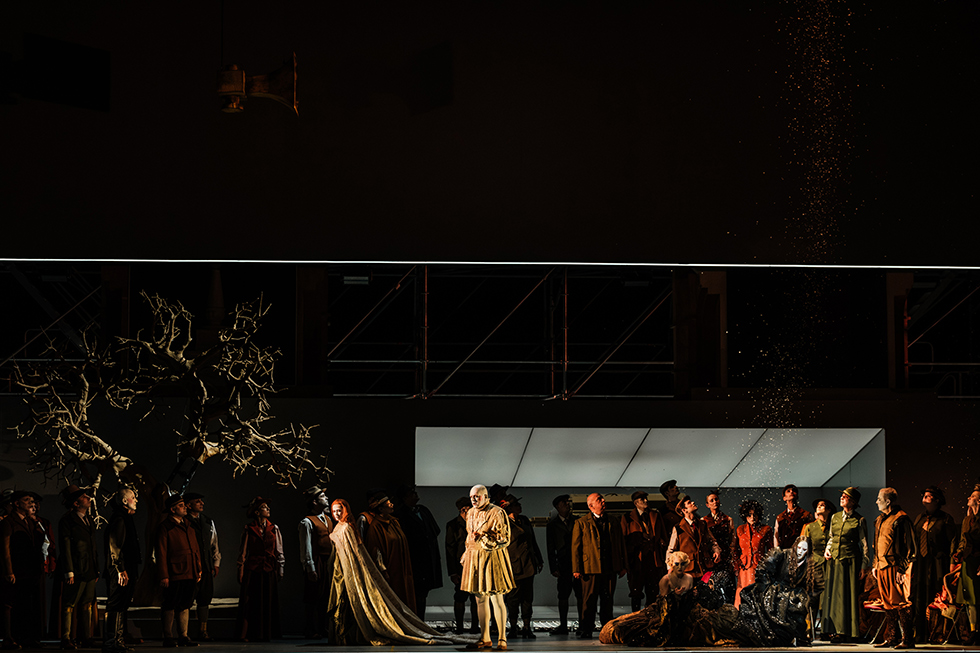
The stage director of the production, Themelis Glynatsis, after his highly successful staging of Béla Bartók’s Bluebeard’s Castle, approaches Anna Bolena not as a monument to be portrayed but as a material to be deconstructed, raising the question of how and on what terms a 19th-century work can stand today without being turned into a museum-like object. Anna Bolena transforms a deeply violent historical period into a bourgeois melodrama, where political conflict and state violence recede in favour of a romance, which ‘seeks to evoke transcendental emotion regarding specific characters: a powerful man, a victimised wife, a rival, and a forgotten lover.’ The dramaturgy allows audiences to be moved without confronting the circumstances that caused this emotion. Against this backdrop, Glynatsis’ stage direction does not attempt to ‘rescue’ the work, nor to superficially modernise it; instead, he tries to foreground how it can be viewed, without turning it into a museum exhibit. As the director notes, ‘the core of the dramaturgy and the entire aesthetic of the performance revolve around the conflicts of different versions of historicity: the romantic and historically inaccurate portrayal of Anne Boleyn’s final days by the composer, Nicholas Georgiadis’ costumes for the 1976 staging of the work at the GNO, and our own historical perception. Georgiadis’ costumes are brought back to life half a century later in a bold, new stage setting that illustrates the tense balance between historical authenticity and contemporary experience. The historical characters of 16th-century England, Georgiadis’ costumes, the history of the GNO itself, and our own historical reflexes become materials that will mould a contemporary and intense performative present in constant dialogue with the past. Set and costumes transform before the audience’s eyes, dramatising the conflict between a captivating authenticity and a modern visual gesture that reveals the power and oppression mechanisms often hidden within this fascination. The new Bolena of the GNO not only focuses on the tragic relationships among the characters but also explores their imprisonment by their very history, clothing, living spaces, and our fantasies about the past. Finally, it also aims to accompany them in their melancholic effort to live out an elusive experience of emotional truth and personal freedom; that is, to become contemporary.’
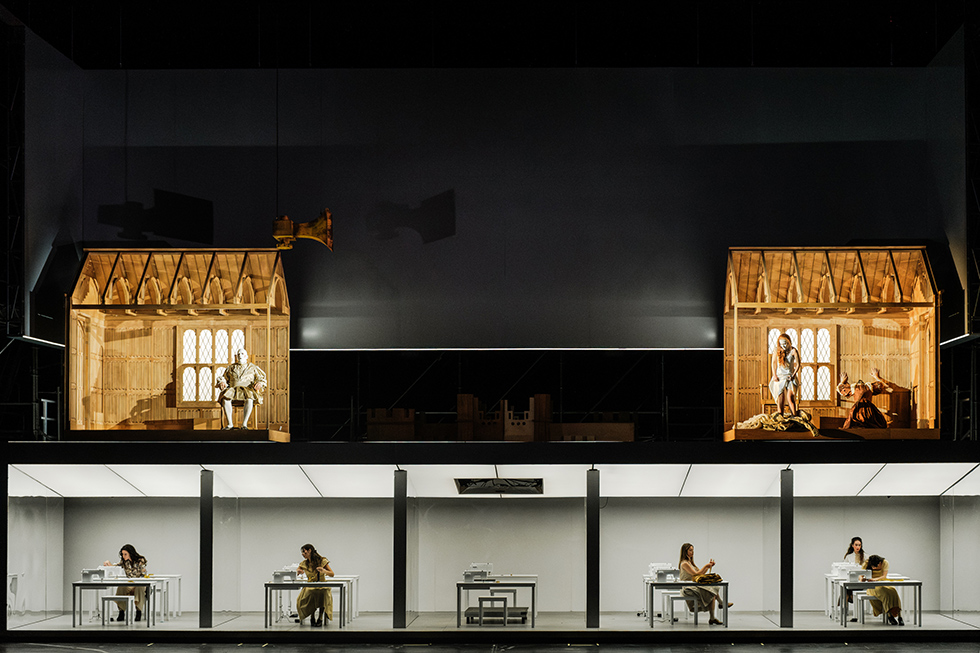
The set is designed as an archival ecosystem, where Act I balances between invoking historical accuracy and portraying the story as a copy, while in Act II, the space turns into a museum, with objects and characters displayed as records of a well-established narrative. At the same time, the soundscape created for this performance acts as an archival intervention that interrupts the self-sufficiency of bel canto, highlighting the violence the work has aestheticised. Special emphasis is given to the mad scene, where vocal extremity is displayed as a spectacle, and the female voice as a field for fetishisation. ‘History is not a closed narrative to be portrayed, but a living mechanism that shapes us’, notes the stage director, proposing a performance that not only depicts the past but also tests the boundaries of our relationship with it.
Award-winning and internationally acclaimed British set designer Leslie Travers, known to the GNO audience from his work on the productions of Bluebeard’s Castle and Cavalleria rusticana / Pagliacci, creates a space where the past and memory serve as lively archival elements. Similarly, Niki Psyhogiou and Themelis Glynatsis, starting with Nicholas Georgiadis’ historical costumes, which are already 50 years old, from Dino Yannopoulos’ legendary production, create a new costume world, making them active elements of the dramaturgy. Katerina Gevetzi is responsible for the movement, Howard Hudson designed the lighting, and Thanos Polymeneas-Liontiris supervises the sound.
The Orchestra of the Greek National Opera will be led by the internationally acclaimed conductor Jacques Lacombe, marking his third collaboration with the GNO, after the productions of La bohème and Werther. Lacombe, who has extensive experience with Gaetano Donizetti’s works, has served as the conductor of the Bonn Opera in Germany and as the musical director of the New Jersey Symphony Orchestra and the Mulhouse Symphony Orchestra in France. He has collaborated with many prestigious opera houses, such as the Royal Opera House in London, the New York Metropolitan Opera, Deutsche Oper Berlin, Bavarian State Opera, Teatro Regio di Torino, Opéra national du Rhin, and the opera houses of Marseille, Monaco, Nancy, Nice, Seville, and Saint-Étienne. The GNO Chorus was coached by Agathangelos Georgakatos.
For this production of Anna Bolena, the Greek National Opera has secured an exceptional cast of both established and emerging Greek protagonists, highlighting its pivotal role in supporting and showcasing Greece’s operatic talent.
Having impressed audiences and critics alike as Liù in Turandot at the Odeon of Herodes Atticus in the summer of 2025, the emerging Greek soprano Maria Kosovitsa will now make her debut in the highly taxing role of Anna Bolena. In 2024, she was selected to study at the Accademia Verdiana of the Teatro Regio in Parma. In that same year, she won second prize at the International Opera Competition ‘Verdian Voices’ and made her role debut as Leonora in Verdi’s Il trovatore at Teatro Mancinelli in Orvieto, Italy. In 2025, she was selected by the Teatro Regio in Parma to cover the leading role in Verdi’s opera Giovanna d’Arco as well as to perform Desdemona in Verdi’s Otello. In addition to her debut in Turandot, she also performed as a soloist with the GNO at the 2025 International Opera Awards.
Portraying Enrico VIII will be the distinguished bass Petros Magoulas, who has performed some of the most important roles in the repertoire, such as Méphistophélès (Faust), Sarastro (Die Zauberflöte), Osmin (Die Entführung aus dem Serail), Heinrich der Vogler (Lohengrin), Daland (Der fliegende Holländer), Hunding (Die Walküre), Zaccaria (Nabucco), Fiesco (Simon Boccanegra), Banco (Macbeth), Sparafucile (Rigoletto), Pagano (I Lombardi alla prima crociata), Four Villains (Les Contes d’Hoffmann), Don Basilio (Il barbiere di Siviglia), Alidoro (La Cenerentola), Colline (La bohème), Vodník (Rusalka), Count des Grieux (Manon), among others, at the Greek National Opera, the Royal Opera House in London, the Kiel Opera, Welsh National Opera, Bilbao Opera, Israeli Opera, Athens and Thessaloniki Concert Halls, and the Athens Epidaurus Festival.
Renowned mezzo-soprano Miranda Makrynioti will perform as Giovanna Seymour. Makrynioti has performed such roles as Annina (La traviata), Spirit (in Sofianopulo’s The Legend of the Ancient Mariner), Arikia (in Milhaud’s La Deliverance de Thésée), Second child (Die Zauberflöte), Myrsouda (The Murderess by Giorgos Koumendakis), and Frantic (The Cunning Little Vixen), among others.
Distinguished GNO tenor Yannis Christopoulos will portray Lord Riccardo Percy, bass Yanni Yannissis will sing the role of Lord Rochefort, mezzo-soprano Diamanti Kritsotaki will perform as Smeton, and tenor Manos Kokkonis will take on the role of Hervey.
STAVROS NIARCHOS FOUNDATION
CULTURAL CENTER
364 Syggrou Avenue, Kallithea
Box Office:
+30 213 0885700
Box Office email:
boxoffice@nationalopera.gr
Daily 09.00-21.00
info@nationalopera.gr