
Contact
ADDRESS
STAVROS NIARCHOS FOUNDATION
CULTURAL CENTER
364 Syggrou Avenue, Kallithea
TEL.
Box Office:
+30 213 0885700
Box Office email:
boxoffice@nationalopera.gr
Daily 09.00-21.00
info@nationalopera.gr
Register to our Newsletter




The Greek National Opera in New York
Nikos Kazantzakis: An Odyssey in Music
15 October 2026
Carnegie Hall – Stern Auditorium / Perelman Stage
Works by Hadjidakis, Theodorakis, Skalkottas, Mitropoulos, Koumendakis
Conductor Vassilis Christopoulos
Featuring Anita Rachvelishvili, Maria Kostraki
With the GNO Orchestra and solo musicians
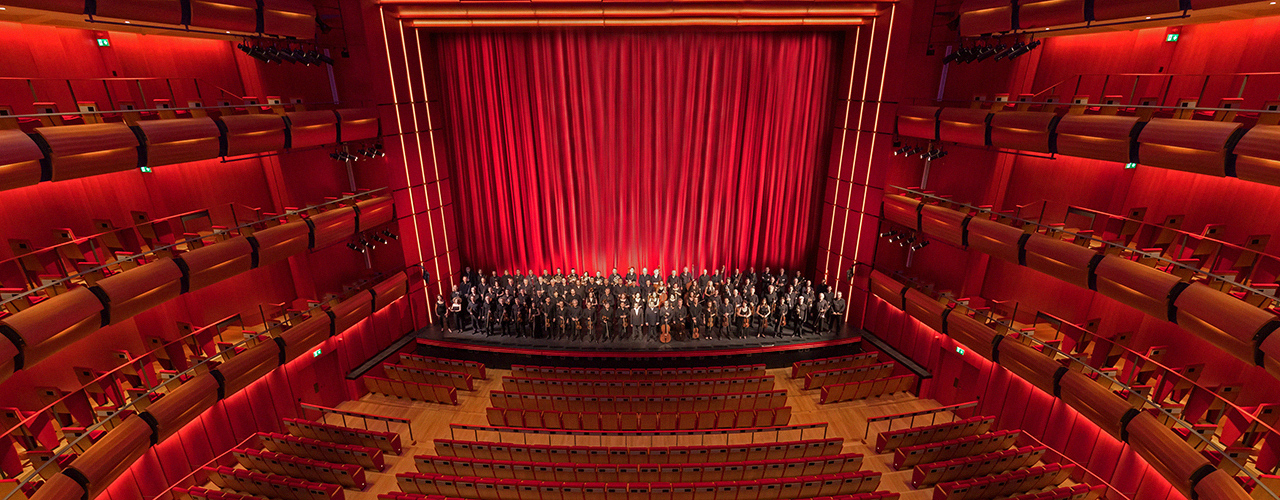
The Greek National Opera will travel to New York for the first time with its Orchestra to present a unique concert at the historic Carnegie Hall (Stern Auditorium / Perelman Stage), featuring exceptional pieces by Greek composers, inspired by the work and figure of Nikos Kazantzakis. Through the concert titled Nikos Kazantzakis: An Odyssey in Music that is scheduled for 15 October 2026, the Greek National Opera will present a magnificent panorama of Greek art music to the New York audience, featuring emblematic pieces by Manos Hadjidakis, Mikis Theodorakis, Nikos Skalkottas, Dimitri Mitropoulos, and Giorgos Koumendakis. The internationally acclaimed Greek conductor and Music Director of the Graz Opera in Austria, Vassilis Christopoulos, will lead the orchestra for this special performance. Joining him will be the world-renowned mezzo-soprano Anita Rachvelishvili and Greek soprano Maria Kostraki, accompanied by the GNO Orchestra and solo musicians. This concert is made possible by a grant from the Stavros Niarchos Foundation (SNF) to enhance the GNO’s artistic outreach.
Nikos Kazantzakis—the most translated Greek author worldwide—has been one of the most timeless and rich sources of inspiration for Greek musical creation during the 20th and 21st centuries. Through music and film, his work has reached the far corners of the Earth, making him one of the most recognisable literary figures worldwide. His works, such as Zorba the Greek, Captain Michalis, Christ Recrucified, The Last Temptation, and Ascetics, have brought Greek culture across the entire planet. His oeuvre, profoundly philosophical and tragic yet also strongly rooted in the people and grounded in experience, addresses crucial themes such as freedom, fate, faith, and human transcendence. The poetic and dramaturgical power of his writing has drawn prominent Greek composers, who have sought to musically convey the intensity, reflection, and existential pulse inherent in Kazantzakis’ universe through their settings. His indirect contributions to the musical repertoire span at least five different genres: symphonic music, opera, ballet, theatre music, and film music. The compositions inspired by Kazantzakis not only serve as musical interpretations of his texts but also as creative dialogues between literature and music, thereby decisively shaping the musical and broader artistic identity of modern Greece. Without any need for ‘translation’, music’s universal language is perhaps the perfect medium for leading audiences on a fascinating journey through the author’s world.
The Artistic Director of the Greek National Opera, Giorgos Koumendakis, notes: ‘The Greek National Opera’s first major appearance in New York marks a significant step in its international outreach strategy. During our concert at the historic Carnegie Hall, we will showcase a special selection of notable works by Dimitri Mitropoulos, Nikos Skalkottas, Manos Hadjidakis, and Mikis Theodorakis, all of which directly or indirectly reference the work of the world-renowned author Nikos Kazantzakis. Alongside the masterpieces of our prominent composers, I will also have the special honour to present a work I wrote for Kazantzakis, titled Amor Fati. The GNO Orchestra will be led by the internationally acclaimed Greek conductor Vassilis Christopoulos. Our concert will feature the celebrated mezzo-soprano Anita Rachvelishvili, who will sing works by Mikis Theodorakis for the first time, as well as the young soprano Maria Kostraki, who will perform Manos Hadjidakis’ Captain Michalis. I would like to thank the Stavros Niarchos Foundation and its Co-President, Andreas Dracopoulos, for standing by our side and supporting our global outreach efforts, from our early initiatives to this incredibly important step, which we could not have even imagined achieving without the assistance of the SNF grants. I would also like to express my heartfelt gratitude to His Eminence Archbishop Elpidophoros of America, for his warm response and unwavering support, as well as for granting us the Archdiocese of America’s auspices for our performance in New York. I also extend my gratitude to the Greek Minister of Culture, Lina Mendoni, for her continuous support of our work. I am confident that the pieces we have selected to present will serve as an excellent introduction to Greek and Cretan culture for the American audience, as showcased through Nikos Kazantzakis’ multilayered body of work.’
Andreas C. Dracopoulos, Co-President of the Stavros Niarchos Foundation (SNF), notes: ‘The Greek National Opera’s (GNO) performance at Carnegie Hall, one of the world’s most renowned cultural institutions, marks a significant milestone in the GNO’s history—one that also reflects longstanding support from the Stavros Niarchos Foundation (SNF) aiming to enhance the GNO’s artistic outreach. The unique musical tribute they’ll perform, inspired by writer Nikos Kazantzakis and featuring emblematic Greek works, bears the evocative title “Odyssey”, a deeply symbolic name that, to our ear, also evokes the GNO’s journey through time. This journey on which the GNO has embarked has taken it from Athens to far corners of the world—from Italy and Cyprus to China and South Africa, and now to New York. Its success is not down to favourable winds, but to the captain’s skill and the crew’s dedication. Our warmest congratulations go to Artistic Director Giorgos Koumendakis and everyone who contributes to the work of the GNO. We are confident that the audience will enjoy a captivating experience that will remain with them for a long time.’
The concert’s programme at Carnegie Hall forms a powerful musical arc connecting generations of Greek composers. Despite their differing aesthetics and artistic paths, all these composers were deeply inspired by the spiritual world of Nikos Kazantzakis and by the island of Crete—either as a place of origin, heritage, or symbolic reference.
Nikos Kazantzakis’ novel Captain Michalis was a major source of inspiration for Manos Hadjidakis (1925–1994), who composed the music for the work’s theatrical adaptation of the same title in 1966. Kazantzakian themes such as freedom, sacrifice, and inner conflict are transformed by Hadjidakis’ music, not into an epic narrative but into a lyrical, existential commentary. The music illuminates the hero’s inner world and engages in a meaningful conversation with Kazantzakis’ words, offering the work an independent artistic reading. The piece will be performed by soprano Maria Kostraki, accompanied by an ensemble of solo musicians.
The most recognisable worldwide incarnation of Nikos Kazantzakis is undoubtedly Zorba the Greek, composed by Mikis Theodorakis (1925–2021). Through his music for Michael Cacoyannis’ film adaptation of the novel Zorba the Greek (Life and Times of Alexis Zorbas), Theodorakis gave his hero a distinct musical identity and voice, which, especially through the famous ‘Zorba’s Dance’, was internationally identified with the Greek spirit. Performing this piece will be the renowned mezzo-soprano Anita Rachvelishvili.
Giorgos Koumendakis (born in 1959), in his symphonic work Amor Fati (2007), draws inspiration from Kazantzakis’ philosophy and spirit. He approaches Cretan music and the distinctive ‘kontylies’ style through abstract orchestral writing, without using traditional instruments. Written to mark the fiftieth anniversary of the author’s death, Amor Fati—as suggested by its title—captures the Kazantzakian concept of accepting one’s fate, along with the composer’s profound connection to the Cretan musical identity. Amor Fati will make its American debut at this concert.
Furthermore, the concert will also feature two unique works from Greek art music, inspired by the centuries-long history and folk culture of Crete, the island that had a profound impact on Kazantzakis.
The three Cretan Dances, composed by Nikos Skalkottas (1904–1949), are inspired by Crete and Cretan music. Skalkottas, an outstanding figure in modern Greek music, wrote works that ranged from the Greek National School and neoclassicism to atonality and the twelve-tone technique (dodecaphony). His most emblematic composition, the 36 Greek Dances, is based on folk songs and traditional tunes from all over Greece, showcasing each region’s distinctive musical characteristics and emphasising the diversity of the Greek landscape.
Dimitri Mitropoulos (1896–1960), enchanted by Cretan culture, composed the piece Cretan Feast in 1919. This prominent Greek 20th-century conductor and friend of Nikos Kazantzakis made his international debut with the Berlin Philharmonic and later carved out a distinguished career in America, where he also served as both the musical and artistic director of the New York Philharmonic. Cretan Feast is one of his early notable piano works, which was subsequently arranged for orchestra by Nikos Skalkottas.
The concert on 15 October 2026 at Carnegie Hall will be held as part of the Greek National Opera’s international outreach strategy, building on its highly successful tours across Europe, Asia, Australia, and Africa.
The concert will be held under the auspices of the Greek Orthodox Archdiocese of America and the Consulate General of Greece to New York, with a portion of the proceeds benefiting the Archdiocese’s Hellenic Education Fund.
Tickets will be available for purchase starting in May 2026 through Carnegie Hall.
The GNO is funded by the Hellenic Ministry of Culture
Lead GNO & Tour Donor
Stavros Niarchos Foundation (SNF)
STAVROS NIARCHOS FOUNDATION
CULTURAL CENTER
364 Syggrou Avenue, Kallithea
Box Office:
+30 213 0885700
Box Office email:
boxoffice@nationalopera.gr
Daily 09.00-21.00
info@nationalopera.gr