
Contact
ADDRESS
STAVROS NIARCHOS FOUNDATION
CULTURAL CENTER
364 Syggrou Avenue, Kallithea
TEL.
Box Office:
+30 213 0885700
Box Office email:
boxoffice@nationalopera.gr
Daily 09.00-21.00
info@nationalopera.gr
Register to our Newsletter





Greek National Opera Online Festival
Waves of Light
New video performances at emblematic PPC landmarks
Artistic curator: Giorgos Koumendakis
10 video performances about the Megalopolis Steam Power Station
From 23 December 2025, available for free on GNO TV
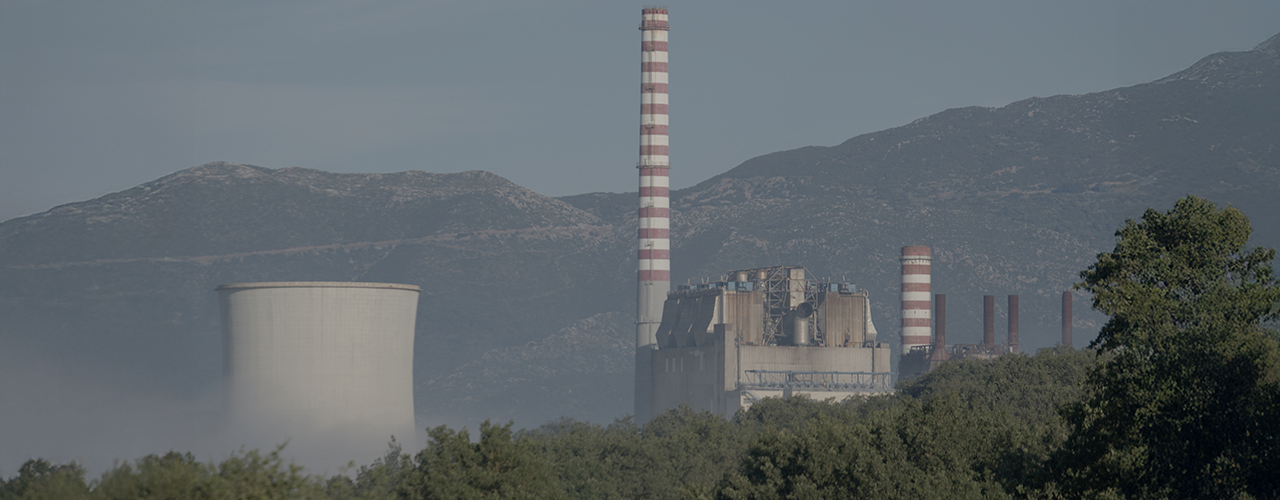
The Greek National Opera’s online festival Waves of Light, in collaboration with the PPC and curated by Giorgos Koumendakis, features the first series of site-specific performances inspired by the Megalopolis Steam Power Station.
The Greek National Opera assigned the organisation of a cross-university / interdisciplinary arts workshop focused on the Megalopolis Steam Power Station to the Department of Performing and Digital Arts at the University of the Peloponnese, involving eight university arts departments from across Greece. As part of the online festival titled Waves of Light, 20 young artists and artistic teams from university departments throughout Greece drew inspiration from the striking sites of the old PPC factory in Megalopolis to create 20 new site-specific digital works for GNO TV, the GNO’s digital platform. These works are grouped into various genres that fall within the broader fields of performing, visual, and digital arts. The music and scripts in these works are inspired by the spaces, history, and people who worked there.
Participating in this workshop were students from the following departments: Department of Music Studies and Department of Digital Arts and Cinema (National and Kapodistrian University of Athens), Department of Visual and Applied Arts (University of Western Macedonia), Department of Culture and Creative Media and Industries (University of Thessaly), Department of Theatre Studies (University of Patras), Department of Sound and Image Arts (Ionian University – undergraduate and postgraduate programmes), and the Athens School of Fine Arts.
The first ten video performances about Megalopolis will be available on GNO TV from 23 December 2025 to 23 December 2028.
PPC, a leader in Greece’s electrification through its emblematic factories, has evolved into an active cultural agent, offering its historical sites as a canvas for contemporary artistic creation. Through the Waves of Light online festival, PPC contributes to repurposing industrial landmarks into vibrant reference points between the past and the future, where energy meets art.
PRESENTATION OF THE 10 VIDEO PERFORMANCES ABOUT MEGALOPOLIS
Memories from the Factory
Apostolos Armagos – Department of Music Studies (National and Kapodistrian University of Athens)
Inspired by his visit to the PPC factory in Megalopoli, composer and sound designer Apostolos Armagos created an audiovisual work that features his own sketches in perfect harmony with the original music he composed and the sounds he recorded at the site.
Memories from the Factory is, in essence, a combination of a painting and music. The painting is gradually revealed during a three-and-a-half-minute video. The creator gathered photographs and sounds from the site that inspired his work. By using images he designed on a piece of paper during his visit and reworking the factory sounds, he created the musical composition that accompanies the video. Thus, with the memory of Megalopoli imprinted in him, he aims to present a child’s perspective through a handcrafted blend of representative images and beautiful music.
Model Megalopolis
Christos Kalamidas – Department of Culture and Creative Media and Industries (University of Thessaly)
This piece is a visual representation of the actual PPC facilities in Megalopoli, in the form of a model. This model has been made of construction materials intended for scrap, such as steel remainders. These materials cannot be used unprocessed. They are highlighted through a new alternative approach that redefines their value, drawing inspiration from the postmodern art movement of arte povera. The industrial image of the model, combined with the coal surrounding its base, is a direct reference to the image of a lignite factory, such as the PPC facilities in Megalopoli. This audiovisual work projects the model onto an appropriately shaped setting, where smoke comes out of the chimneys, accompanied by a sound mix of industrial noises and sounds produced from burning materials like coal and lignite. It is a handcrafted piece that offers a different way of viewing and receiving the image of this historic factory.
A Flower Wonders Wandering
Xenia Serafeimidou – Department of Performing and Digital Arts (University of the Peloponnese)
This piece was set in the interior of the PPC factory in Megalopoli. The elements of the site are incorporated into this set, taking on a symbolic function to capture an individual’s effort to answer the questions that arise within them and understand the complexity of the surrounding world. Snapshots of this process are captured through the alternation of slow and rapid movements of a figure wandering through the site. Nature’s constant presence in humanity’s journey is highlighted by a mask of a flower and the sound of birds. A special role is played by a telephone apparatus, which marks the beginning and end of this inner pursuit while underscoring people’s profound need for communication.
Oppidum Magnum
Wiktor Mastela – Department of Music Studies (National and Kapodistrian University of Athens)
Oppidum Magnum is a sound-driven exploration of a post-apocalyptic, industrial world. Through the collection of unprocessed mechanical sounds and ‘visceral’ echoes of the past, an otherworldly beauty emerges from desolation. The piece combines electronic and acoustic elements, creating a riveting audiovisual experience that invites viewers to contemplate the tension between humanity and nature, along with the industry’s impact on the planet.
The goal is to invite the public to engage in more attentive listening, highlighting the extinction not only of the natural environment but also of the sounds of existence. The visual component challenges viewers with intense disfiguration of images, creating a disturbance that forces them to reconsider their visual dominance. Oppidum Magnum explores what industry leaves behind and how artistic expression can examine these marks of absence, presenting viewers with questions about the global environmental decline.
Industrial Echoes
Christina Georgiou – Department of Music Studies (National and Kapodistrian University of Athens)
Industrial Echo. An acoustic journey through the corridors of the Megalopoli steam power station. The sound brings the narrator’s memory to life, retrieving snapshots from a monument of industrial heritage. The sounds of electric power emphasise the factory’s contribution to the spread of energy as a common good in Greece and to the country’s overall development and prosperity. Combined with sounds from the station itself and the narrator’s voice, they invite audiences to a journey across space and time. The video also features scenes and snapshots from the factory’s operations, illustrating some of the challenges faced by the people there and highlighting the factory’s importance as well as its emergence as a landmark of a place that will never be the same again.
Lighting the Memories
Anna Frengidou – Department of Performing and Digital Arts (University of the Peloponnese)
Lighting the Memories focuses on the transition from operational mode to complete deactivation. In a black-and-white photograph from the past, little children curiously observe the power pillars of a factory that has definitely changed their lives.
Today, with technology having advanced so much, the factory is closing down. This deactivation refers not only to the building’s cessation of operations but also to the dissolution of entire groups of people who, after many years of collaboration, are suddenly scattered. How does someone, who has dedicated half their life to this site, truly feel, when they close the door behind them for the last time?
The piece attempts to capture this melancholic transition by focusing on the lights that gradually go out and the engines that stop operating. Images are accompanied by the electric sounds of engines, alarms, footsteps, and voices echoing in the empty space. In the end, we hear the characteristic sound of a unit being shut down, contrasted with the everlasting memory of a photograph.
Homo S Cape
Adonis Volanakis – Department of Theatre Studies (University of Patras)
The collaborative contribution of the Department of Theatre Studies at the University of Patras titled Homo S Cape is a ten-minute-long audiovisual work. It focuses on human evolution, influenced by a theatrical improvisation game known as LARP (Live Action Role-Playing). It aims to reimagine the industrial site of PPC in Megalopoli, through a fantasy game. Our proposal was based on Yuval Noah Harari’s book Homo Deus, which explores the evolutionary-environmental revolution. In the context of our research, we explored themes such as energy production, renewable energy sources, ecological destruction, environmental reports, the rupture between nature and humankind, dark tourism, the concept of landmarks / memory, and gender stereotypes. The goal of Homo S Cape is to discuss and raise questions about art and space, creating an essential experience that will bridge imagination, art, and contemporary issues.
AUTOMATΑ
Andrea Diogenous, Ariadni Polychronaki – Department of Performing and Digital Arts (University of the Peloponnese)
This video performance tells the story of forgotten female bodies in a deserted, male-dominated factory. As if time has stood still, these bodies move silently across spaces once crowded with people, seeking something in this unknown place. The video depicts a factory day that repeats itself, much like ‘Groundhog Day’, reflecting the repetitive routine of a worker through these forsaken bodies.
Just Transition
Charikleia (Hari) Marini, Konstantina Kaika – Department of Sound and Image Arts (Ionian University – postgraduate programme)
The on-site performance Just Transition, shot at the steam power factory in Megalopoli presents a blend of artistic action and social reality, incorporating elements of performance and video art techniques. The factory site is transformed into a multidimensional canvas that tells the story of lignite and industrial heritage, along with the social and environmental consequences of the factory’s operations. Through multimedia elements, photographs, objects, soundscapes, and testimonies, the collective memory of both workers and local inhabitants is brought to the foreground.
The audiovisual components, objects, and physical activities at the site showcase the imprint of the factory’s phases of operation, closure, and transition, along with the gradual desolation of Megalopoli. The artistic intervention focuses on the transition and industrial heritage. The video captures the emotional tension of the performance, highlighting the significance of community and exchanging experiences during a time of change.
This piece was created under the supervision of the Department of Audio and Visual Arts at the Ionian University, as part of the course ‘Performance Interventions’ within the Postgraduate Studies Programme ‘Audiovisual Arts in the Digital Era’.
CHTHONIA
Lena Delavia – Department of Performing and Digital Arts (University of the Peloponnese)
Where old technology fades, new human advancements are constructed. Upon gazing at the site, a series of questions arises: What will happen now? Will it evolve into another, more high-tech form? What role do humans play in all of this? Particularly women. Only men used to work in the factory. Female energy is nowhere to be found. I wish to add it to the site, drawing influences from it. A female, chthonian energy that leaves its traces wherever it passes. This energy transforms into an installation placed within a static, motionless, lifeless site, leaving behind its long-missing mark. The representation is realised at specific places throughout the site.
GNO TV, a new strand of programming of the Greek National Opera, was created and operates with the support of a grant from the Stavros Niarchos Foundation (SNF) (www.SNF.org) to enhance the Greek National Opera’s artistic outreach.
The GNO is funded by the Hellenic Ministry of Culture
Sponsor of the GNO Online Festival Waves of Light: PPC
Lead Donor of the GNO & Founding Donor of the GNO TV:
Stavros Niarchos Foundation (SNF)
STAVROS NIARCHOS FOUNDATION
CULTURAL CENTER
364 Syggrou Avenue, Kallithea
Box Office:
+30 213 0885700
Box Office email:
boxoffice@nationalopera.gr
Daily 09.00-21.00
info@nationalopera.gr